
In the epic face-off of Spanish hams, Serrano and Iberico take the ring.
First off, these aren't just any old hams.
Serrano comes from the sierra, hills, giving it a distinct flavor. Iberico, the heavyweight, is like the VIP of pork, fed on acorns.
Which should grace our table? The answer isn't so straightforward.
What is Serrano Ham?
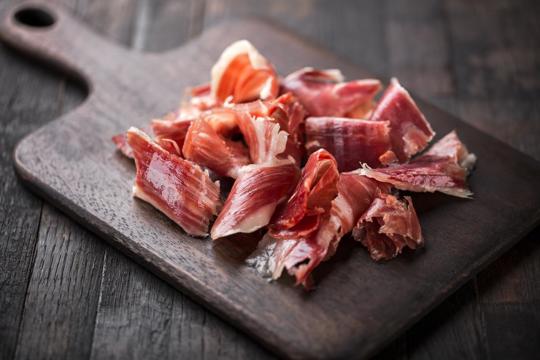
Serrano Ham - a traditional Spanish specialty - not to be confused with Serrano peppers vs jalapenos comparison about the pepper.
This cured ham comes from a white pig breed raised in the mountains of Spain.
Skilled artisans season and dry it for up to 18 months.
It has a perfect balance of saltiness and sweetness, leaving a pleasant taste on the tongue.
This dish has been a part of Spanish culture for centuries.
Techniques have been passed down, generation after generation.
Each step of production requires special care and accuracy, displaying the commitment behind every slice.
Serrano Ham stands out for its craftsmanship and unique traits.
The flavor depends on the diet, age, and breed of the pig.
This diversity adds complexity, giving a range of flavors to please different palates.
It also has an attractive marbled appearance.
Intramuscular fat and lean meat interlace, offering a creamy texture that melts in your mouth.
Enjoy it alone or pair it with other ingredients, like cheese or fruits.
Serrano Ham gives a wonderful cooking experience.
What is Iberico Ham?

Iberico Ham is a Spanish delicacy, crafted from unique black Iberian pigs.
These hogs are raised in the dehesa, a serene oak forest.
They feast on acorns to create a sweet nutty flavor and juicy meat.
Its marbling gives it a melt-in-your-mouth texture that stands out from other hams.
Its excellent taste and ancient tradition make it a cherished great dish.
This art has been passed down for generations.
It starts with the selection of free-range pigs.
They mainly eat acorns in the montanera season, allowing their fat to accumulate oleic acid for superior tenderness and flavor.
Next, they are cured with salt and air-dried for up to four years.
This enhances the flavors and textures even more.
Iberico Ham is categorized into four grades based on feed quality and purity: Bellota, Recebo, Cebo de Campo, and Cebo.
Bellota is the highest-grade due to its acorn-fed diet.
This results in unmatched flavor and tenderness.
The marbled fat throughout the meat gives it juiciness and complexity.
If pairing contrasts are useful, what goes well with lemon in desserts shows how flavor pairings highlight or balance acidity versus richness.
Differences Between Serrano Ham and Iberico Ham
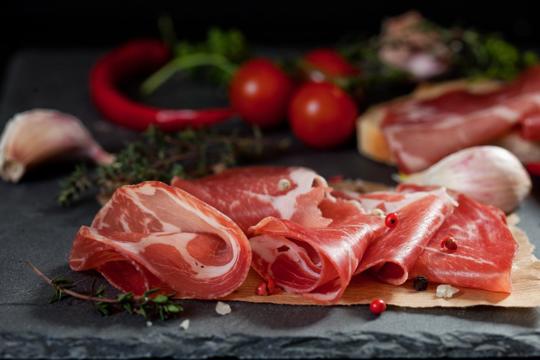
Serrano ham and Iberico ham are two unique Spanish cured meats.
Serrano ham is made from white pigs, but Iberico ham is made from premium black Iberian pigs.
This difference in pig breed creates variation in taste and texture.
For a different take on cured-pork contrasts, Sugar Cured vs Country Ham comparison guide contrasts two American curing traditions.
Origin and Production
The origins and production of Serrano Ham and Iberico Ham are what make them so special.
Serrano Ham is traditionally grown in the mountains of Spain.
Iberico Ham comes from free-range black Iberian pigs that roam oak forests.
The flavor and texture of each ham depend on their feeding practices.
Serrano pigs are fed mostly grains, giving them a milder taste.
Iberian pigs eat acorns, giving their meat a nutty flavor.
Serrano Ham takes 12 months to produce.
Iberico Ham needs a longer curing period of up to 36 months.
This diversity in origin and production makes Spanish ham so unique.
Breeds of Pigs Used
Pigs are essential for the production of Serrano Ham and Iberico - two popular Spanish cured meats.
Different breeds of pigs give these products their unique flavors.
Duroc and Landrace pigs are commonly used to make Serrano Ham.
They provide the ham with a meaty texture.
But the Iberian pig is the standout when it comes to Iberico.
It has a strong genetic makeup that results in marbling.
This adds a luxurious richness to the meat.
So, the right pig breeds are important for the quality and character of these delicious cured hams.
For an unusual palate perspective, what guinea pigs taste like guide explores how different animals and diets influence flavor.
Feeding and Aging Process
Serrano & Iberico hams have different feeding & aging processes.
Serrano hams are from white pigs that eat acorns, grain, & grass.
Iberico hams come from Iberian pigs that eat only acorns from oak forests called "dehesas".
This diet gives Iberico ham its flavor.
Serrano hams are aged 12 months, while Iberico hams require 24-48 months.
This longer period gives Iberico hams their complex flavors.
Aging is very important; it allows the meat to develop its taste & texture.
Both types of ham go through techniques to ensure quality.
This includes salting to remove excess moisture & promote preservation.
The hams are then hung in controlled environments until they dry out.
Flavor and Texture
Serrano ham and Iberico ham have distinct flavors and textures.
Serrano is salty and savory.
Its texture is firm yet tender.
Iberico, however, has a more intense flavor - a reminder that Extract vs Flavor explainer clarifies what 'flavor' means in tasting notes.
It's nutty with a melt-in-your-mouth feel.
Its high fat content gives it unique marbling and smoothness.
To truly experience the hams, savor them slowly.
Both hams are staples of Spanish cuisine.
Enjoy the classic simplicity of Serrano or the indulgent complexity of Iberico.
Cost and Availability
Cost and availability differ.
Serrano is usually cheaper and more accessible than Iberico.
This is because of the different production methods and pig breeds used.
Serrano is made from white pigs.
Iberico, however, is made from black Iberian pigs.
These pigs are raised in Spain's southwest.
They move about in open pastures and eat acorns, which give their meat a special flavor and marbling.
The few Iberian pigs available cause Iberico Ham's higher cost.
On the other hand, Serrano is made with white pigs bred for leaner meat.
These pigs are raised in confinement and fed a controlled diet.
This method may not give Serrano's meat the same richness and flavor, but it allows for an affordable price and broader distribution.
Similarities Between Serrano Ham and Iberico Ham
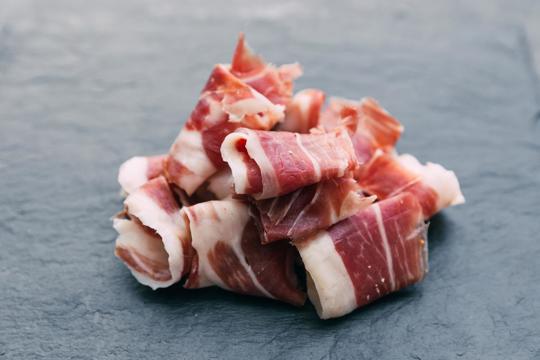
Serrano Ham and Iberico Ham are two legendary Spanish cured meats that share many similarities.
For one, they both come from pigs native to Spain.
Plus, they both undergo a lengthy air-drying process to enhance their flavor and texture.
And, they are typically served thinly sliced and used as a tasty addition to different dishes.
These shared features add to their allure in the cooking world.
It's also important to note the unique characteristics of each ham variety.
Serrano Ham usually comes from white pigs and has a milder taste.
Meanwhile, Iberico Ham is from a special breed of pigs known as Iberian pigs.
These animals have black hooves and eat acorns during their last months, resulting in a nutty and savory flavor that sets it apart from the other.
The marbling in Iberico Ham is also more visible, intensifying its tenderness and flavor.
If exploring related pork cuts is helpful, Pork Hock vs Ham Hock comparison breaks down differences in use and flavor.
Culinary Uses and Pairings
Serrano ham has a savory yet delicate taste - making it ideal for sandwiches, salads, pastas, omelets, and pizzas.
Iberico ham is more intense in flavor, courtesy of the pigs' acorn-rich diet.
This goes well with soft cheeses like Manchego or goat cheese.
It also works well with grilled veggies, roasted meats, and even chocolate desserts.
What sets Iberico apart is its marbling.
It can be cooked at higher temperatures without losing its melt-in-your-mouth texture.
It's great for pan-searing or grilling.
Both hams are delicious when served at room temperature.
You can pair them with various ingredients and styles.
Whether it's an appetizer or a main course - these Spanish hams will improve your dishes with their exceptional tastes.
For inspiration on unlikely matches, watermelon smoothie pairings list offers ideas for balancing sweet, savory, and refreshing notes.
Key Differences Between Serrano and Iberico Ham
As we have seen, there is a wide range of differences between Serrano ham and Iberico ham.
While both originate in Spain, they differ greatly in taste, texture and cost.
There are also many similarities as well.
For instance, they can both be used to add savory flavor and aroma to any dish.
No matter what your preference is, it's important to research the details before you make an informed purchase or consume the product.
With so much variety available in the market today, it can be difficult to pick the right one for your needs.
Fortunately, we can now identify clear distinctions between Serrano ham and Iberico ham based on their characteristics to help us make better decisions when shopping for cured meats.
Ever since being first introduced in Madrid during ancient Roman times, these unique hams have been celebrated as one of Spain's greatest culinary accomplishments with passionate fans from all across the world.
They truly are a sign of the incredible diversity and flavors found in Spanish cooking that stands out from its European counterparts.
Frequently Asked Questions
Serrano comes from the sierra, hills, giving it a distinct flavor. They share some similarities but each has qualities that make it better suited for certain recipes.
They can stand in for each other in a pinch. Serrano Ham and Iberico overlap in some uses, but the flavor or texture will shift.
Adjust quantities to taste.
Shelf life differs based on processing and packaging. One often keeps longer unopened, while the other may need refrigeration or faster use after opening.
Which one is more forgiving in recipes?
One tends to perform more consistently across a range of cooking methods, making it the safer choice when experimenting.
The other delivers stronger results in specific applications.
Both hams pair well with a range of sides. Pork Shoulder vs Ham comparison guide explains differences in cuts and uses. Costco Spiral Ham vs HoneyBaked comparison compares two popular pre-cooked ham options.