
South Indian food usually builds on rice and lentils, while North Indian food usually builds on wheat breads and dairy.
- South Indian cooking leans on rice, lentils, coconut and curry leaves, as in dosa, idli and sambar.
- North Indian cooking leans on wheat breads, dairy and the tandoor, as in naan, dal makhani and butter chicken.
- Each side is many regional cuisines, so exceptions are common.
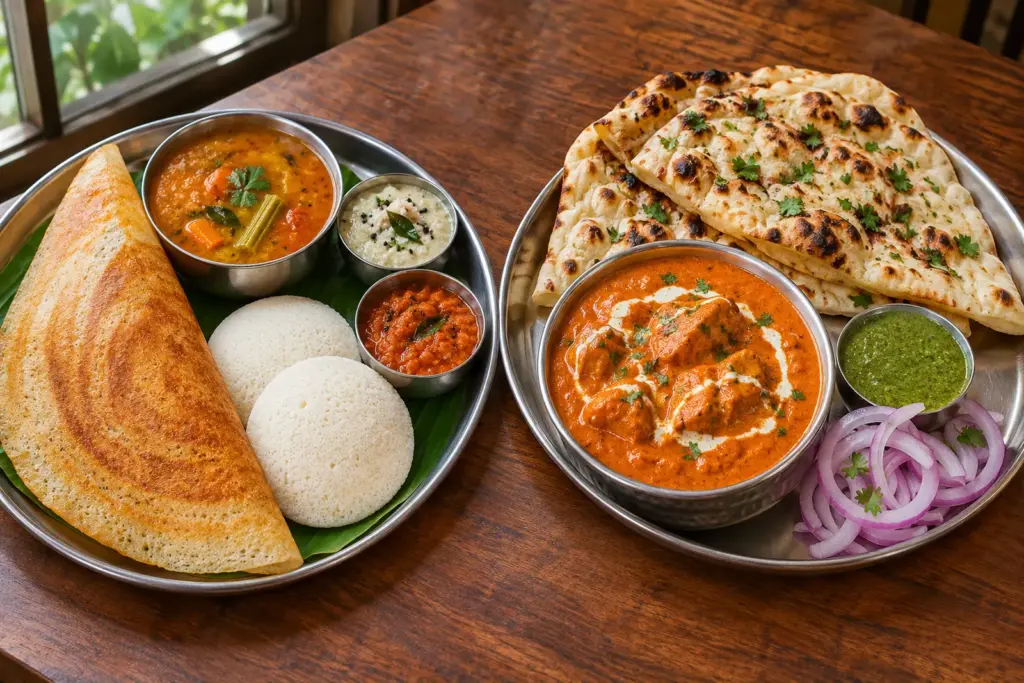
If you know a recipe's region, you know what to stock. A southern recipe asks for urad dal, curry leaves and tamarind, and a northern one asks for atta flour, paneer and ghee, so this is one of the more practical side-by-side food comparisons for your pantry.
1. What Is the Difference Between South and North Indian Food?
Here, South India means the cooking of Tamil Nadu, Kerala, Karnataka, Andhra Pradesh and Telangana, and North India means Punjab, Delhi, Uttar Pradesh, Kashmir, Rajasthan and the states around them. Every one of those places has its own cuisine, so you will meet these tendencies often but not in every dish.
| Trait | South Indian (common tendency) | North Indian (common tendency) |
|---|---|---|
| Everyday staple | Rice, plus rice and lentil batters (dosa, idli) | Wheat flatbreads (roti, paratha, naan) |
| Cooking fat | Coconut oil, sesame oil | Ghee, butter, mustard oil |
| Main sour note | Tamarind, kokum, tomato | Yogurt, dried mango powder (amchur), tomato |
| Signature seasonings | Mustard seeds, curry leaves, dried red chilies, black pepper, sambar powder | Cumin, coriander, garam masala, dried fenugreek leaves (kasuri methi), cardamom |
| Typical gravy | Thin, tangy lentil stews and coconut-based curries | Thick onion, tomato, yogurt, cream or cashew gravies |
| Signature method | Fermenting, steaming, tempering | Tandoor roasting, slow simmering, deep-frying |
| Famous dishes | Dosa, idli, sambar, rasam, Kerala fish curry | Dal makhani, butter chicken, rogan josh, chole, tandoori chicken |
Use the table as a shopping guide. If a recipe lists urad dal, curry leaves and tamarind, you are cooking southern, and if it lists atta, paneer and kasuri methi, you are cooking northern.
2. How Do the Staples and Breads Differ?
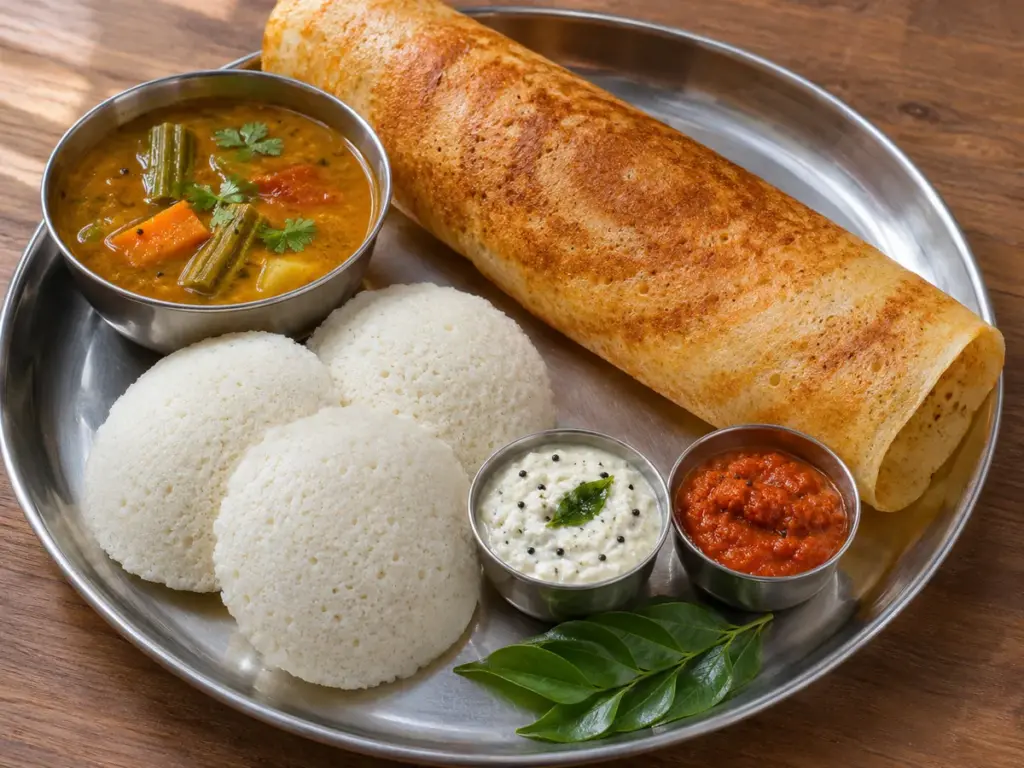
Rice and fermented batters anchor most southern meals. Dosa is a thin crepe and idli is a steamed cake. You make both from a batter of rice and urad dal (a split black lentil) that ferments overnight and turns light and slightly sour.
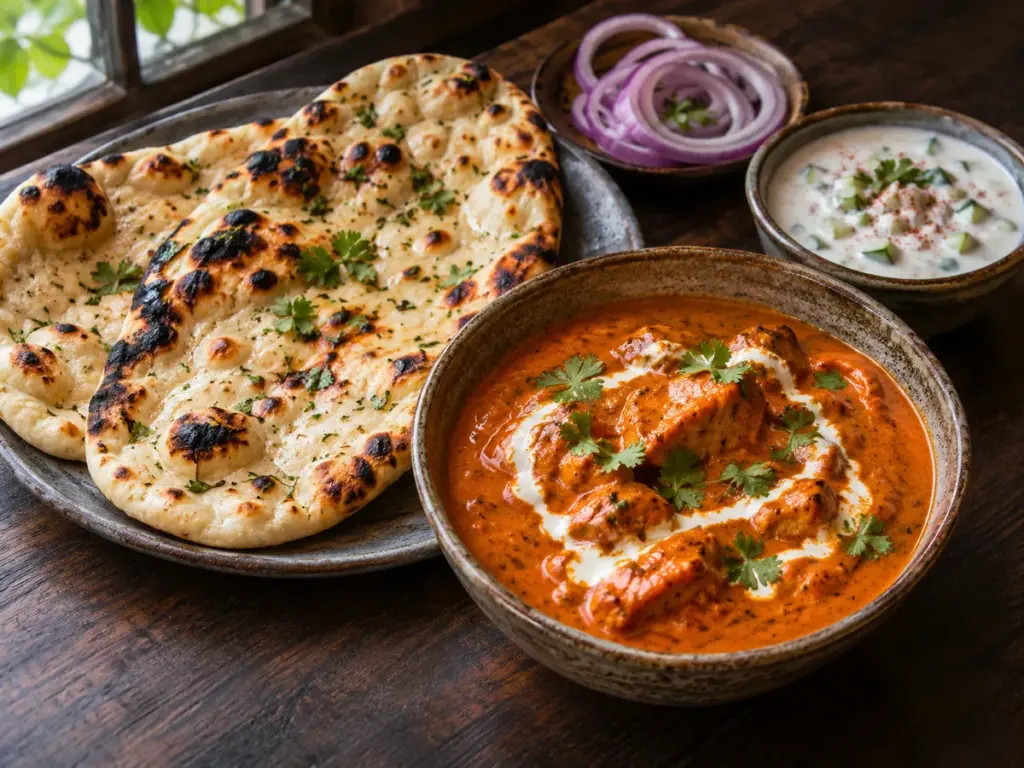
Wheat flatbreads anchor most northern meals. You cook roti and chapati from whole-wheat atta on a flat griddle, you layer paratha with ghee, and you bake naan, a yogurt-leavened refined-flour dough, against the wall of a tandoor. At home, a very hot cast-iron skillet gives you blistered spots, but it only approximates a tandoor.
The exceptions matter as much as the pattern:
- Rice is a daily food in the north too. Rajma chawal (kidney beans over rice), jeera rice and pulao all come from northern kitchens.
- Wheat appears in the south. Cooks in Kerala and Tamil Nadu make layered parotta and chapati, and they serve them with vegetable kurma or curry.
- Millets follow the farms, not the compass. Bajra (pearl millet) flatbreads belong to Rajasthan, jowar (sorghum) to Maharashtra, and ragi (finger millet) to Karnataka, where it becomes soft balls called mudde.
Climate pushes the same way. Wheat is a cool-season crop in the northern plains, so you will see winter vegetables such as radish and turnip in northern pickles and stuffed parathas, while rice paddies and coconut palms fill the warm, wet southern coast.
3. How Do the Seasonings and Cooking Fats Differ?
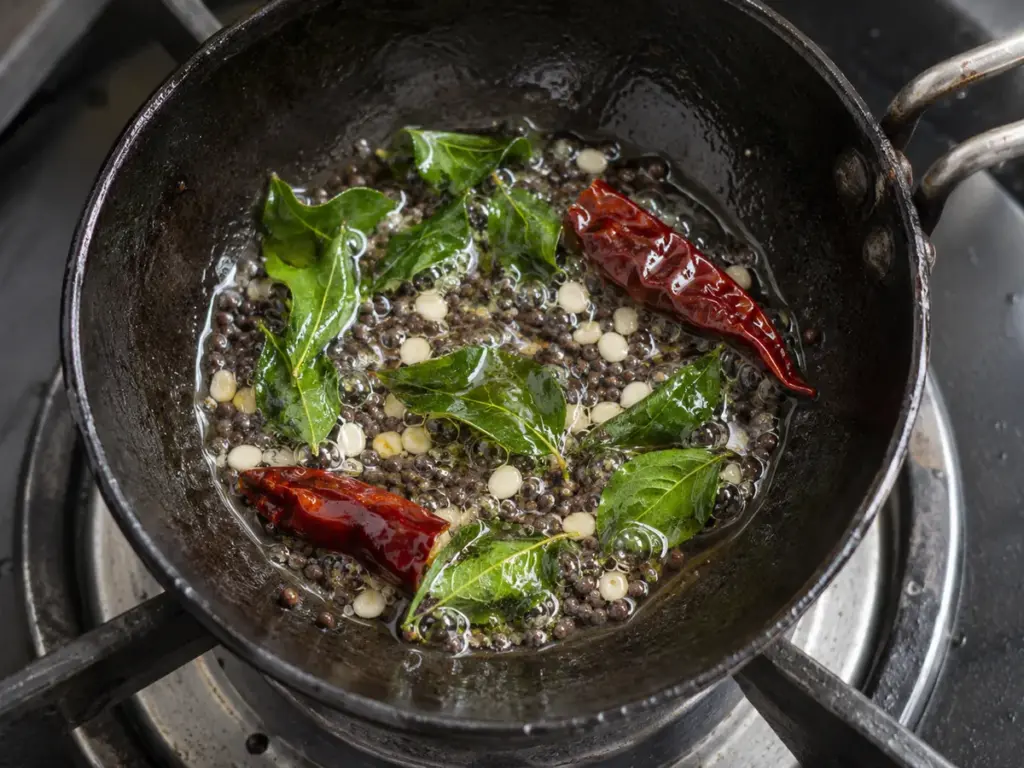
Southern cooks often start or finish a dish with tempering. You heat coconut or sesame oil, add black or brown mustard seeds until they pop, then add urad dal, dried red chilies and curry leaves for a few seconds. The hot oil carries those flavors into whatever you pour it over, such as sambar, coconut chutney or a stir-fried vegetable.
Curry leaves are the hardest southern ingredient to replace. If you cannot find fresh ones at an Indian grocery, curry leaf stand-ins get you part of the way, but none copies their smell exactly.
Northern gravies usually start in the pan instead. You cook sliced onion, ginger, garlic and tomato in ghee or oil until the mixture thickens and the fat separates, then stir in yogurt, cream or cashew paste. The ghee adds the nutty flavor of ghee to the sauce, and if you add paneer, a fresh cheese that keeps its shape in hot gravy, paneer cheese cubes turn the gravy into palak paneer or matar paneer.
4. How Do the Cooking Methods Differ?
- Fermenting rice and urad dal batter for dosa and idli
- Steaming idli, puttu and other rice cakes
- Griddle-frying dosa on a flat iron tawa
- Simmering sambar and rasam with tamarind
- Clay-pot cooking for Kerala fish curry in a chatti
- Tandoor roasting for naan, tandoori chicken and tikka
- Slow simmering dal makhani and rogan josh
- Dum cooking, a sealed pot on low heat, for Lucknow-style biryani
- Deep-frying samosas and bhature
- Tawa cooking for parathas and rotis
The tandoor shapes northern flavor more than any single spice, because a marinade of yogurt, lemon juice and chili chars at the edges and picks up smoke. At home, you can get close to tandoori chicken in a hot oven, and a tandoori masala blend in the marinade gives you the color and warm spice.
5. Do They Taste Different?
Southern food leans sour, sharp and fragrant. If you order sambar or rasam, you taste tamarind first, and Chettinad chicken from Tamil Nadu gets its heat from black pepper. Andhra and Telangana kitchens are known for some of the hottest chili cooking in the country, while coconut rounds the edges in Kerala and coastal Karnataka.
Northern food leans rich, round and warm. Cream, butter and yogurt soften the sauce, and the cardamom, cloves and cinnamon in garam masala add a sweet warmth. You will still find sharp northern dishes, though, such as a Punjabi saag with garlic and green chilies, and Rajasthani cooks use plenty of dried red chili.
Neither side tastes like one thing. Even a single word like curry stretches from sour tamarind gravies to cream-rich tomato ones, and the flavor of curry shifts with the region and the cook.
6. Is South Indian Food More Vegetarian?
Many people assume so, but survey data points the other way. In Pew Research Center's 2021 survey, 39% of Indian adults called themselves vegetarian, and Hindus in the North were far more likely to say so than Hindus in the South.
| Region (Hindu adults) | Say they are vegetarian |
|---|---|
| North | 71% |
| Central | 61% |
| West | 57% |
| South | 30% |
| Northeast | 19% |
| East | 18% |
The southern coast fits those numbers: Kerala and Mangalore cooks make fish curries, and Chettinad cooks are known for chicken and mutton. The stereotype probably comes from the strictly vegetarian Udupi-style restaurants of Karnataka, whose dosa and idli menus many South Indian restaurants abroad still copy. Meanwhile, the north has deep vegetarian traditions of its own, such as dal makhani, chole and paneer dishes, next to kebabs and rogan josh from Mughal-era and Kashmiri kitchens.
7. Which Famous Dishes Belong to Which Cuisine?
| Dish | Region | What it is |
|---|---|---|
| Dosa | South | Thin crepe of fermented rice and urad dal batter |
| Idli | South | Steamed rice and urad dal cake, eaten with sambar and chutney |
| Sambar | South | Lentil and vegetable stew soured with tamarind |
| Rasam | South | Thin tamarind and black pepper soup |
| Hyderabadi biryani | South | Rice and meat layered and sealed to steam in its own juices |
| Dal makhani | North | Black lentils and kidney beans simmered with butter and cream |
| Butter chicken | North | Tandoori chicken in a creamy tomato gravy |
| Rogan josh | North (Kashmir) | Braised lamb in a chili and yogurt gravy |
| Dal baati churma | North (Rajasthan) | Lentils with baked wheat balls and a sweet crumbled grain |
If you are trying to place biryani, know that it belongs to both sides. Cooks make it across India, from Lucknow in the north to Hyderabad and Ambur in the south, and the Ambur version uses short-grain seeraga samba rice instead of basmati. Mughal court cooking shaped the northern style, and a similar court tradition in Hyderabad produced the south's best-known biryani.
In Punjab, you eat sarson ka saag, simmered mustard greens, with makki di roti, a cornmeal flatbread. The creamy tikka masala on many US menus is northern in style, built on tandoor-grilled chicken or paneer, and you will find it tastes nothing like chickpea chana masala.
8. What Do the Two Cuisines Share?
The north-south line is easy to overdraw, because you will find the same pantry on both sides:
- Lentils in every meal. Southern cooks make sambar, and northern cooks make dal, from toor, moong, masoor or urad.
- Tempering. Both toast whole spices in hot fat and pour them over a finished dish.
- Yogurt as a cooler. Raita goes with northern biryani, and curd rice ends many southern meals.
- Fried snacks. Samosas are northern and vadas are southern, but both are crisp fried savory pastries or fritters.
- Pickles and chilies. A small spoon of pickle sits on plates in both regions, and dried red chilies turn up in both pantries.
9. Can You Swap Ingredients Between the Two?
You can make a few swaps without breaking a recipe, as long as you accept a different taste.
- Ghee for coconut oil in tempering. The dish turns richer and loses the faint coconut smell, but the mustard seeds and curry leaves still pop and flavor the fat.
- Full-fat coconut milk for cream in a northern gravy. You get a dairy-free sauce that tastes a little sweeter and faintly of coconut, and it works best in tomato and cashew-based curries.
- Rice for roti, or the reverse. A southern sambar goes well with roti, and a northern dal goes well with rice, so you can serve either way.
Some swaps cost you the dish. If you make dosa with wheat flour, you get a different pancake, and a naan without yogurt and refined flour will not puff like the original.
10. Which One Should You Cook?
Pick by the situation in your kitchen:
- You want a dairy-free or vegan dinner. Southern sambar, rasam and coconut vegetable curries usually start with oil instead of dairy, and a plant-based curry plan is easy to build from Indian vegan lentil curries (check that the tempering uses oil, not ghee).
- You are feeding guests and want a rich main. A northern butter chicken or korma holds well on the stove, so you can make it ahead, and Indian chicken curry recipes cover both creamy and brothy styles.
- You want a light weeknight meal with rice. Rasam over rice with a quick vegetable stir-fry takes little time, and it needs only a pot and a small tempering pan.
- You have a skillet but no time to ferment. A northern dal with store-bought roti or naan skips the overnight batter that dosa and idli need.
For shopping, look for fresh curry leaves in the produce cooler of an Indian grocery (they freeze well in a bag), atta in the flour aisle, and block paneer in the refrigerated section. Ready-made dosa and idli batter is sold refrigerated in many Indian groceries, which saves the grinding and the overnight wait.
Sources
- Pew Research Center, Religion and Food in India (2021): vegetarian share of Hindus by region.
- Pew Research Center, Eight-in-ten Indians limit meat in their diets, and four-in-ten consider themselves vegetarian (2021): 39% of adults call themselves vegetarian.
- APEDA (Government of India), Millet production by state: bajra, jowar and ragi growing states.

Food writer and recipe developer. Restaurant industry veteran sharing real recipes, honest substitutes, and tips that actually work in a home kitchen.



