Ube is a purple yam that tastes mildly sweet, with vanilla and nutty notes, and turns soft and moist when cooked.
- Ube is sweeter than taro, which cooks call earthier and milder.
- It is a true yam (Dioscorea alata), not taro or purple sweet potato.
- Cook it before eating, because raw yam tubers contain a bitter alkaloid that heat destroys.
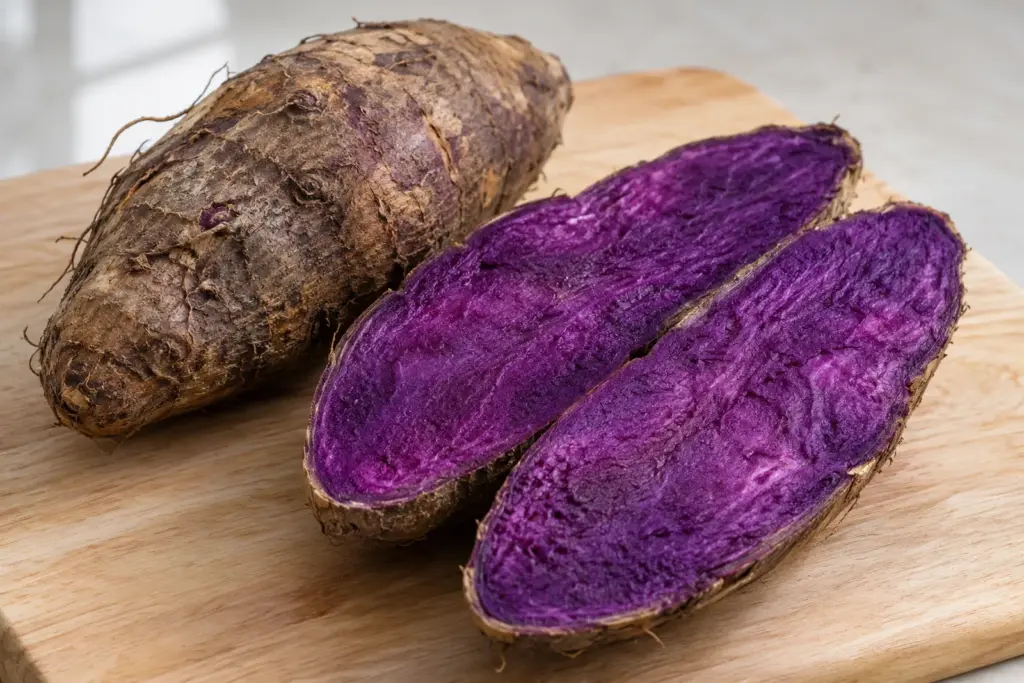
Ube (say OO-beh) is a purple yam from the Philippines that now shows up as ice cream, lattes and cakes, and it is one of the foods people look up to learn how unfamiliar foods taste before they order.
1. What Does Ube Taste Like?
Cooks and food writers describe ube as sweet and nutty, with a vanilla note that is stronger than in taro. Food Network quotes baker Abi Balingit comparing it to vanilla and pistachio, so you already know two of its reference points if you have tried the taste of pistachios.
Here is what you can expect from a plate of cooked ube:
- The sweetness is mild, a little below purple sweet potato and above taro.
- The vanilla note turns up in nearly every description, and real vanilla flavor is the closest comparison most people reach for.
- The texture is moist and firm when boiled, and it can turn mealy or fibrous depending on how you prepare it.
- The color runs from pale lavender to deep purple, depending on the variety.
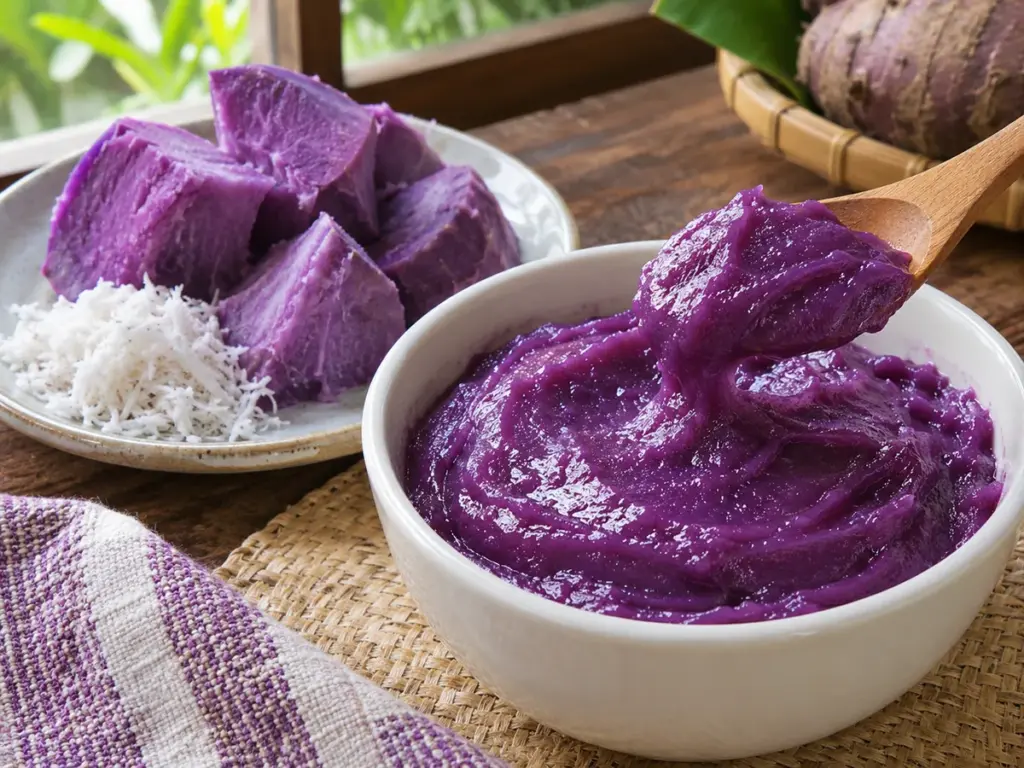
Because the root itself is mild, the dish around it does much of the flavoring. In halaya, the Filipino ube jam, cooks boil and mash the yam, then simmer it with coconut milk, evaporated or condensed milk, and butter. A spoonful of halaya therefore tastes like a creamy, sweet dessert more than like a vegetable.
The jam works as an ingredient as well as a spread. You can eat it as it is or fold it into pastries and ice cream, and the sweet, milky flavor of condensed milk in many recipes is why halaya reads sweeter than the plain root.
2. Is Ube the Same as Taro or Purple Sweet Potato?
No. Ube is a true yam (Dioscorea alata), taro is Colocasia esculenta, and purple sweet potato is Ipomoea batatas. Each one has its own flavor and texture, even when the flesh looks similar.
- Ube belongs to the yam family (Dioscorea alata), and its flesh runs pale lavender to vivid purple.
- Taro belongs to the arum family (Colocasia esculenta), and its flesh is white with purple flecks.
- Okinawan purple sweet potato belongs to the morning glory family (Ipomoea batatas), and its flesh is vivid purple that deepens when cooked.
| Trait | Ube | Taro | Okinawan purple sweet potato |
|---|---|---|---|
| Flavor | Mildly sweet, vanilla and nutty | Milder, earthier, less sweet | A little sweeter than ube |
| Texture | Moist and firm, can be fibrous | Dense and starchy | Drier, mashes fluffy like a regular potato |
| Usual use | Desserts and drinks | Savory and sweet dishes, such as a sinigang thickener | Roasted, steamed or mashed whole |
The flavor gap matters more than the color match. A dessert written for ube comes out less sweet and earthier with taro, so treat ube and taro as different ingredients when you swap.
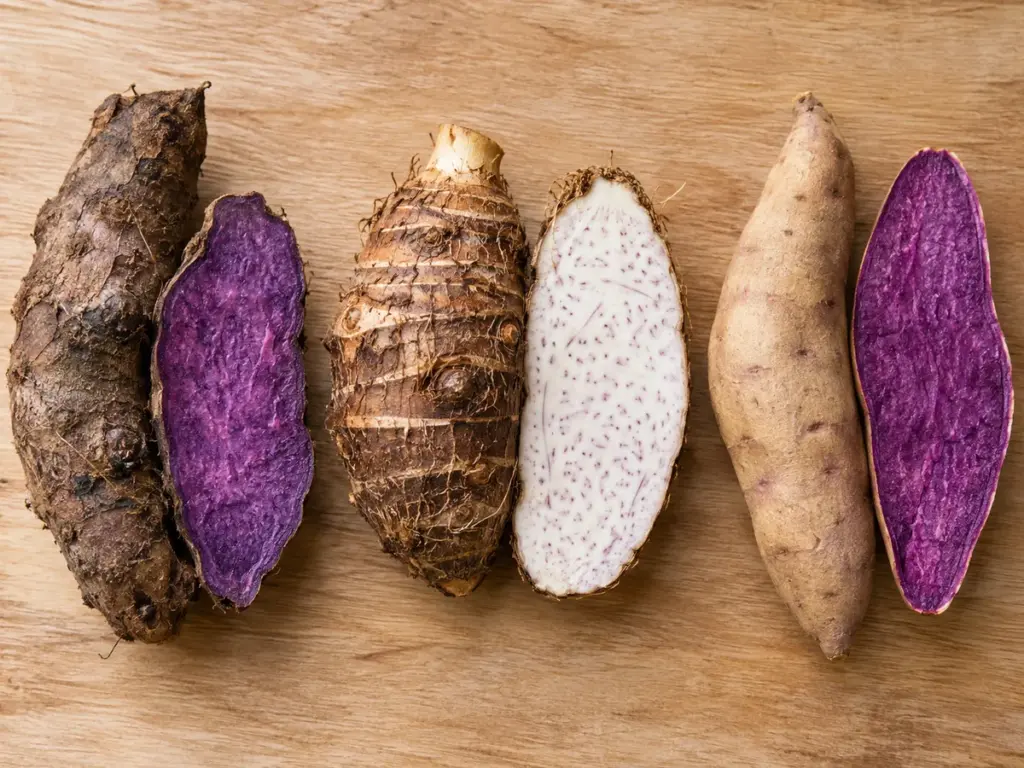
You can tell the roots apart at the store before you buy:
- Ube has a rough, bark-like brown skin, and its cut flesh ranges from pale lavender to deep purple.
- Okinawan purple sweet potato has a beige skin and vivid purple flesh, and it cooks up with the familiar sweet potato flavor.
- Taro has white flesh with small purple flecks and a milder, earthier flavor that cooks use in savory dishes as well as sweet ones.
3. Is Ube Extract the Same as Fresh Ube?
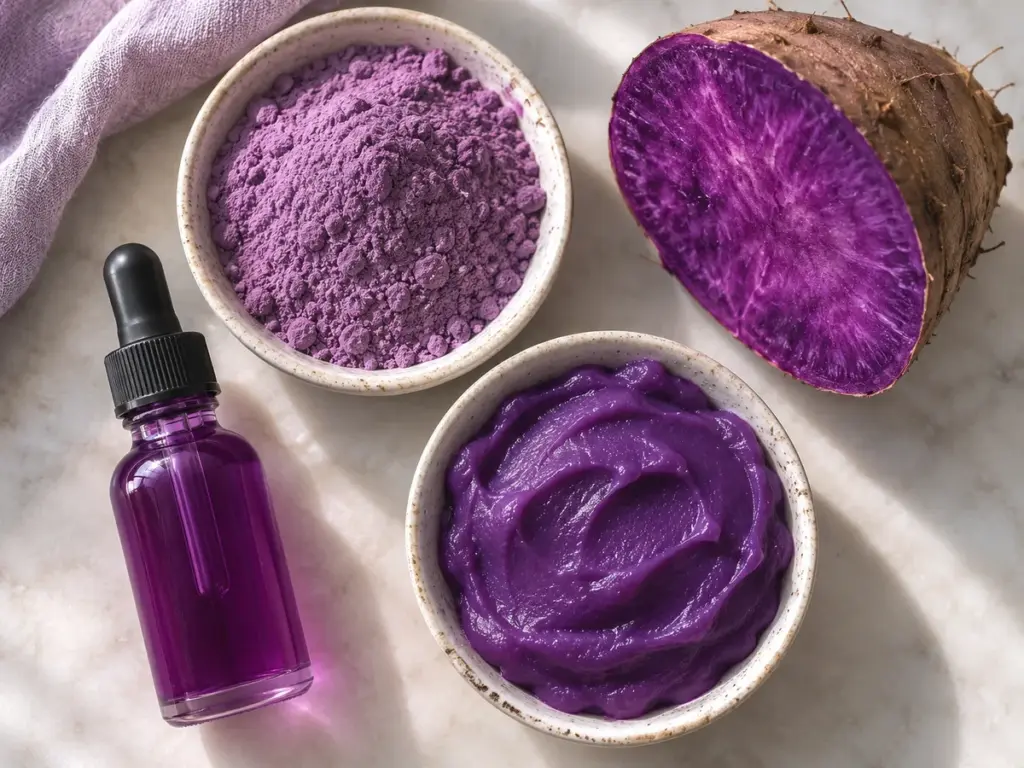
Fresh ube is hard to find in most US stores, so many ube desserts rely on frozen grated ube, powder, ready-made halaya or extract. They do not taste or look the same.
| Form | What it is | Flavor and color | Best for |
|---|---|---|---|
| Frozen grated ube | The root, sold in the freezer section of some grocery stores | Mild and sweet, color depends on the variety | Halaya, cakes, ice cream |
| Powder | Dried ube, often made only from the yam | More muted color, grainy until you mix it with water | Smoothies, milkshakes, ice cream, cookies and cakes |
- It is boiled, mashed ube cooked with coconut milk, evaporated or condensed milk and butter.
- It tastes sweet and creamy.
- Use it for eating as is, pastries and ice cream.
- It is a concentrated flavoring, often glucose syrup with flavoring and coloring.
- It is brighter and more concentrated than fresh ube.
- Use it for lattes, cocktails, frostings and puddings.
Tasting Table notes that you can swap ube extract for vanilla extract 1:1, and it describes the extract as sweet and slightly nutty.
4. How Do You Cook Ube Safely?
Cooks traditionally boil or steam ube, and halaya is the usual first project. Here is how the jam comes together:
- Peel and chop the root into chunks. Frozen grated ube from the store freezer skips this step.
- Boil the chunks until they are tender all the way through.
- Mash the ube, or grate it, which is how Filipino cooks traditionally handle the fibrous strands.
- Simmer the mash with coconut milk, evaporated or condensed milk, and butter.
- Serve it as a spread, or use it in desserts, pastries and ice cream.
5. Which Ube Dishes Are Worth Trying First?
Ube belongs mostly to sweet dishes, and Food Network's list of Filipino-style recipes includes halo-halo, ube-coconut sticky buns, ube crinkle cookies and a macapuno chiffon cake. Coconut shows up in most of them, so you can expect ube and coconut to taste good together.
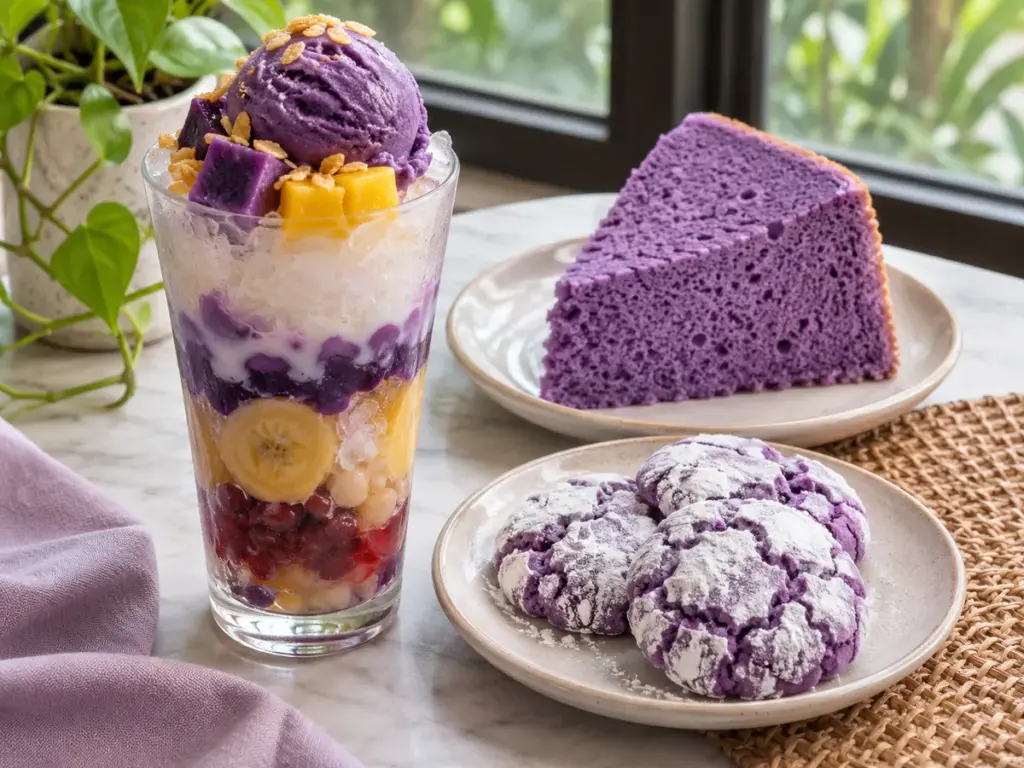
- Ube halaya is the base for most other desserts, and it is sold ready-made if you do not want to cook it.
- Ube ice cream turns halaya or extract into a cold, creamy scoop, and the ube ice cream flavor depends on how much real yam goes in.
- Crinkle cookies and cakes often get extra purple from food coloring, so a deep color tells you little about the amount of ube.
- Lattes and puddings usually use extract or powder, which blend smoothly into liquids and creams.
Sources
- Tasting Table, Ube vs. Taro: What's the Difference?
- Tasting Table, Purple Sweet Potatoes vs. Ube: What's the Difference?
- Tasting Table, Ube Extract vs. Powder: What's the Difference?
- Food Network, What Is Ube?
- Feedipedia, Greater yam (Dioscorea alata)
- USDA FoodData Central, Yam, raw, FDC 170071
Frequently Asked Questions
USDA FoodData Central has no ube-specific record. Its generic "Yam, raw" entry (FDC 170071) lists 118 kcal per 100 g, but that covers yams as a group, and powder, halaya and desserts add sugar, milk and butter, so check the package label for ube products.
Yes, you can swap it 1:1 in many recipes, but the extract adds purple color and an ube flavor, so use it where a lavender tint suits the dish, such as frosting, pudding or ice cream.

Food writer at GustoMeadow. Writes ingredient substitutes, food comparisons, taste guides and storage guides for home cooks.
Storage and food-safety numbers follow USDA, FDA and university extension guidance.