
Ripe mango or plain canned pumpkin purée replaces persimmon pulp in baking, and crisp Asian pear or Fuji apple replaces Fuyu slices in salads.
- Mango purée swaps 1:1, within about 1 g of persimmon's sugar per 100 g.
- Pumpkin purée swaps 1:1 with about 2 tablespoons of sugar per cup, because it has a quarter of persimmon's sugar.
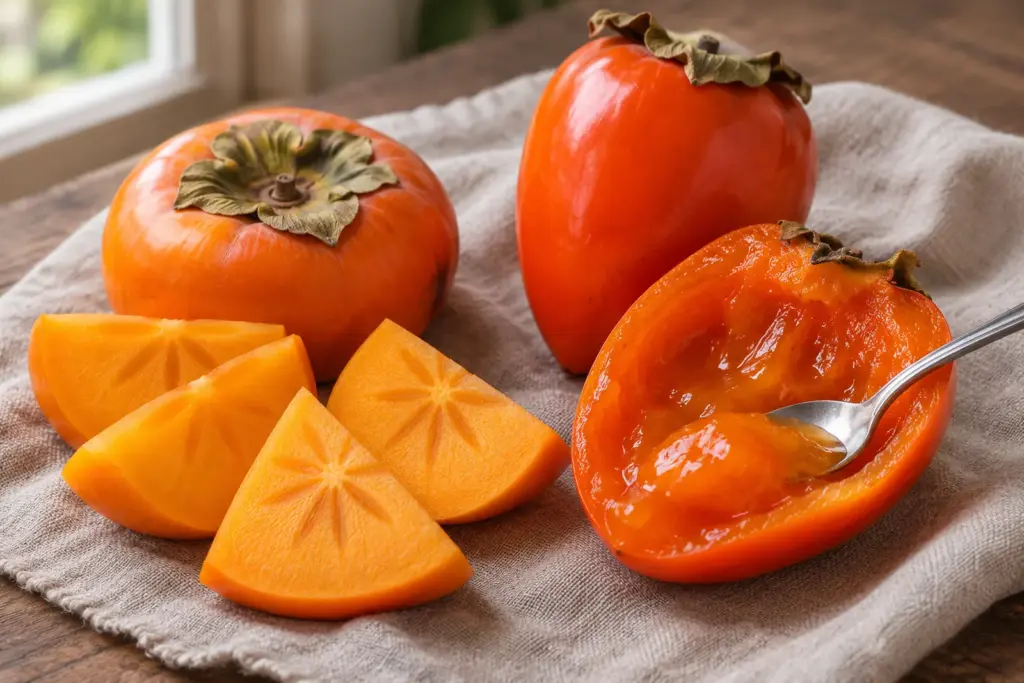
Fuji apple keeps a crisp slice and has the closest sweetness of any raw swap.
Your recipe's persimmon is doing one of two jobs: soft Hachiya pulp in a pudding or loaf, or crisp Fuyu slices in a salad. Like most fruit and pantry swaps, the right pick follows the job, so decide which one your dish needs before you shop.
What Does Persimmon Do in a Recipe?
Persimmon is sweet and dense next to the fruits that replace it. USDA's raw Japanese persimmon entry lists about 12.5 g of sugar and 80% water per 100 g, while apricots hold 9.2 g of sugar and 86% water (FDC 169941 and 171697). That is why persimmon pulp bakes into moist, dense loaves, and why most swaps bring more water and a little less sugar into the bowl.
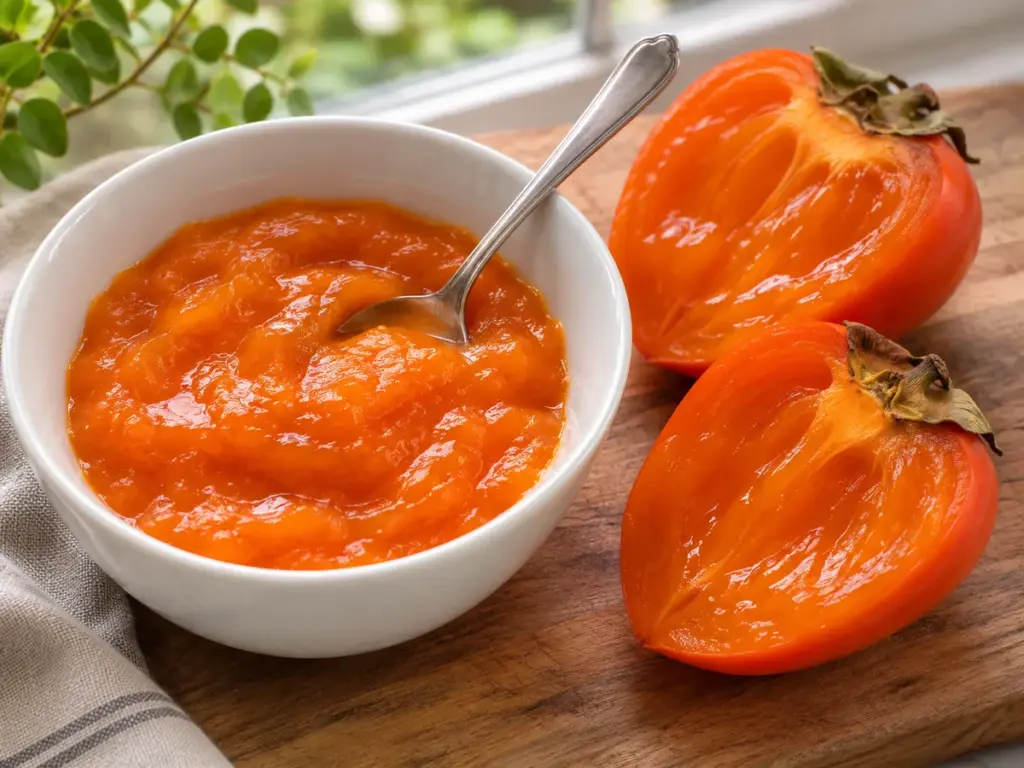
Your recipe calls for persimmon in one of two forms, and each form needs a different swap:
- Hachiya pulp goes into puddings, loaves and muffins. A Hachiya stays bitter until it turns jelly-soft, which is why Fuyu and Hachiya taste so different.
- Fuyu slices go raw into salads and cheese boards. A Fuyu can be eaten firm or soft, so a recipe that wants crunch means a firm one.
8 Best Substitutes for Persimmon
| Substitute | Ratio | Best for | What changes |
|---|---|---|---|
| Mango purée | 1:1 | Loaves, pudding | Tropical flavor |
| Pumpkin purée | 1:1 plus sugar | Loaves, bars | Less sweet |
| Apricot purée | 1:1 | Muffins, jam | Less sweet |
| Pear purée | 1:1 | Loaves, muffins | Milder |
| Asian pear | 1:1 | Raw slices | Juicier, milder |
| Fuji apple | 1:1 | Raw slices | Apple flavor |
| Plums | 1:1 | Jam, compote | Tart skin |
| Quince | 1:1, cooked | Jam, roasting | Needs simmering |
Mango and pears are near one-to-one swaps, pumpkin needs added sugar, and only Asian pear and apple give you a raw crunch. You will notice a swap most in baking, because the pulp sets both the sweetness and the moisture of the whole batter. Use fully ripe fruit, purée it smooth, and measure by volume after puréeing.
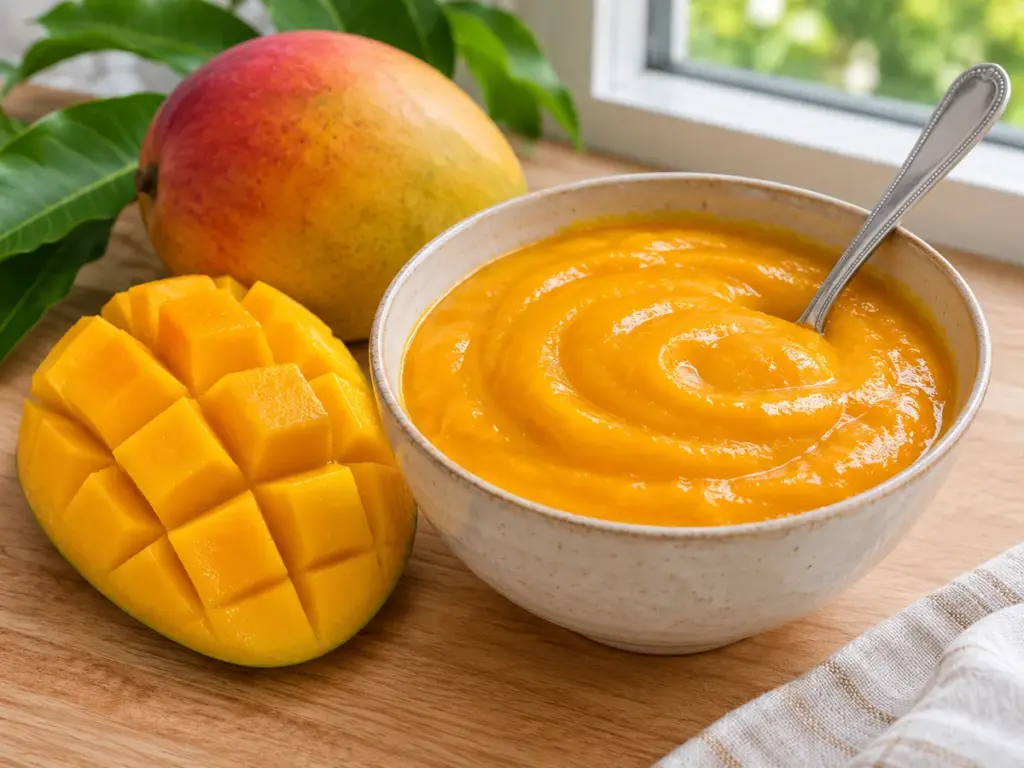
1. Ripe Mango Purée
Ripe mango purée is the closest match for Hachiya pulp. USDA lists mango at 13.7 g of sugar and 83% water per 100 g (FDC 169910), so it sits within about 1 g of sugar and 3 points of water from persimmon. Swap it 1:1 by volume with no other change.
Mango flesh can be fibrous, so blend it until it is smooth instead of mashing it. Pick a mango that gives when you press it with your thumb, because an underripe one tastes sour next to ripe mango's juicy sweetness. The loaf or pudding will taste of mango where it used to taste of persimmon.
2. Plain Pumpkin Purée
Plain canned pumpkin purée is the pantry swap, but it needs sugar. USDA lists it at 3.3 g of sugar per 100 g, about a quarter of persimmon's 12.5 g (FDC 168450). A cup of purée weighs 245 g, so it falls roughly 22 g short of persimmon at the same weight, which is about 2 tablespoons of sugar per cup (calculated from those USDA figures).
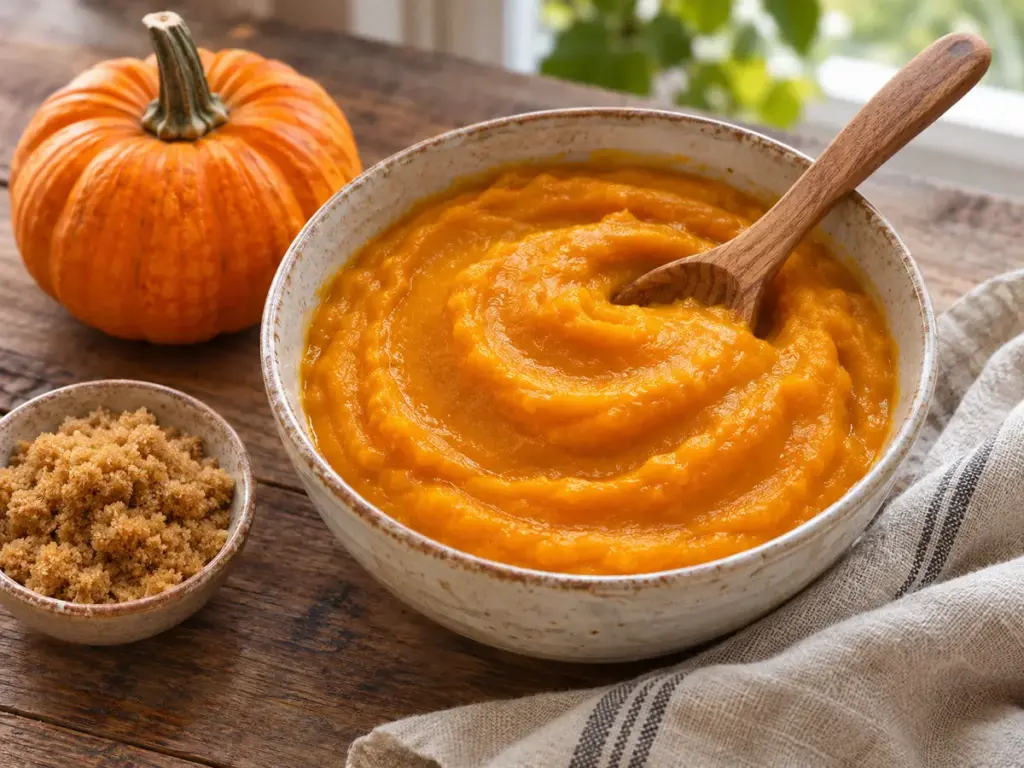
- Measure the purée. Use the same volume as the pulp the recipe lists.
- Stir in the sugar. Add about 2 tablespoons of white or brown sugar per cup of purée.
- Check the batter. If it looks looser than the recipe describes, hold back a little of the milk or other liquid.
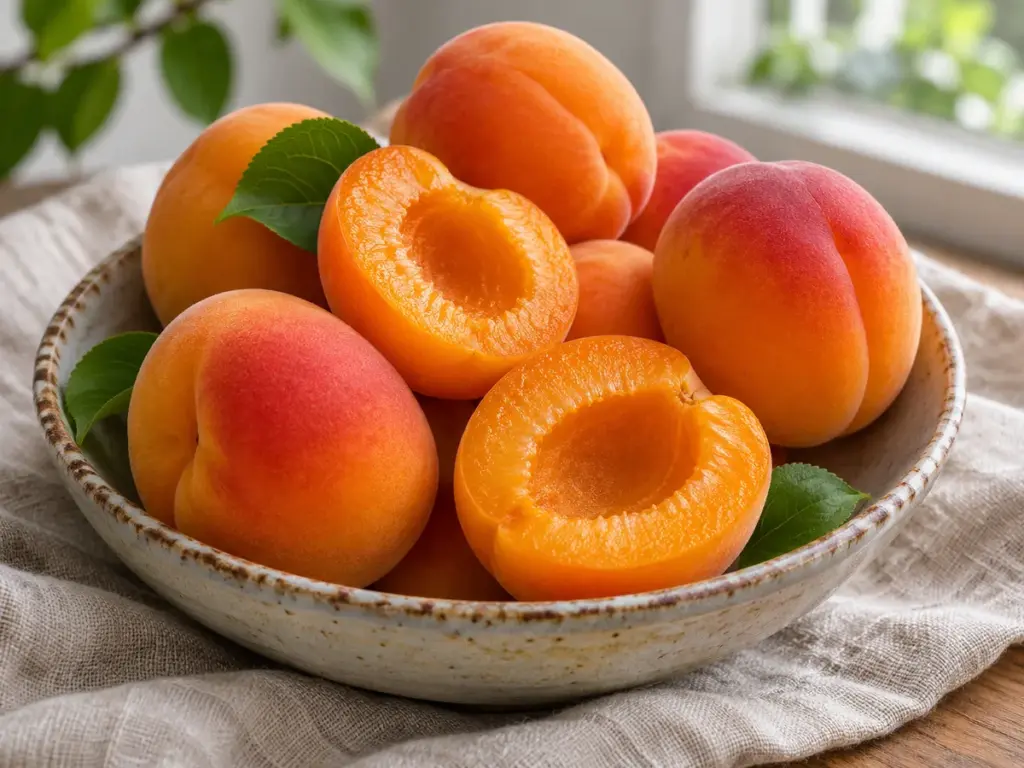
3. Ripe Apricots
Ripe apricots make a lighter, less sweet purée. USDA lists them at 9.2 g of sugar and 86% water per 100 g (FDC 171697), about 3 g less sugar and 6 points more water than persimmon. Pit them and purée them 1:1 by volume, then add sugar to taste, starting with a teaspoon or two per cup for a pudding (a starting point, not a published ratio).
If your apricots are still firm, simmer the halves in a splash of water until they soften before you blend them. The same purée works in jam, where persimmon is also common.
4. Ripe Pear Purée
Ripe pear purée is the mildest swap. USDA lists pears at 9.8 g of sugar and 84% water per 100 g (FDC 169118), about 3 g less sugar than persimmon, so a 1:1 swap gives a lightly sweet crumb. Peel the pears and cook them soft before blending, and choose a smooth-flesh type, since some pears are fibrous and a little starchy while others are relatively smooth.
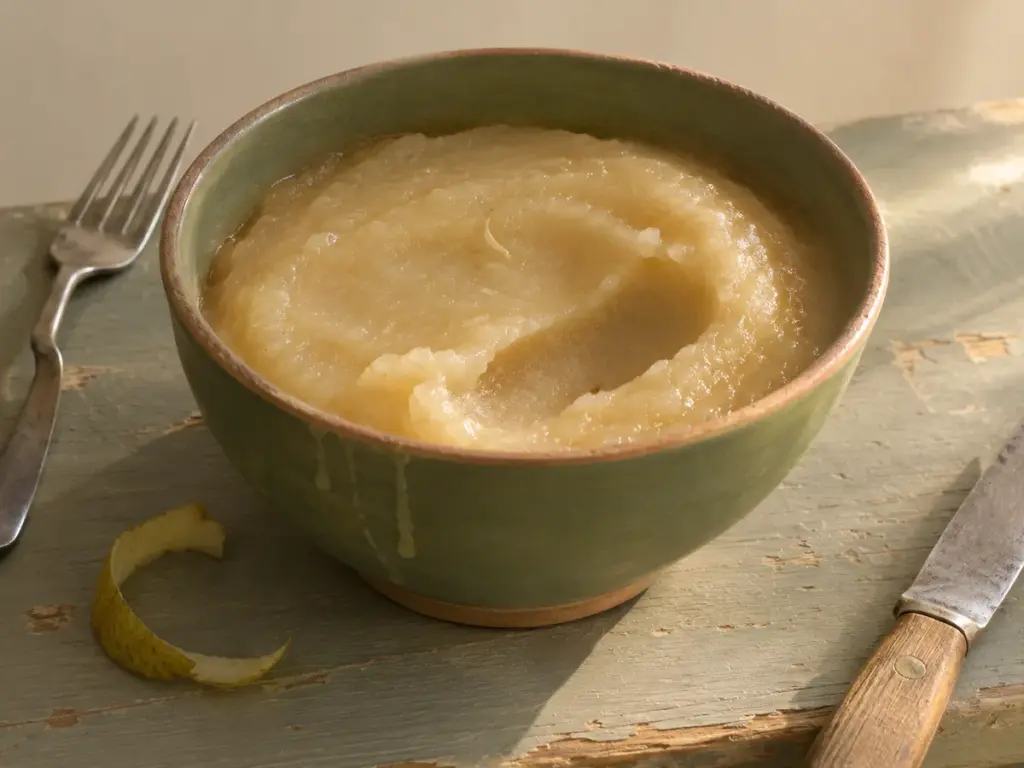
If the purée seems flat next to the recipe's spices, stir in a spoonful of sugar before it goes into the batter.
5. Asian Pear
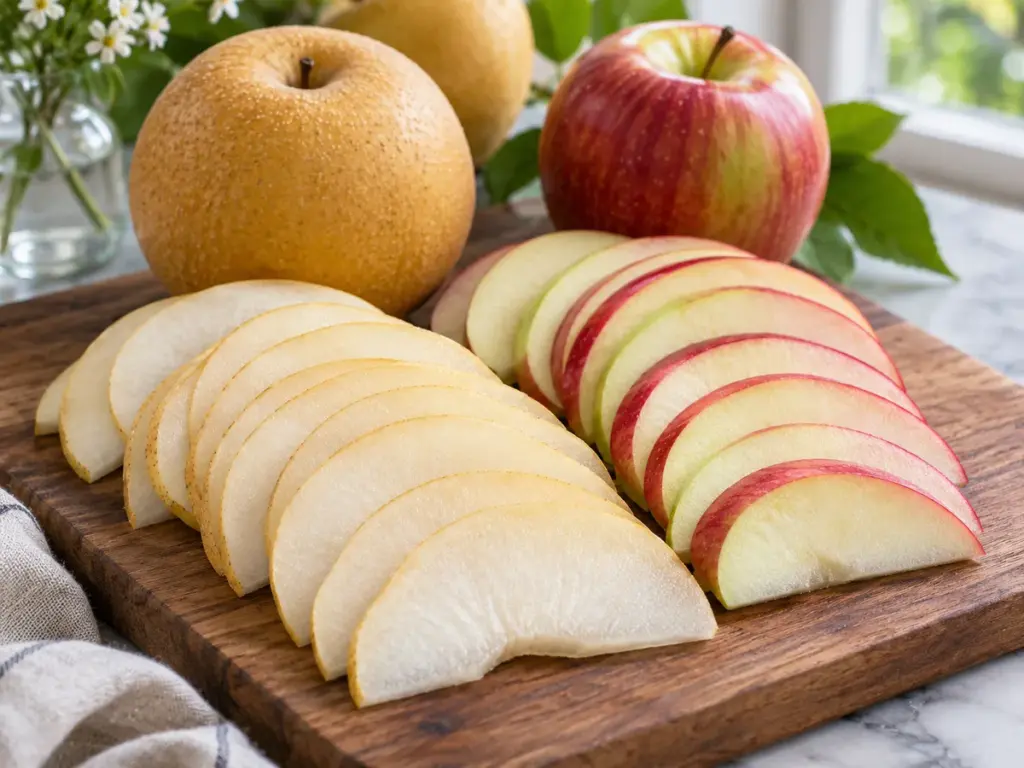
Raw slices need a fruit that stays crisp when cut, so mango, apricot or ripe pear would turn to mush in your salad. Asian pear gives the closest crunch. USDA lists it at 88% water and 7.1 g of sugar per 100 g (FDC 168177), so it is juicier and milder than persimmon.
Slice it as thick as you would slice a Fuyu and swap it 1:1, and add a little honey to the dressing if the salad needs more sweetness.
6. Fuji Apple
Fuji apple keeps the most sweetness of the raw options. USDA lists it at 11.7 g of sugar and 84% water per 100 g (FDC 167793), close to persimmon's 12.5 g, so the dressing needs no extra honey. Swap it 1:1 on a salad or a cheese board.
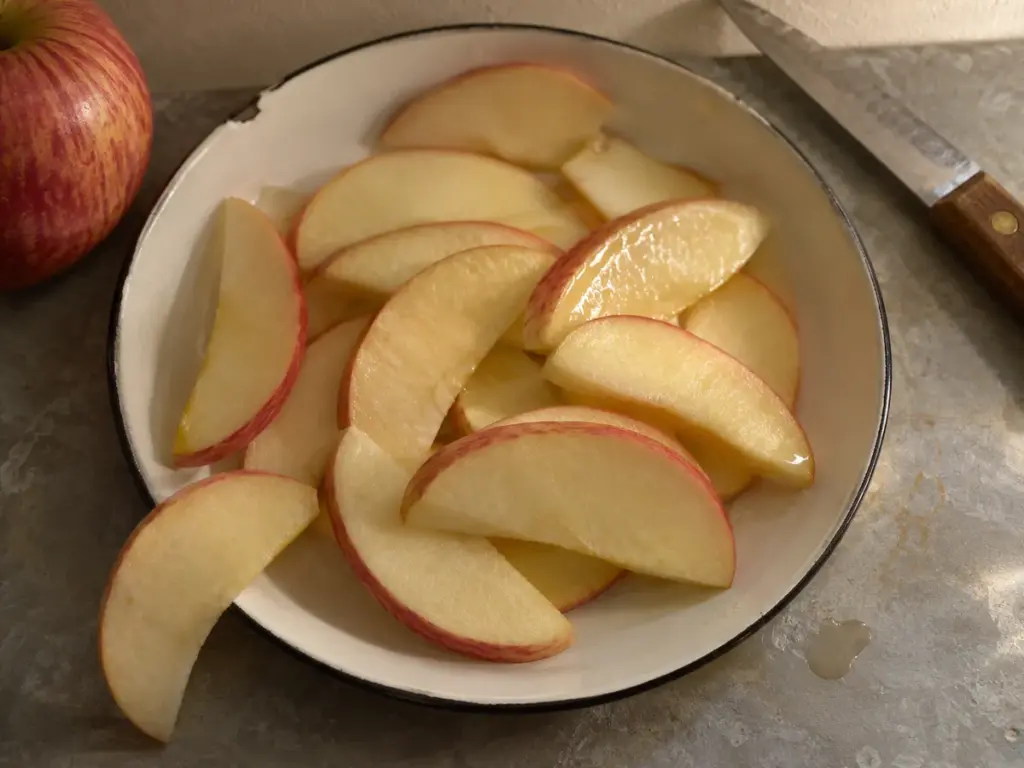
Slice it thin with the skin on, and toss the slices in lemon juice so they do not brown while the salad waits.
7. Plums
Plums cook down fast, which makes them the easy swap for jam and compote. USDA lists them at 9.9 g of sugar and 87% water per 100 g (FDC 169949), so swap them 1:1 by chopped volume and add sugar to taste. Remove the pits, and peel the plums if you want less tartness, because the skin carries the tartness.
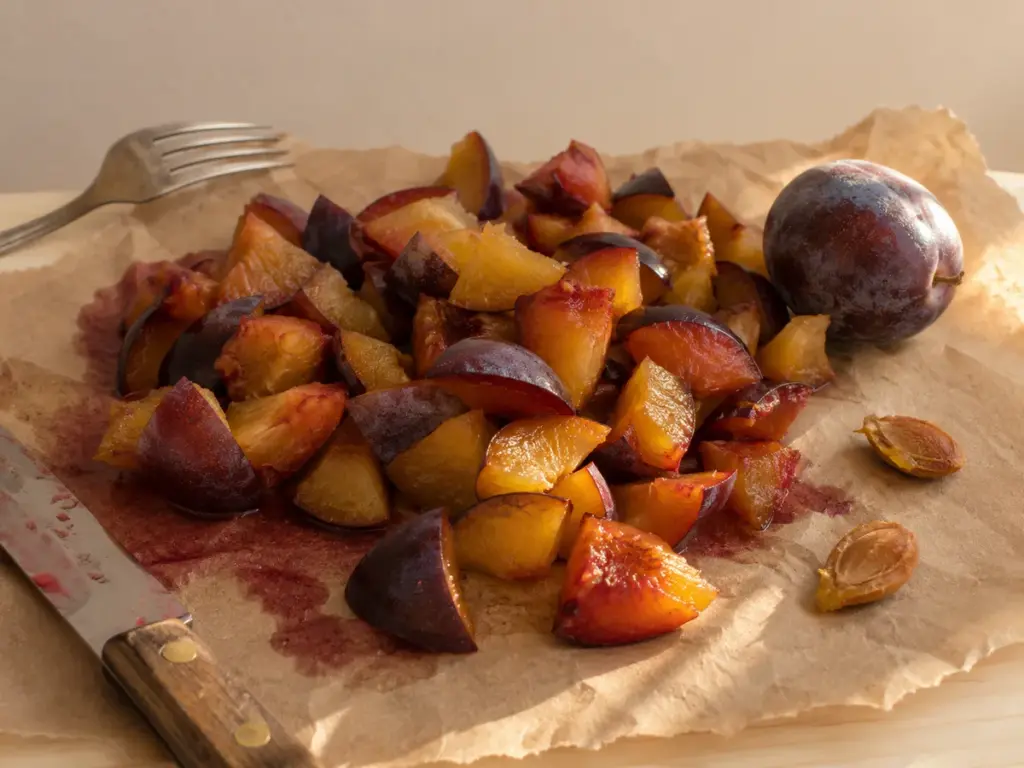
Chop them to the size the recipe gives the persimmon, and taste the cooked fruit before you sweeten it, because the sugar you need depends on how ripe your plums are.
8. Quince
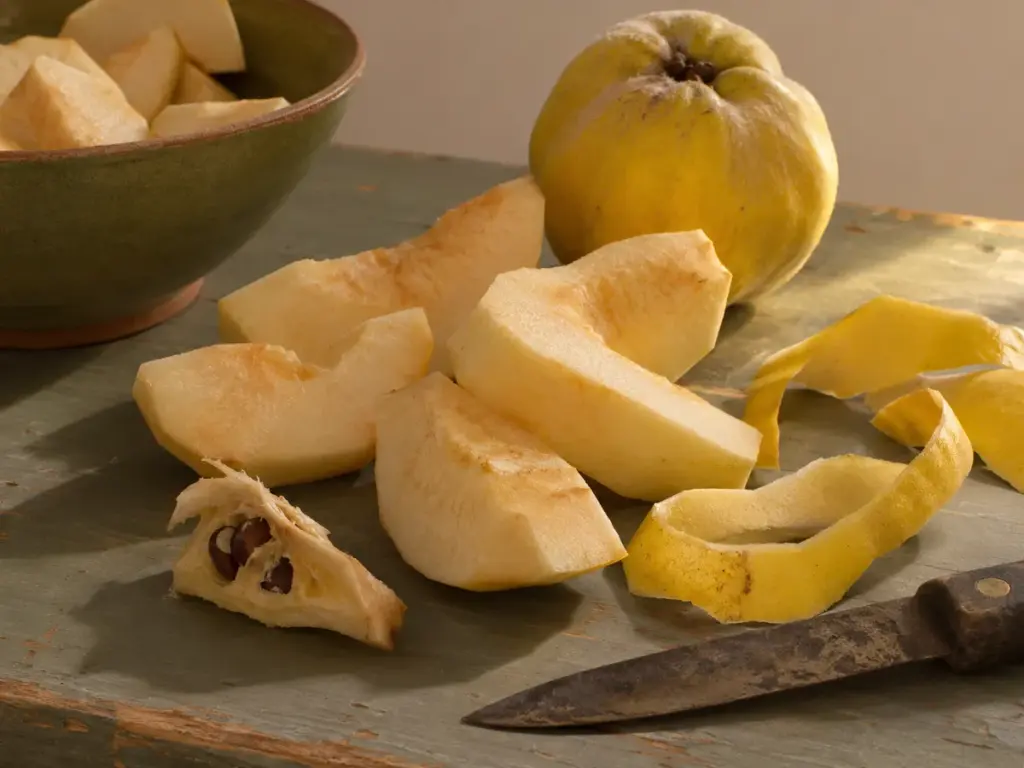
Quince is hard and sour raw, but it turns sweeter once cooked. Peel and core it, then simmer the pieces until a knife slides in before they go into the dish, and swap them 1:1 by cooked volume. Cooked quince holds its shape instead of melting like persimmon pulp, so choose it for jam, compote or roasting rather than a loaf, and cut the pieces to the size you want in the finished dish.
Can You Swap One Persimmon for Another?
Sometimes the fruit in your kitchen is a persimmon, just not the type your recipe names. Each trade below either works or fails for a reason you can check:
- Fuyu for Hachiya in baking: it can work when the Fuyu is very soft. Peel it and blend it smooth, so the pulp measures like Hachiya pulp (editorial advice, since no source compares the two).
- Hachiya for Fuyu in a salad: it fails, because only a fully jelly-soft Hachiya is edible and it cannot be sliced. Use Asian pear or Fuji apple instead.
- Sharon fruit for Fuyu: Sharon fruit is the marketing name for the Israeli-bred Triumph persimmon, which growers ripen with carbon dioxide. It is a persimmon too, so try it 1:1 in raw slices and bite one slice first to check that it does not dry your mouth.
Which Swaps Should You Skip?
- Pineapple has less sugar than persimmon, 9.9 g against 12.5 g per 100 g (FDC 169124), and its fibrous flesh is not smooth like pulp, so it will not melt into a batter or give the soft bite of a ripe Fuyu.
- A firm, unripe Hachiya stays bitter and mouth-drying, so it spoils a batter and a salad alike.
Sources
- USDA FoodData Central, FDC 169941: Persimmons, japanese, raw
- USDA FoodData Central, FDC 169910: Mangos, raw
- USDA FoodData Central, FDC 168450: Pumpkin, canned, without salt
- USDA FoodData Central, FDC 171697: Apricots, raw
- USDA FoodData Central, FDC 169118: Pears, raw
- USDA FoodData Central, FDC 168177: Pears, asian, raw
- USDA FoodData Central, FDC 167793: Apples, raw, fuji, with skin
- USDA FoodData Central, FDC 169949: Plums, raw
- USDA FoodData Central, FDC 169124: Pineapple, raw, all varieties
- Wikipedia: Persimmon (astringent and non-astringent types)
- Wikipedia: Sharon fruit (Triumph cultivar, carbon dioxide ripening)
- FoodPrint: Persimmons (Hachiya and Fuyu)

Food writer at GustoMeadow. Writes ingredient substitutes, food comparisons, taste guides and storage guides for home cooks.
Storage and food-safety numbers follow USDA, FDA and university extension guidance.



