
A mix of 1 teaspoon fine salt, ¼ teaspoon each of garlic powder, onion powder and paprika, and a pinch of sugar stands in for 1 tablespoon of seasoned salt.
- That mix has about half the salt of Lawry's, so you taste and add salt if needed.
- Garlic salt plus ¼ teaspoon paprika per tablespoon is the quickest swap.
- With celery salt, you add garlic and onion powder.
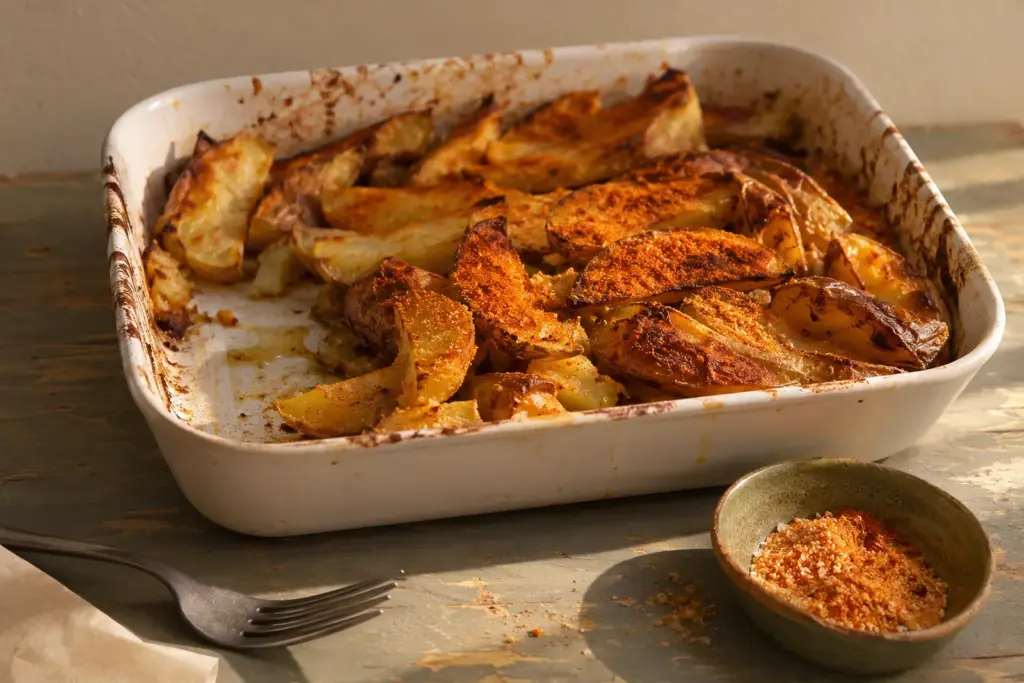
Seasoned salt, also sold as seasoning salt or season salt, is mostly salt, so a good pantry substitute has to cover the salt first, or tell you how much salt is missing, and match the garlic, onion and paprika flavor second. These six swaps use what most cooks already have.
What Does Seasoned Salt Do in a Recipe?
A shaker of Lawry's holds more than salt and paprika, since the label lists salt, sugar, spices (including paprika, celery seed, turmeric), onion, corn starch, garlic, tricalcium phosphate (to make free flowing), extractives of paprika and natural flavor (McCormick product page).
A label lists ingredients from the largest amount to the smallest, so salt is the main ingredient in Lawry's.
The Nutrition Facts figure of 380 mg sodium in a ¼ teaspoon (1.2 g) fits that, because table salt is about 39% sodium by weight (USDA FoodData Central, FDC 173468) and so salt makes up roughly four-fifths of the blend (rounded arithmetic).
A swap has three jobs: it replaces the salt, it replaces the garlic and onion flavor, and it brings the orange color that paprika gives.
Wikipedia lists chicken, French fries, fried seafood and potatoes as the usual foods for seasoned salt, so if you season any of those, a weak swap shows there first.
6 Best Substitutes for Seasoned Salt
1. Homemade Seasoned Salt Mix
For every tablespoon of seasoned salt the recipe calls for, you stir together 1 teaspoon fine salt, ¼ teaspoon garlic powder, ¼ teaspoon onion powder, ¼ teaspoon paprika and a pinch of sugar. IngredientSubstitutes.com ranks that ratio as the closest match, and it adds ⅛ teaspoon of celery seed or celery salt for the signature note, cutting the plain salt to ¾ teaspoon when celery salt goes in.
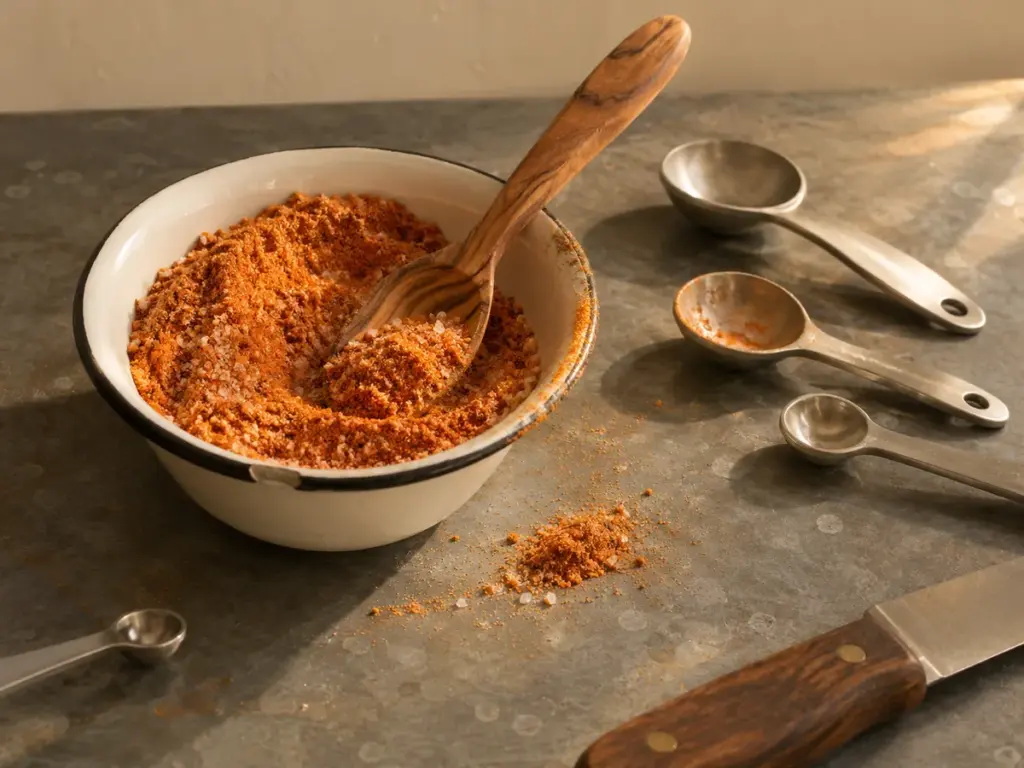
This ratio holds about half the salt of a tablespoon of Lawry's (see the salt note above), so you taste the dish before adding more salt. If a recipe calls for 2 teaspoons, you scale the same ratio down to ⅔ teaspoon fine salt and a generous pinch each of the garlic powder, onion powder and paprika (our scaling of the same ratio).
2. Garlic Salt with Paprika
Per IngredientSubstitutes.com, you use the same amount of garlic salt as seasoned salt, plus ¼ teaspoon paprika per tablespoon. You will taste more garlic than in the original, and ⅛ teaspoon of onion powder per tablespoon evens it out.
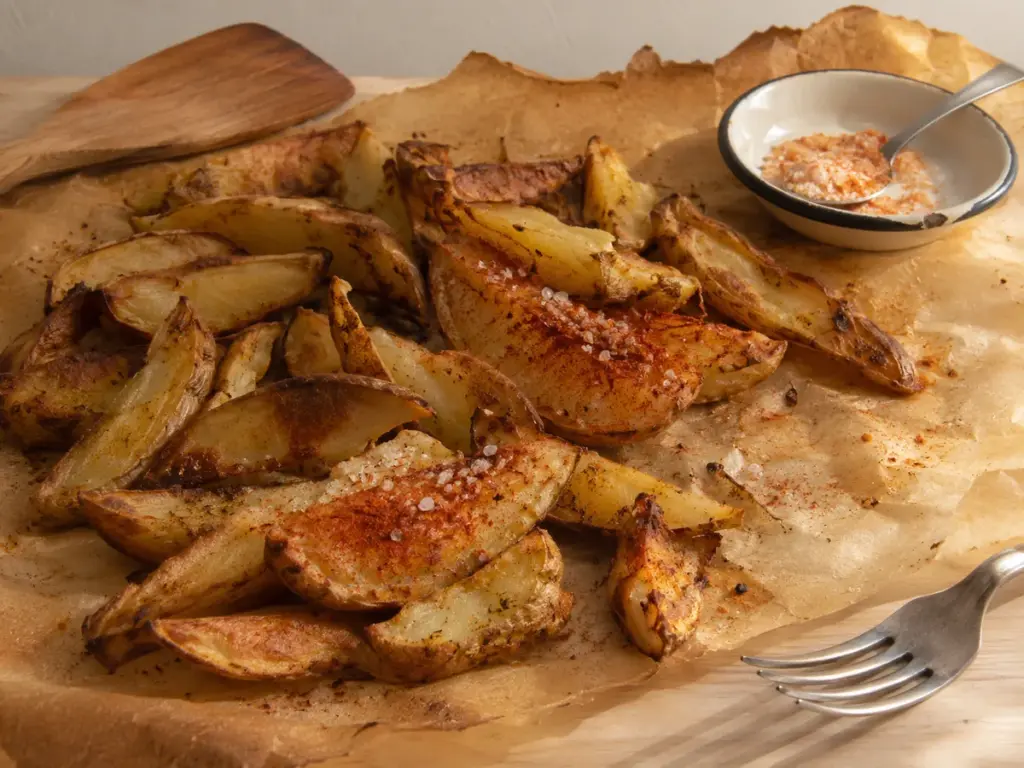
Garlic salt is salt blended with garlic, so any salt the recipe adds on top stacks fast, and you are safer leaving the extra salt out until you have tasted the dish.
If your garlic salt jar is empty too, garlic powder and plain salt can stand in for it.
3. Celery Salt with Garlic and Onion Powder
For each tablespoon of seasoned salt, IngredientSubstitutes.com uses 1 teaspoon celery salt, ¼ teaspoon garlic powder and ¼ teaspoon onion powder. Like item 1, this mix comes in lower in salt than the tablespoon of seasoned salt it replaces.
Celery salt is ground celery seed mixed with table salt, and it tastes like celery mixed with salt, which we would call greener and more herbal than seasoned salt.
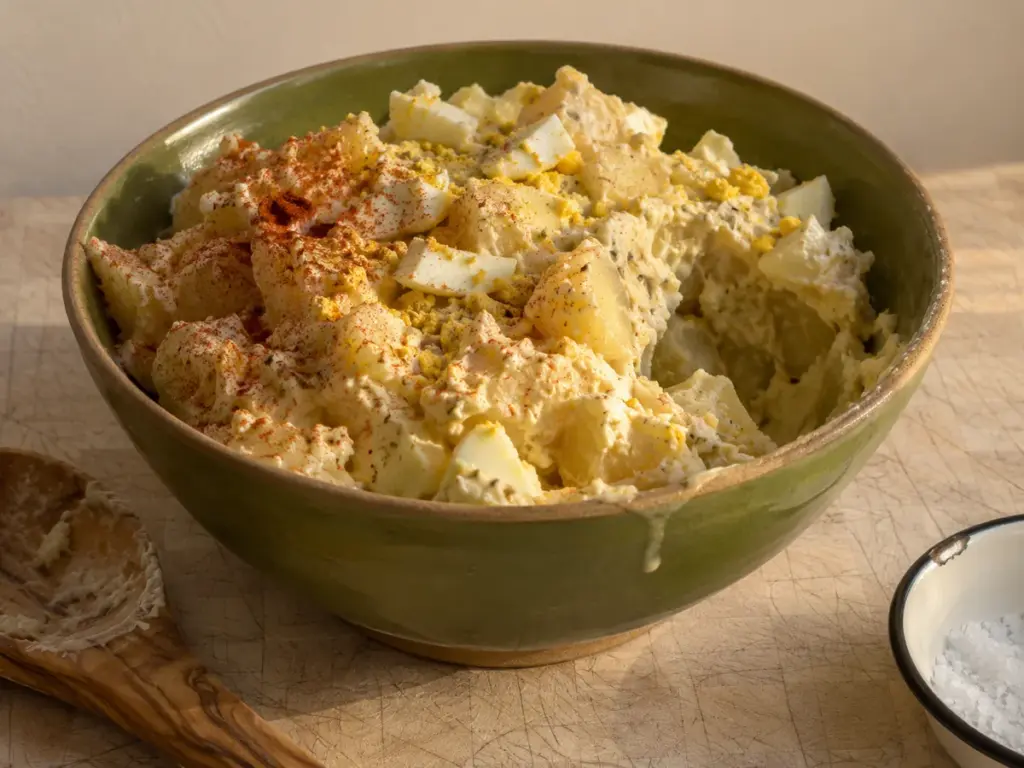
The mix has no paprika, so your food stays pale unless you add a pinch of paprika to bring the color back.
We would use this swap in potato salad and egg dishes, where the herbal note fits, and we would start with a little less celery than the recipe asks for.
4. Onion Powder with Salt and Paprika
If you have neither garlic salt nor celery salt, 1 teaspoon fine salt, ¼ teaspoon onion powder and ¼ teaspoon paprika make a plainer version of the mix in item 1. It is the item 1 ratio with the garlic powder left out, an adjustment of ours that no published recipe backs, so a taste before serving is worth it.

Plain onion powder is the right jar here, because onion salt carries table salt that would double up with the salt you measure. You get a milder result, with no garlic bite and the same paprika color, which suits dishes where garlic would compete.
5. Lemon Pepper
IngredientSubstitutes.com gives the same amount of lemon pepper as seasoned salt and tells you to taste for salt, because salt content varies widely by brand.
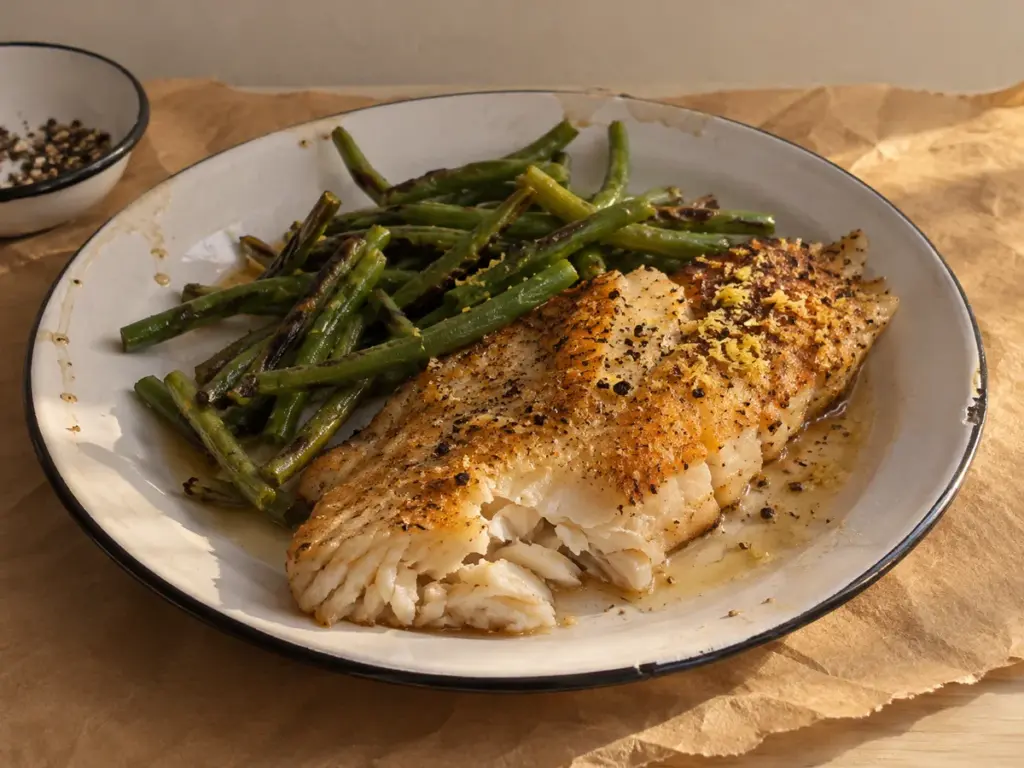
You cannot tell the salt level from the jar, so we would start with half the amount and work up. The National Kidney Foundation lists lemon pepper among the salt-containing seasonings to limit on a low-sodium diet.
The flavor moves toward bright citrus and black pepper and away from garlic and paprika. That direction suits chicken, fish and green vegetables (IngredientSubstitutes.com).
6. Herbes de Provence with Salt
Herbes de Provence is an herb blend, so it replaces the savory flavor and none of the salt, which means you pair it with 2 teaspoons of plain salt per tablespoon of seasoned salt, the amount that matches the saltiness. We'd add the herbs a pinch at a time until you see flecks on the food.
The 2 teaspoons of salt follow IngredientSubstitutes.com's plain-salt ratio, and pairing that salt with the herbs is our suggestion. If you have no jar, you can mix thyme, oregano, rosemary and basil as a stand-in.

Brands differ in which herbs they use. With no paprika or sugar in the blend, the food comes out paler and less sweet than with the original, so you will get better results on roasted chicken and potatoes than on a dish that relies on the seasoned-salt color.
How Do You Make a Batch of Homemade Seasoned Salt?
The Daring Gourmet's copycat recipe makes about ½ cup, or 24 one-teaspoon servings, and its recipe card lists these ingredients.
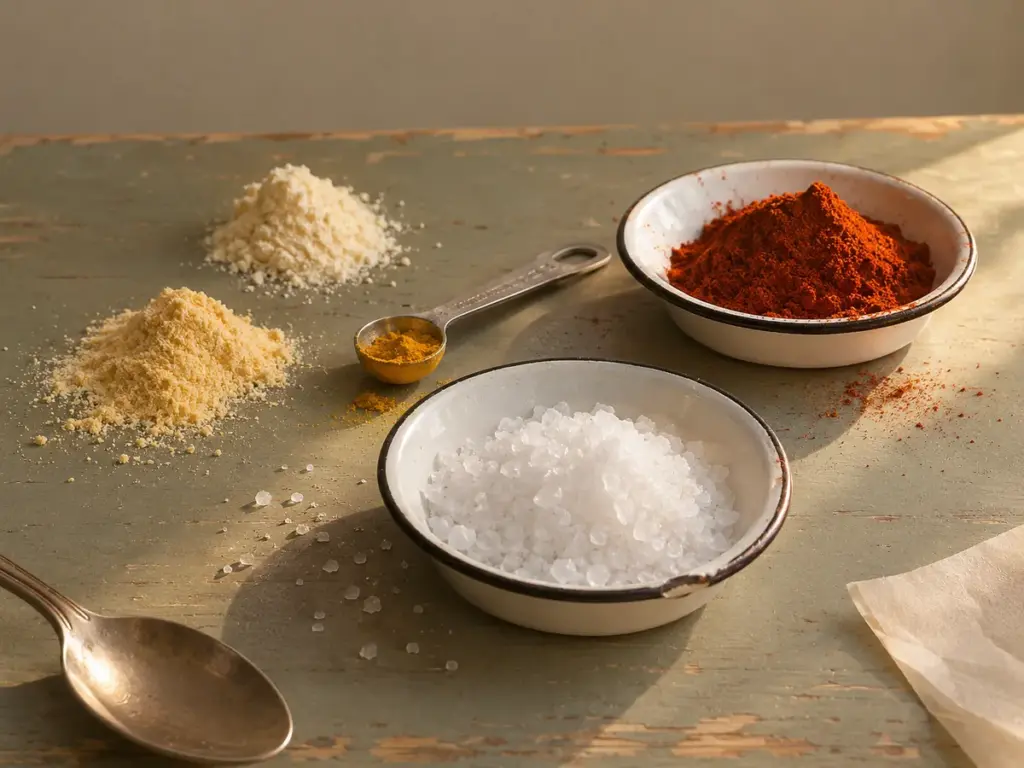
- ¼ cup kosher salt
- 1 tablespoon sweet paprika (not hot)
- 1 tablespoon white sugar
- 1½ teaspoons garlic powder
- 1½ teaspoons onion powder
- ¾ teaspoon freshly ground black pepper
- ½ teaspoon ground mustard
- ½ teaspoon ground turmeric
- ¼ teaspoon cayenne pepper
- ⅛ teaspoon celery seed
- 1 teaspoon cornstarch (optional, to prevent caking)
If you run the blend through a spice or coffee grinder, it comes out fine enough to pour evenly from a shaker. In an airtight jar kept in a cool, dark place, it lasts several months, according to the recipe card.
The author suggests it as an all-purpose shake and on oven-baked French fries and potato wedges.
How Do You Cut the Sodium in Seasoned Salt?
The National Kidney Foundation (NKF) advises that an item with salt among its first five ingredients is probably too high in sodium, and it counts 140 mg or less per serving as low sodium. Seasoned salt lists salt first, so you cut sodium by cutting the salt.
- Lawry's 25% Less Sodium Seasoned Salt lists 270 mg per ¼ teaspoon on retailer listings of its label, and its ingredients include potassium chloride (see the potassium note below if you limit potassium).
- A blend with no salt keeps the garlic, onion and paprika and drops the salt altogether.
- Garlic powder, onion powder and paprika carry almost no sodium, as the table shows.
| Ingredient | Sodium per teaspoon | Source |
|---|---|---|
| Celery seed | about 3 mg | FDC 170920 |
| Garlic powder | about 2 mg | FDC 171325 |
| Onion powder | about 2 mg | FDC 171327 |
| Paprika | about 2 mg | FDC 171329 |
The per-teaspoon figures are rounded arithmetic, which means USDA sodium per 100 g times USDA grams per teaspoon.
If you want a blend with no salt, the NKF's guide prints an American Favorite Blend with no salt in its ingredient list, credited to Health Education Assc. Inc.: 5 teaspoons onion powder (not onion salt), 1 tablespoon each of garlic powder, paprika and dry mustard, 1 teaspoon thyme, ½ teaspoon white pepper and ½ teaspoon celery seeds, for about ¼ cup.
If you want flavor without the salt, the NKF advises no more than ¼ teaspoon of dried spices per pound of meat. Lemon, vinegar, herbs and garlic can also carry the flavor in place of salt, as in these low-sodium side dishes.
Which Swaps Only Work in a Pinch?
Plain salt alone matches the saltiness but not the aromatics, so you get plainer, paler food, which makes it the weakest choice for fries and dry rubs.
Adobo seasoning works at the same amount, but its oregano and black pepper push the taste herbal and peppery, and the turmeric in some blends can tint your food yellow (IngredientSubstitutes.com).
Sources
- Lawry's Seasoned Salt product page, McCormick: ingredient list
- Lawry's Seasoned Salt nutrition facts, ReciPal: 380 mg sodium per ¼ teaspoon (1.2 g)
- Lawry's 25% Less Sodium Seasoned Salt, Stop & Shop listing: 270 mg per ¼ teaspoon, potassium chloride
- USDA FoodData Central, table salt (FDC 173468), with garlic powder (171325), onion powder (171327), paprika (171329) and celery seed (170920)
- IngredientSubstitutes.com, Seasoned Salt Substitute: swap ratios
- The Daring Gourmet, Seasoned Salt: batch recipe, yield and storage
- National Kidney Foundation, Sodium and Your CKD Diet: label rules, salt-containing seasonings, salt substitutes, salt-free blend
- Ayach et al., Life-threatening hyperkalemia in a patient with normal renal function, Clinical Kidney Journal
- Wikipedia, Seasoned salt: common uses

Food writer at GustoMeadow. Writes ingredient substitutes, food comparisons, taste guides and storage guides for home cooks.
Storage and food-safety numbers follow USDA, FDA and university extension guidance.



