A ripe persimmon tastes honey-sweet, with a hint of apricot and date, and the type you pick decides how it eats.
- A Fuyu is crisp and mildly sweet, so you can bite into it firm like an apple.
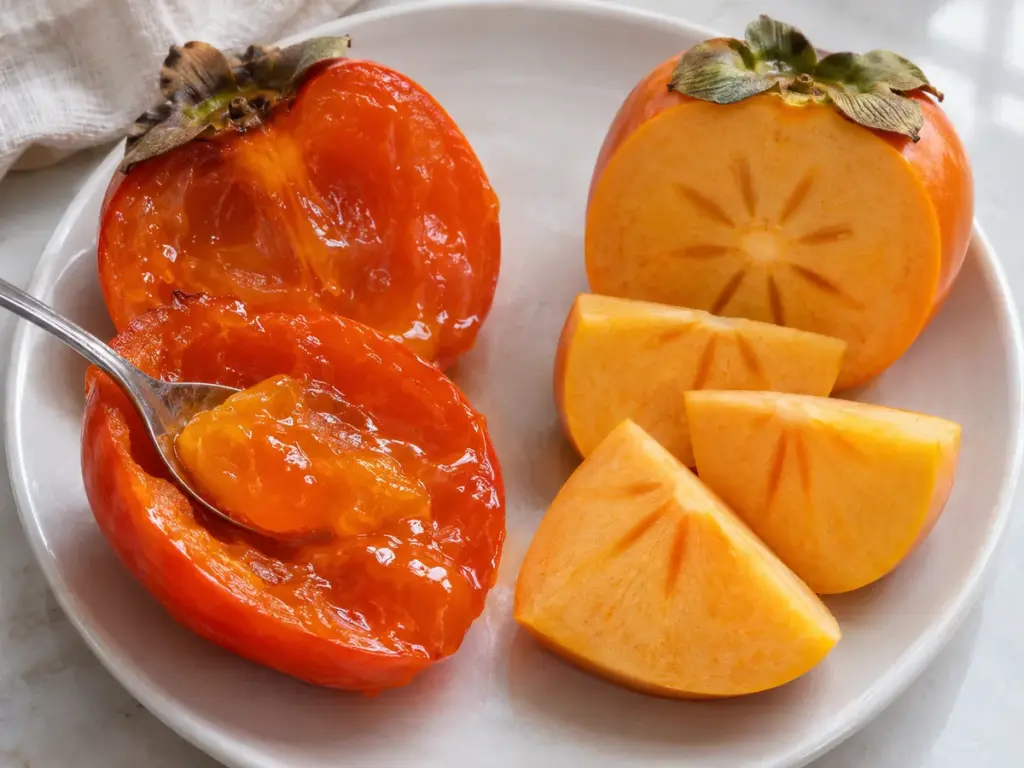
- A Hachiya is bitter and mouth-drying until it turns jelly-soft, and then it tastes like a sweet fruit pudding.
- Most people find a ripe persimmon very good.
Few fruits change as much from one variety to the next as persimmons do, and that is why how a food tastes can swing from delicious to harsh with one wrong pick at the store. Once you know which type is in your hand, you know whether to eat it now or wait.
1. What Does a Ripe Persimmon Taste Like?
People usually describe a ripe persimmon as honeyed and mild, closer to a soft apricot or a date than to a tart fruit, much like ripe fresh figs. Fresh jujube, sometimes called a Chinese date, has a crisp, apple-like bite that resembles a firm Fuyu. The texture changes with the type, so here is what you get from each one:
- Lightly sweet when firm, and sweeter as it softens.
- Crunchy like a firm apple when firm, and jelly-like once fully ripe.
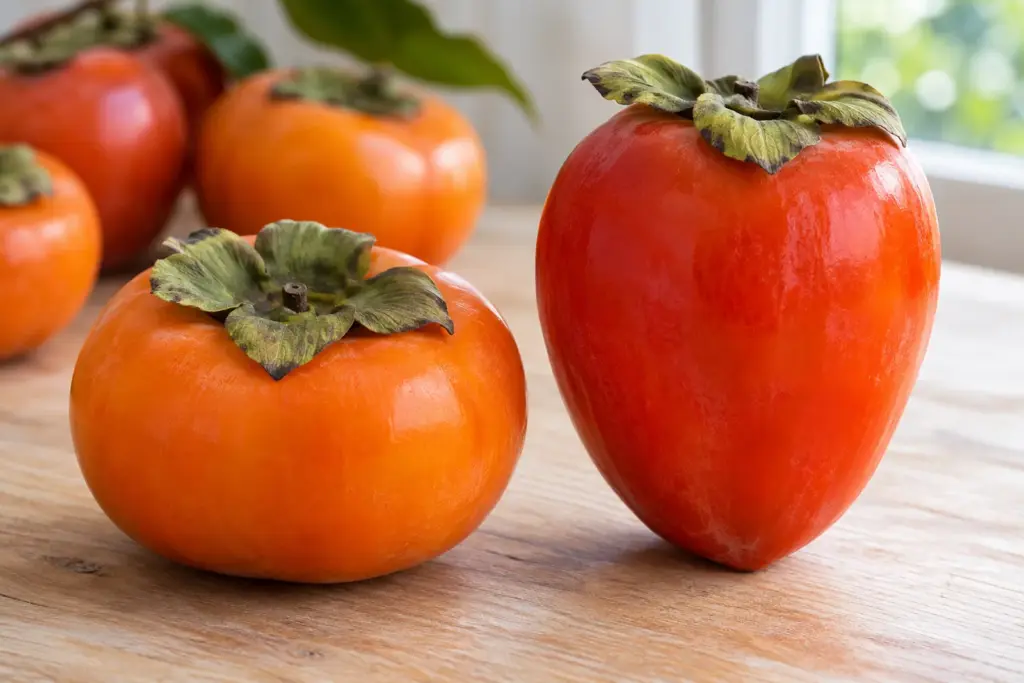
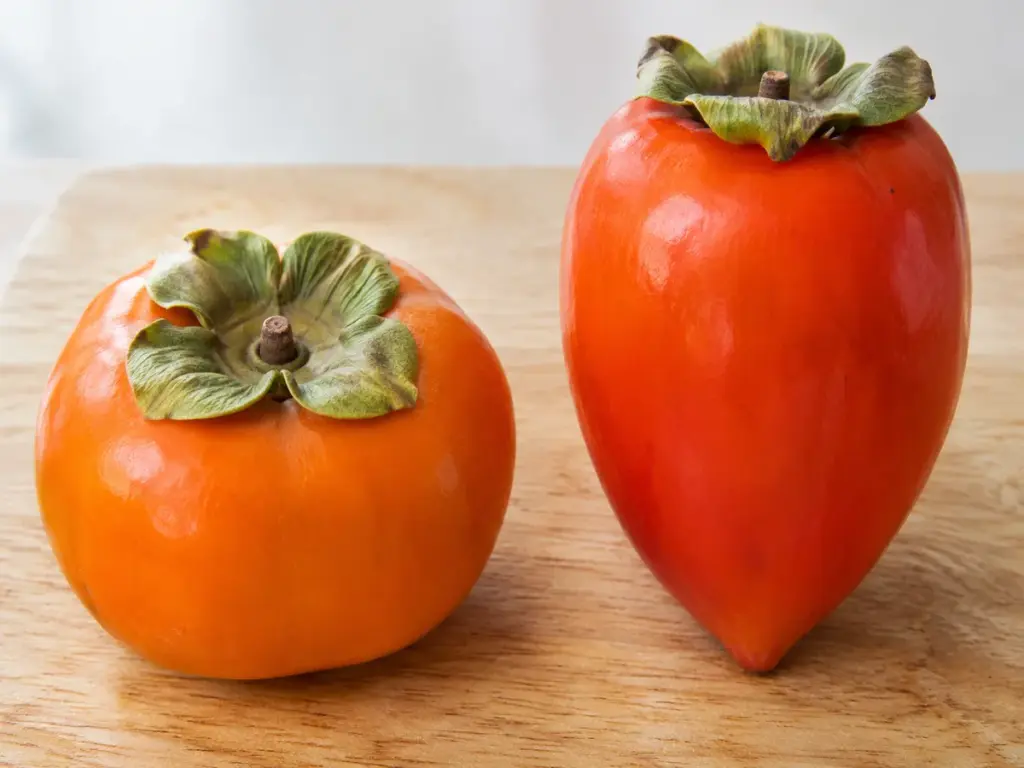
- Squat and flat, like a small orange tomato.
- Bitter and tannic until it is soft, then sweet with a gelatin-like pulp.
- Pudding-soft inside when ripe, which you scoop with a spoon.
- Acorn-shaped, taller and longer than a Fuyu.
A properly ripe Hachiya is the sweeter of the two. UC Davis's postharvest standards set a sugar target of 21 to 23% soluble solids for Hachiya and 18 to 20% for Fuyu, so you give up a little sweetness when you choose the crisp one, and you gain the freedom to eat it right away.
2. Why Does an Unripe Persimmon Make Your Mouth Pucker?
The pucker comes from tannins, the same family of compounds that dries your mouth when you drink strong black tea. Astringent types such as Hachiya are full of soluble tannins while they are firm, and those tannins turn into an insoluble form as the fruit softens, which is why a ripe Hachiya stops tasting harsh.
Non-astringent types such as Fuyu and Jiro hold little or no tannin, so you can eat them crisp. That is the whole difference between the two, and it is why the Hachiya's soft stage is the only stage you want to eat.
3. How Do You Tell a Hachiya From a Fuyu?
These two are the persimmons most widely grown in the U.S., and the shape is the quickest way to tell them apart at the store. Other varieties follow the same split, with Tanenashi on the astringent side and Jiro on the non-astringent side.
| Trait | Fuyu | Hachiya |
|---|---|---|
| Shape | Squat and flat, like a tomato | Acorn-shaped, taller and longer |
| Astringent? | No | Yes, until it is fully soft |
| When to eat it | Firm or soft, your choice | Only when jelly-soft |
| Texture | Crunchy when firm, jelly-like when fully ripe | Soft, pudding-like pulp |
| Best uses | Eating out of hand, salads, baking when very ripe | Spooning, muffins, cakes, bread, jam, sorbet |
A firm, blemish-free persimmon is a good buy only if it is a Fuyu, because a firm Hachiya is simply unripe.
4. How Do You Ripen a Hachiya?
Stores often sell Hachiyas while they are still firm, so you will probably need to ripen yours at home. Follow these steps:
- Set them out. Put the fruit in one layer on the counter, stem side down, at cool room temperature. This usually takes several days to a week.
- Speed it up if you need to. Seal 3 or 4 persimmons in a paper bag with one apple or banana in a warm spot. The ethylene gas from the apple softens them in about 2 to 4 days.
- Check them daily. A ripe Hachiya is deep orange to red and feels heavy and squishy, like a water balloon.
- Eat or chill it. Scoop it out with a spoon once it is soft, or move it to the fridge so it stops ripening.
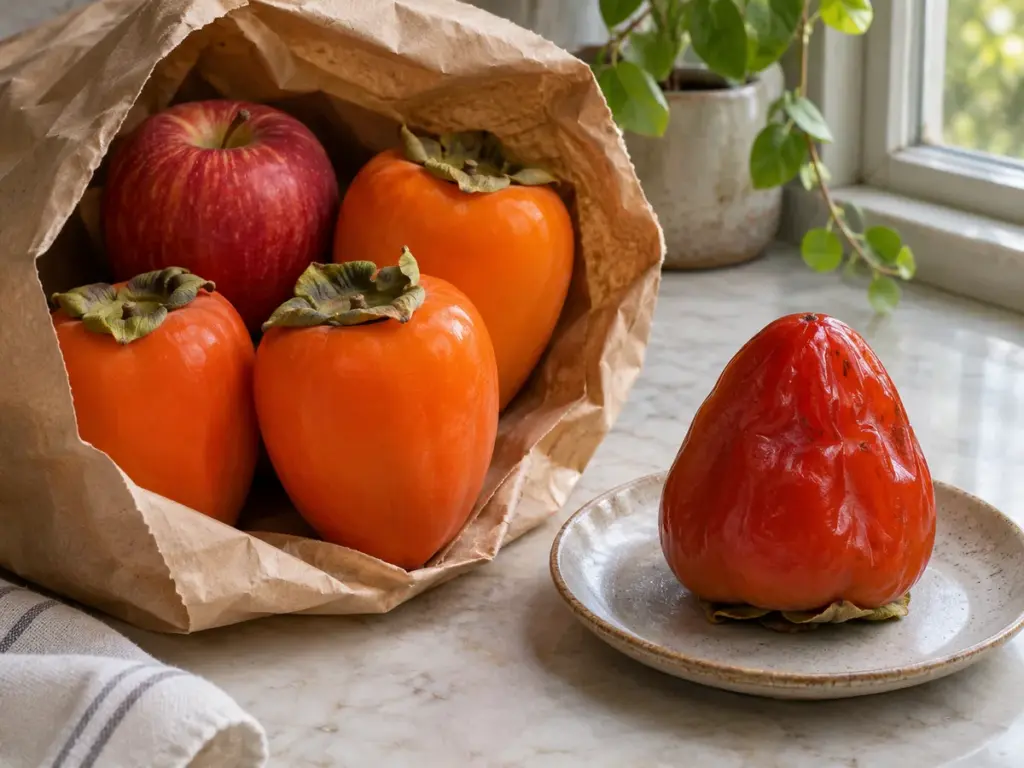
Do not rush the last step. If you eat a Hachiya before it is soft all the way through, it can still taste strongly of tannins. Black streaks on the skin are normal and do not mean the fruit has gone bad.
If you do not want to wait, you can freeze an unripe Hachiya for about a day and then thaw it. The University of Florida says this lowers the astringency, but the fruit turns soft and slightly brown, so you should use it in baking or purees, not for eating fresh.
5. How Do You Eat and Cook With Persimmons?
Each type has a job, and matching the fruit to the job makes the difference between a crisp salad and a messy one:
- Fuyu, raw. You can eat it like an apple, skin and all, or slice it thin into salads, where it pairs with the crisp sweetness of ripe pears. If the skin feels tough on yours, peel it.
- Hachiya, by the spoon. You cut a soft one in half and scoop out the pulp, or you spread it on toast.
- Either type, baked. Muffins, cakes and quick bread all work, and a very ripe Fuyu blends into jam and smoothies.
- Hachiya, frozen. If you freeze a ripe one and let it thaw slightly, it turns sorbet-like.
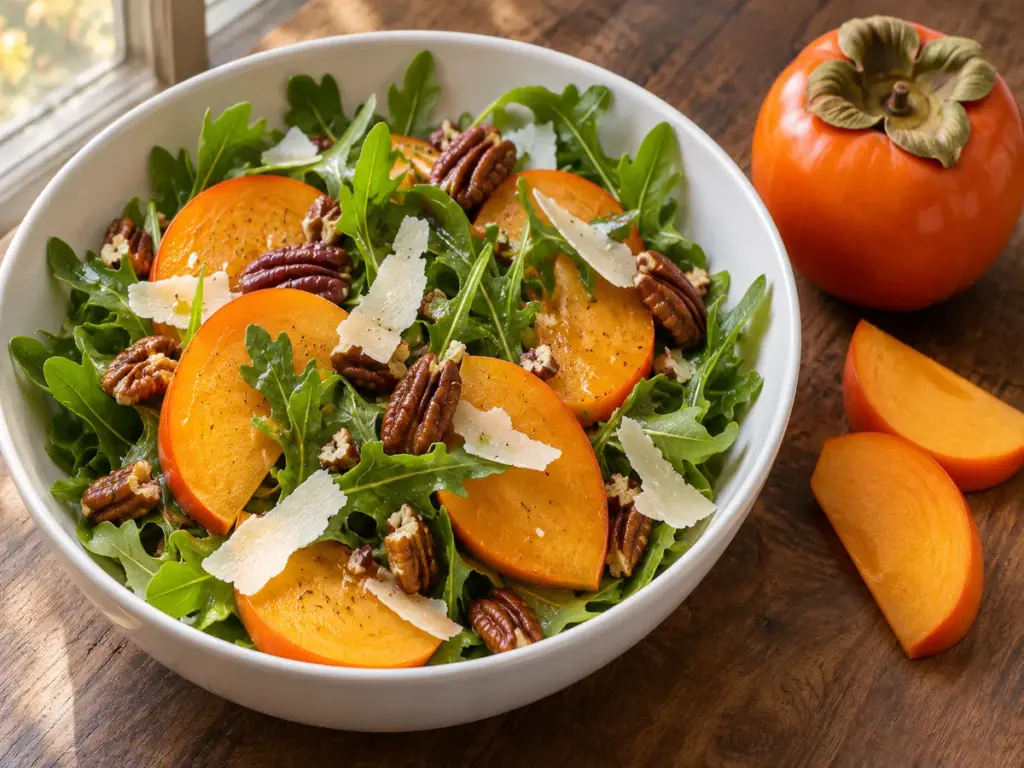
Persimmons are seasonal, so when your store has none, ripe plums or quince are the usual stand-ins for persimmon in cooked dishes. A ripe plum brings similar juicy sweetness with a tart edge near the skin. Quince is hard and sour raw, so it needs slow cooking before it turns soft and sweet.
6. How Do You Pick and Store Persimmons?
What you look for depends on what you plan to do with the fruit:
- For a Fuyu you will eat soon, pick deep orange fruit with smooth skin and no blemishes. It is ripe when you buy it, so it should feel firm.
- For a Hachiya you want to eat today, pick a soft, heavy one with rich color and a green calyx, the leafy cap. If you want it later, a firm one is fine, because you will ripen it at home.
Firm persimmons keep in the fridge for 1 to 2 months in a ventilated bag, according to the extension sources we checked, and you can freeze them for 6 to 8 months. Use a container that lets air in, because an airtight one invites mold. Once a Hachiya is soft, eat it soon.
Sources
- UC Davis Postharvest Technology: Persimmon
- University of Florida IFAS: Alleviating Astringency in Persimmon Fruit (HS1483)
- University of Florida NFREC: Persimmon strategies
- eXtension Ask an Expert: Persimmon varieties, ripening and storage
- FoodPrint: Persimmon
- Case report on persimmon bezoar (PubMed Central)

Food writer at GustoMeadow. Writes ingredient substitutes, food comparisons, taste guides and storage guides for home cooks.
Storage and food-safety numbers follow USDA, FDA and university extension guidance.