
Kibbeh is bulgur with ground lamb or beef, and falafel is ground chickpeas or fava beans, so kibbeh is meat and falafel is not.
- Kibbeh is a fried or baked shell around spiced meat; raw kibbeh nayyeh also exists.
- Falafel is deep-fried soaked beans and herbs, the easy pick for vegetarians.
- Cook kibbeh made with raw meat to 160°F inside.
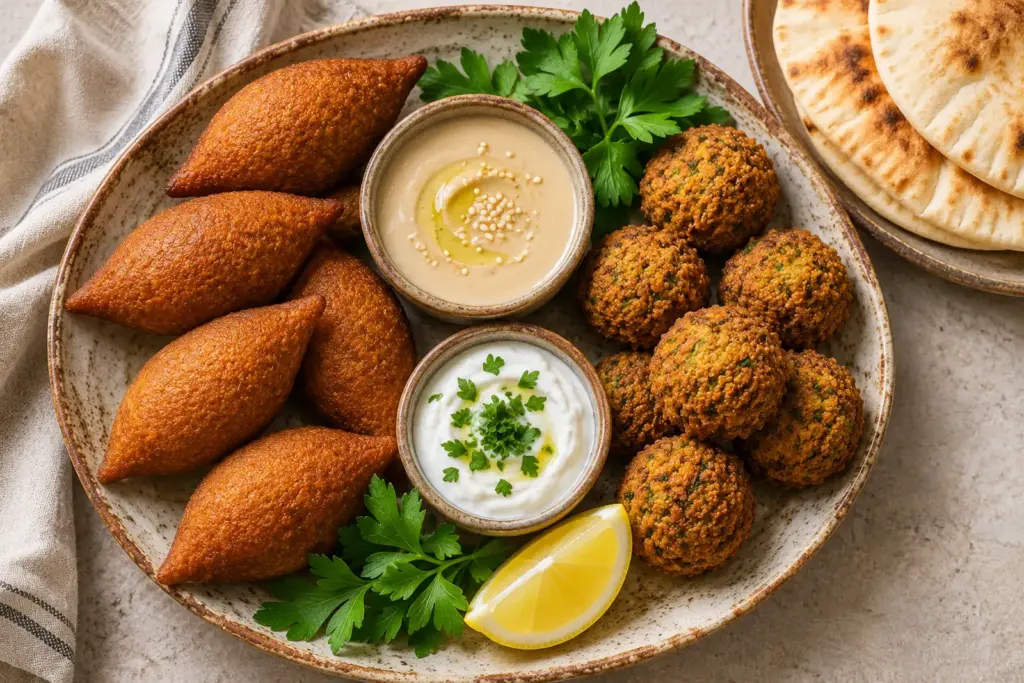
Both are fried, spiced and served on the same mezze platters, so cooks mix them up, and plenty of look-alike food comparisons start with exactly this kind of pair. They split on the point that matters at a mixed table: kibbeh contains meat and bulgur, falafel contains neither.
1. What Is the Difference Between Kibbeh and Falafel?
The two dishes share spices and a fryer, and little else. This table lines up what changes on your plate and in your kitchen:
- It is made from fine bulgur and very finely ground lamb or beef, with onion and spices.
- It contains meat.
- It is made from ground chickpeas, fava beans or both, with parsley, garlic, cumin and coriander.
- It contains no meat.
- Kibbeh is a hollow torpedo around a filling, a tray bake, a patty or a raw paste, while falafel is shaped into balls or patties.
- Kibbeh is deep-fried, baked, grilled, simmered in yogurt sauce or served raw, while falafel is deep-fried or baked in the oven.
- Kibbeh has a crisp shell and a dense, meaty inside, while falafel is crisp outside and moist and crumbly inside.
| Trait | Kibbeh | Falafel |
|---|---|---|
| Usual serving | Mezze or main dish with a yogurt sauce | Pita sandwich with tahini sauce and pickles |
| Home region | The Levant, a national dish of Lebanon and Syria | Most likely Egypt, made with chickpeas across the Levant |
The second row settles most decisions, because one dish needs a meat thermometer and the other does not. The rest of the table decides how much work you sign up for and what ends up next to it on the plate.
2. What Is Kibbeh Made Of?
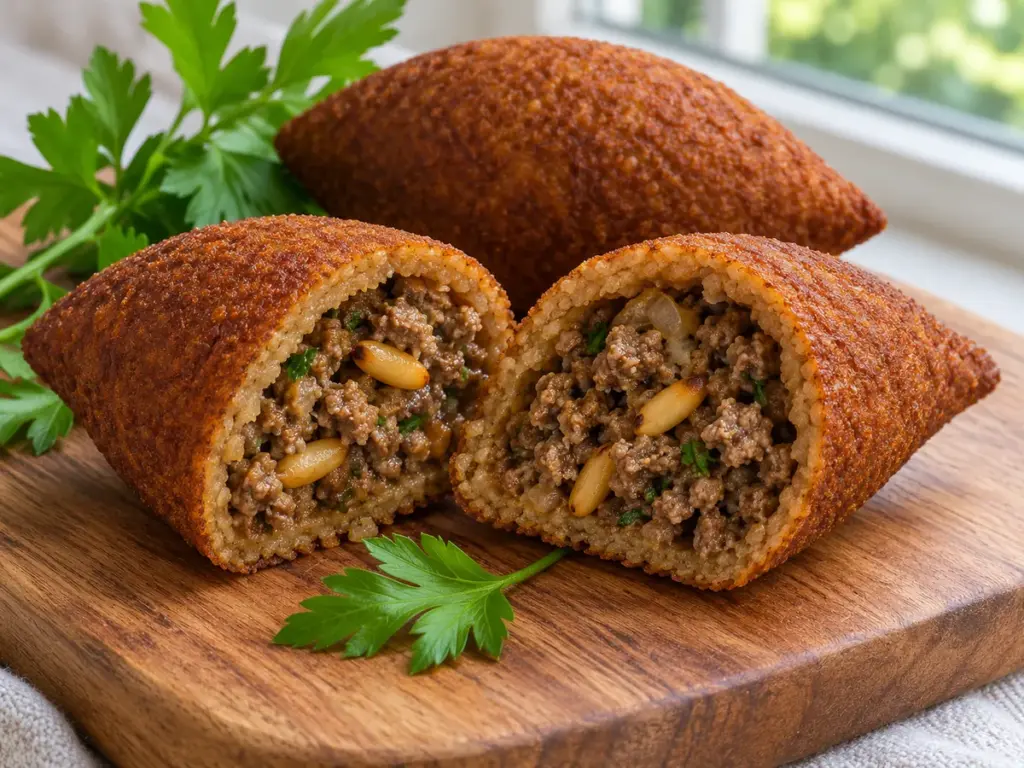
Kibbeh is a dough of fine bulgur and very finely ground lamb or beef, worked with onion and spices such as cinnamon and allspice until it holds together.
Grain size decides whether it holds. Milk Street's beef kibbeh recipe calls for fine bulgur because it makes a mixture that sticks together, and if you only have medium or coarse bulgur, it says to grind it in a spice grinder for 10 to 30 seconds. Bulgur is wheat that has been parboiled, dried and cracked, so it behaves differently from plain cracked wheat in a dough.
You will meet the same dough in several forms, so a menu that says kibbeh can mean quite different dishes:
- Fried kibbeh is a torpedo-shaped shell sealed around spiced minced meat and toasted pine nuts, then deep-fried until crisp.
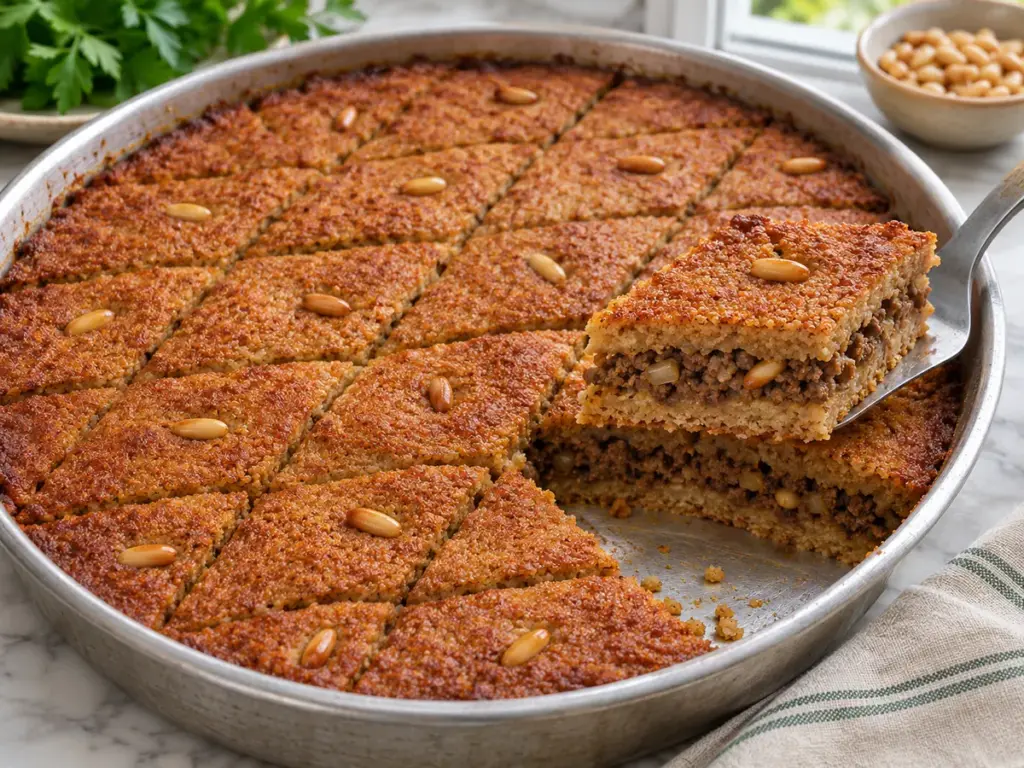
- Kibbeh bil siniyeh bakes a layer of meat filling between two layers of dough in a tray, so you skip shaping each piece by hand.
- Kibbeh nayyeh mixes bulgur with raw, very finely minced lamb or beef, much like steak tartare, and comes with mint, olive oil, green onions and bread.
- Kibbeh labaniyeh simmers in a yogurt sauce and goes over rice, and kibbeh mishwiyyeh is grilled instead of fried.
If you choose lamb, expect a stronger, more savory flavor than beef gives, because ground lamb's taste comes through the spices. The filling also carries toasted pine nuts, and pine nut stand-ins such as toasted walnuts or almonds cover for them when the price stings.
3. What Is Falafel Made Of?
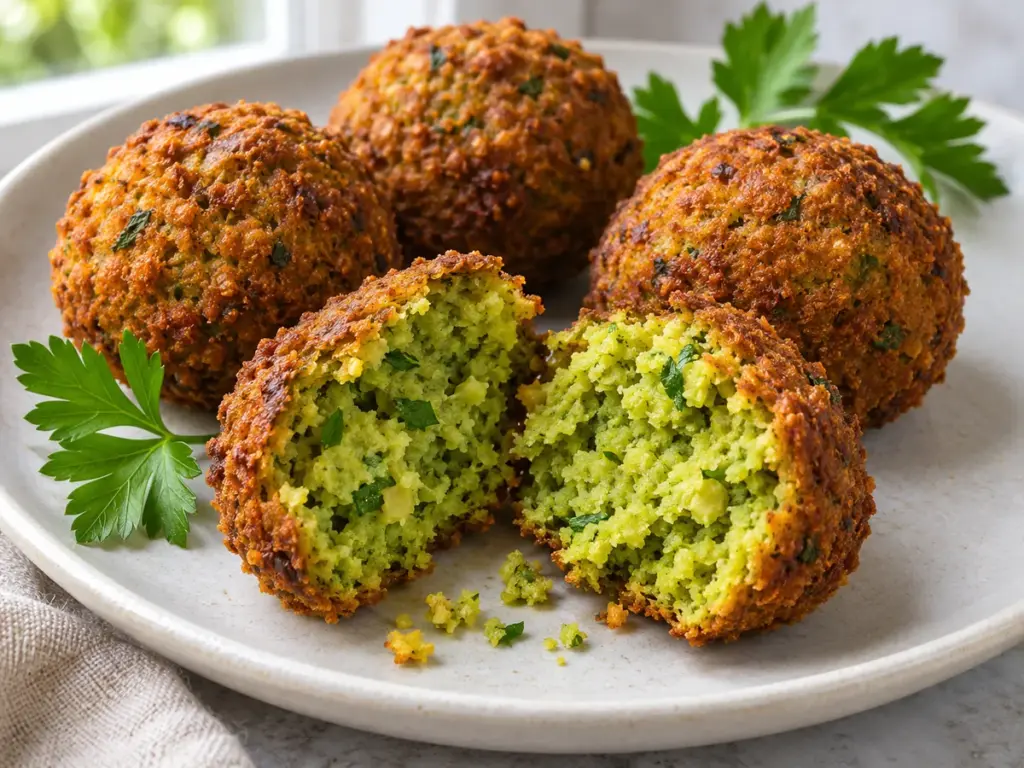
Falafel is ground dried chickpeas, fava beans or a mix of both, blended with parsley, scallions or leek, garlic, cumin and coriander, then shaped into balls or patties and deep-fried.
The bean depends on where you are. Egyptian ta'ameya uses fava beans, Israeli and Palestinian falafel uses chickpeas, and Jordan, Lebanon and Syria use chickpeas or a mix. The chickpea version is the one you will meet most in the United States, and the inside runs green when the herbs are plentiful.
Soak dried chickpeas and never cook them first. Cooked chickpeas turn the mixture to mush that falls apart in the oil, which is why recipes that start from cooked beans often add flour as a binder. Canned chickpeas are already cooked, so they have the same problem. Alton Brown's falafel recipe on Food Network shows the whole method, and you can follow it step by step:
- Soak overnight. Cover 1 pound of dried chickpeas with cold water by about 2 inches.
- Pulse, do not puree. Process the soaked chickpeas in two batches, 10 to 20 pulses each, with parsley, garlic, scallions and toasted ground cumin and coriander.
- Scoop 1½ to 2 ounces for each ball, and rest them at room temperature for up to 2 hours.
- Fry at 350°F, four at a time, for 5 to 7 minutes until deep golden brown.
- Drain on a rack set over paper towels so the crust stays crisp.
You can also bake falafel in the oven, which avoids the high fat of frying.
4. How Do Kibbeh and Falafel Taste Different?
- Warm, savory and slightly sweet from lamb or beef with cinnamon and allspice
- Toasted pine nuts add a buttery crunch in the filling
- The bulgur gives a dense, slightly chewy shell
- Herby, nutty and garlicky with a cumin and coriander finish
- Chickpeas or fava beans give an earthy, mild center
- The inside crumbles, so it holds a sauce well
Kibbeh tastes like spiced meat, so what you notice first is richness. Falafel leads with parsley and cumin over a bean base, and how falafel tastes changes with how much spice and herb goes into the mix. That is why you nearly always get falafel with a sauce, while kibbeh can stand alone.
5. Which Is Healthier, Kibbeh or Falafel?
You cannot assume either one is the light choice. USDA FoodData Central lists home-prepared falafel at 333 calories, 13.3 g protein and 17.8 g fat per 100 grams, and a 2¼-inch patty weighs about 17 g (FDC 172455). The USDA database has no kibbeh entry, so no official number exists for it, and the real figure swings with how fatty the meat is and whether the pieces are fried or baked.
- Falafel: the fat comes mostly from the frying oil, so baking it cuts that number.
- Kibbeh: the fat comes from the meat and the oil, so lean lamb or beef and a baked tray version keep it lower.
- Bulgur on its own is light: cooked bulgur has 83 calories, 3.1 g protein and 4.5 g fiber per 100 g (FDC 170287).
Pick by cooking method, not by the name. A baked tray of kibbeh and a baked falafel tray both eat lighter than the fried versions.
6. Can You Use Falafel Instead of Kibbeh?
You can put falafel in kibbeh's place on a mezze table, because both are fried, hand-held and served with a sauce, but you lose the meat and the chewy bulgur shell, so a falafel will not fill a main dish the way kibbeh does. In a pita for a vegetarian, kibbeh cannot replace falafel, since the shell contains meat.
If you want the shell-and-filling format without meat, Lebanese cooks make meatless kibbeh with onions, walnuts and wheat, and a Lenten version layers pumpkin, onions, walnuts, chickpeas and spinach. Those use the same dough idea with different fillings.
7. Which Should You Make or Order?
- A vegetarian or vegan guest: falafel, with vegan hummus on the side, since it has no meat.
- A crowd with little prep time: baked kibbeh bil siniyeh, because you press the dough into a tray instead of shaping each piece.
- A sandwich or a lunch wrap: falafel, which fits into a pita with tomatoes, cucumbers and pickled vegetables.
- Children, pregnant guests or anyone with a weak immune system: falafel or fully cooked kibbeh, never kibbeh nayyeh.
- Cooking tonight on short notice: kibbeh, since falafel needs an overnight soak, as long as you have fine bulgur or a spice grinder for coarser grain.
8. What Do You Serve with Kibbeh and Falafel?
Kibbeh pairs with a yogurt-tahini sauce, lemon wedges and warm flatbread, as Milk Street serves it, and a tabbouleh salad cuts through the rich meat. A plate of fried kibbeh also takes cool, crunchy sides such as fattoush or a cucumber yogurt salad.
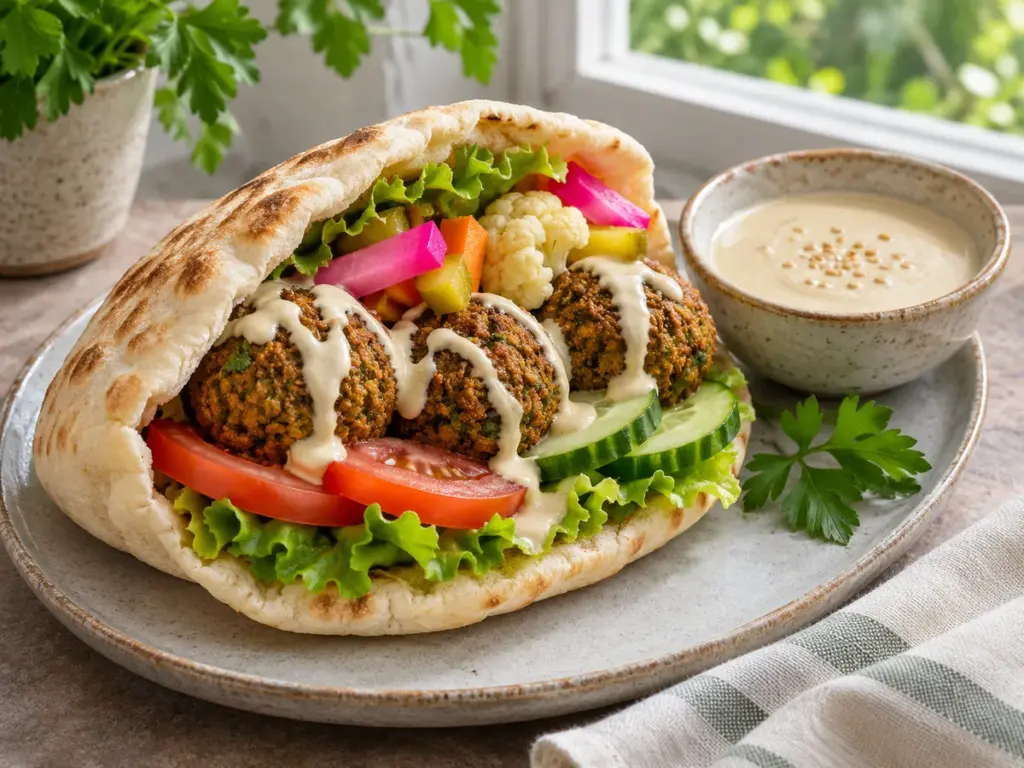
Falafel goes into pita or other flatbread with tomatoes, lettuce, cucumbers, pickled vegetables and tahini sauce, and many cooks add hot sauce. If you want something beyond tahini, a garlicky yogurt sauce is one of the falafel sauces beyond tahini that cuts the fried crust.
For a plate instead of a sandwich, serve the balls with pickled zucchini, hummus or tzatziki. A pocket pita holds several balls with the vegetables, while a flat flatbread has to be rolled around them.
Sources
- Wikipedia, Kibbeh: ingredients, forms (fried, bil siniyeh, nayyeh, labaniyeh, mishwiyyeh), vegetarian versions, national dish of Lebanon and Syria.
- Wikipedia, Falafel: chickpeas, fava beans, regional differences, soaking, flour binder, baking.
- Food Safety News, Kibbeh caution: raw recipes perfect for foodborne pathogens: USDA notice on raw kibbeh, 160°F, highest-risk groups.
- USDA FSIS, Color of Cooked Ground Beef as It Relates to Doneness: cook ground beef to 160°F and use a thermometer.
- Milk Street, Beef Kibbeh: fine bulgur, grinding coarser bulgur, serving with yogurt-tahini sauce and flatbread.
- Food Network, Alton Brown's Falafel: dried chickpeas, overnight soak, 350°F oil, 5 to 7 minutes.
- USDA FoodData Central, FDC 172455, Falafel, home-prepared and FDC 170287, Bulgur, cooked.

Food writer at GustoMeadow. Writes ingredient substitutes, food comparisons, taste guides and storage guides for home cooks.
Storage and food-safety numbers follow USDA, FDA and university extension guidance.



