
Chuck is the beef primal cut from the shoulder area, so the two overlap.
- A shoulder or arm roast is the leaner piece that slices cleanly.
- A blade or center-cut chuck roast has more marbling and falls into juicy shreds.
- You need hours of moist heat for both.
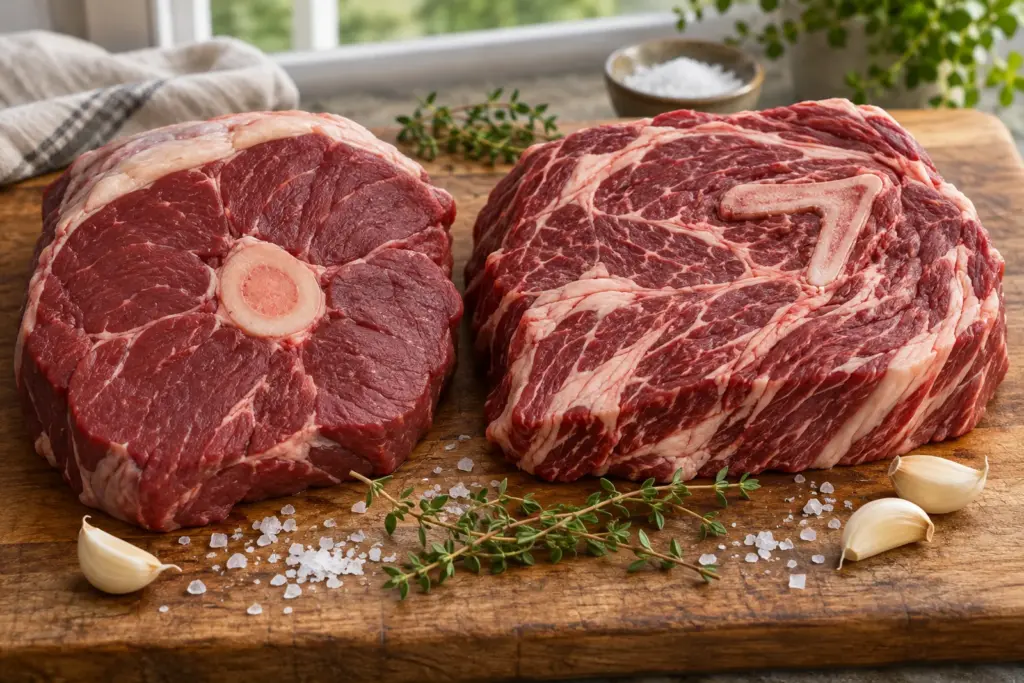
Because chuck already is the shoulder, you may find this pair one of the more confusing beef cut comparisons at the butcher counter. Stores label the same muscles differently, so the bone and the amount of white fat in the package tell you more than the name does.
1. What Is the Difference Between Beef Shoulder and Chuck?
The Beef Checkoff describes the square-cut chuck primal as the large cut from the shoulder area, known for rich, beefy flavor and slow-cooking roasts.
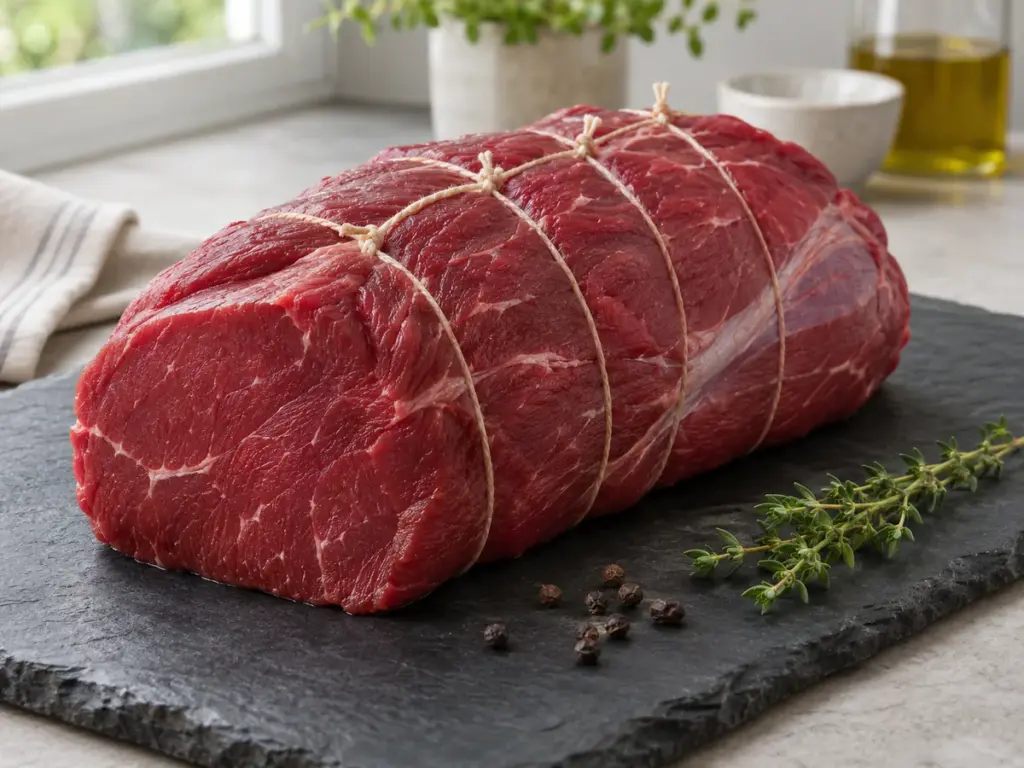
"Beef shoulder" is therefore a place on the animal, so when you see a roast labeled shoulder, it is usually an arm or shoulder clod piece from the front of that primal. Here is how those compare with the blade and center-cut roasts that most stores label "chuck roast":
| Trait | Shoulder (arm roast, shoulder clod) | Chuck roast (blade or center cut) |
|---|---|---|
| Where it sits | Around the upper foreleg and the shoulder clod | Across the shoulder blade and the chuck roll near the ribs |
| Bone | One large round arm bone, or none in a boneless clod heart | A flat, 7-shaped blade bone, or none in a boneless center cut |
- In 3 oz cooked, lean only and trimmed, it has 180 calories and 6 g fat (arm chuck roast).
- After braising it is firmer and slices into neat pieces.
- In 3 oz cooked, lean only and trimmed, it has 210 calories and 11 g fat (blade chuck roast).
- After braising it is softer and shreds with a fork.
The fat numbers come from USDA data for the trimmed lean meat only, so the whole roast, with its seams of fat, runs richer than 11 g. The gap between a lean arm roast and a marbled blade roast is the main thing you taste.
| Trait | Shoulder (arm roast, shoulder clod) | Chuck roast (blade or center cut) |
|---|---|---|
| Methods the Beef Checkoff lists | Oven roasting, braising, pressure cooking | Braising, pressure cooking |
| Cost | Listed as economical | Listed as a value cut with rich flavor |
The Beef Checkoff lists a shoulder roast as cut from the shoulder clod and sold as pot roast, while a center-cut chuck roast comes from the chuck roll.
2. What Do the Labels at the Store Really Mean?
Names for these cuts vary from store to store, and one piece of beef shoulder can be sold as a shoulder roast, a clod roast or an arm roast. Even chuck shoulder roast on a label only tells you the meat came from this area of the animal.
The Beef Checkoff names below are the ones to match against the bone and fat in the package:
- Chuck arm roast, also called arm pot roast, is named for the arm bone (humerus) it contains. It is lean and bone-in, so it needs slow cooking.
- Shoulder clod heart, sold as shoulder roast or clod heart, is the largest part of the shoulder clod. Butchers cut it into arm roasts, arm steaks and ranch steaks, and trim thick connective tissue.
- 7-bone chuck roast is cut across the shoulder blade, and that cut leaves the 7-shaped bone it is named for.
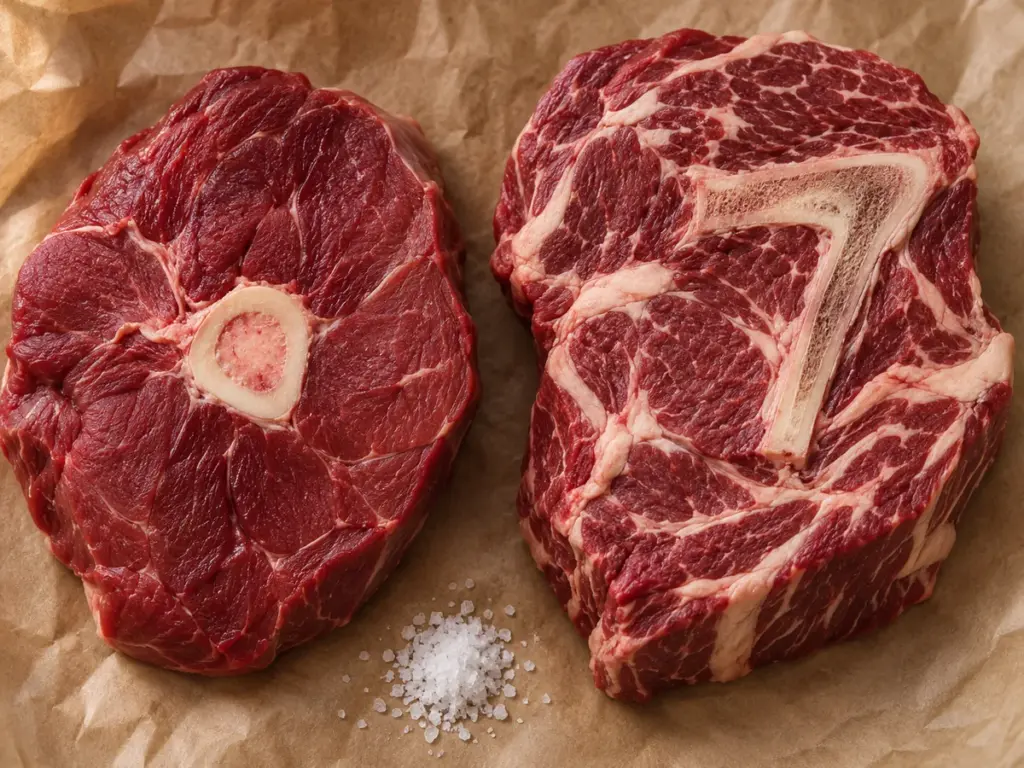
- Chuck roast, also sold as chuck center roast or pot roast, comes from the center of the chuck roll, the boneless section next to the ribeye end.
Cross rib roast, also sold as an English cut roast or shoulder center roast, sits next to the arm and spans ribs 2 through 5. If you see an English roast, the name can mean either piece, since the Beef Checkoff files it under the shoulder clod and some charts file it under the cross rib.
3. How Do Shoulder Clod, Chuck Roll and Chuck Eye Differ?
The square-cut chuck splits into sections, and two of them supply the roasts in this comparison: the shoulder clod and the chuck roll.
Over the arm, the clod gives you the lean roasts. Toward the rib end, the roll holds the center-cut chuck roast, the chuck eye and the under blade.
| Section | Cuts you see in the case |
|---|---|
| Shoulder clod (NAMP 114) | Arm roast, clod heart roast, arm and ranch steaks, top blade, flat iron |
| Chuck roll (NAMP 116A) | Center-cut chuck roast, chuck eye roll and steak, under blade |
At the rib end of the chuck eye roll you get the chuck eye steak, which differs from a plain chuck steak in being tender enough to grill.
4. How Do the Texture and Marbling Compare?
Both cuts come from shoulder muscles that work all day, so both are packed with connective tissue and neither is tender raw.
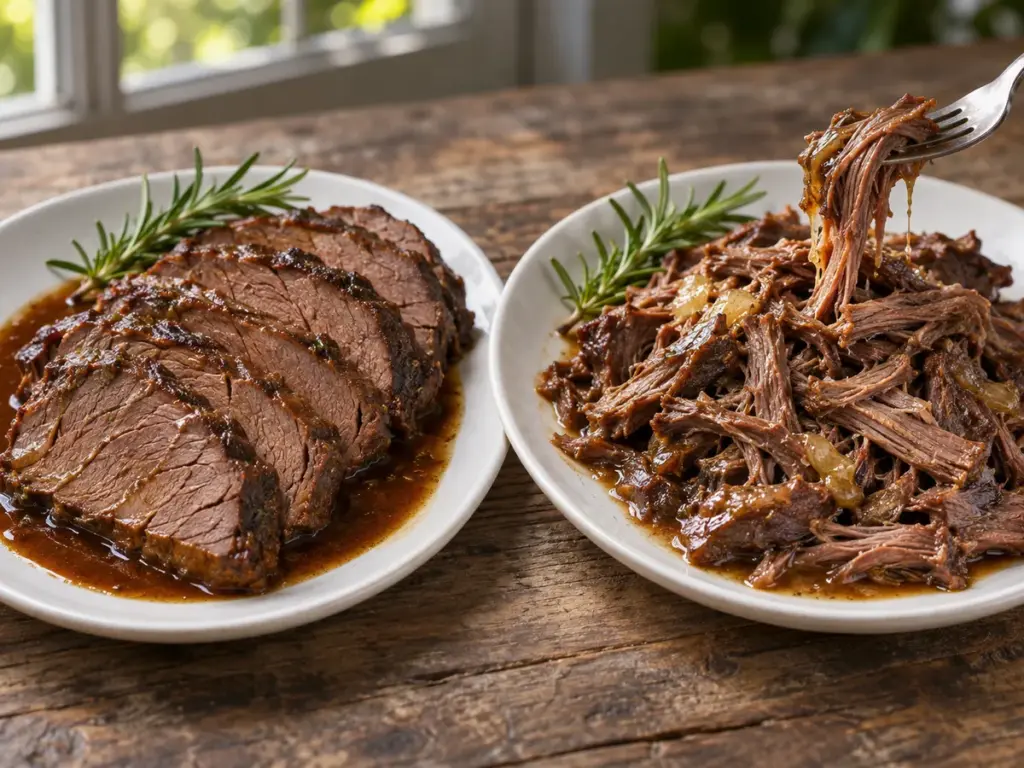
The difference you notice at the table comes from the fat. An arm roast has less marbling and finishes firmer, so it holds a slice, while a blade roast has more fat running through it and breaks into moist shreds.
USDA grade shifts this as well. If you buy a Select blade roast, it can finish drier than a Choice one, since USDA describes Select beef as leaner than Choice or Prime.
When you cook the meat slowly in moist heat, that connective tissue turns into gelatin. Cook's Country says collagen begins breaking down past 140°F and does it most efficiently in a moist setting around 200°F, which a covered pot in a low oven can hold for hours and a hot grill cannot.
One piece of the shoulder breaks the rule, because the top blade, part of the shoulder clod, holds the second most tender muscle on the animal. Butchers cut it into top blade and flat iron steaks, which are tender enough to grill or broil.
A chuck tender roast is another piece again, a small, lean muscle from the same primal that cooks differently from a big chuck roast.
5. How Should You Cook Each Cut?
Roasts from either cut cook best in a covered pot, and the cut you pick mostly sets how you serve the meat. Either roast works with braising or stewing, and the Beef Checkoff lists a pressure cooker for both as well.
- It braises whole, then you slice across the grain
- A covered oven roast with some liquid turns out firmer
- The meat dries out if you cook past fork-tender
- It braises until it falls apart, for tacos or sandwiches
- It cubes well for stew, where marbling keeps pieces moist
- You can skim the fat off before you make gravy
Cook's Country braises in a covered Dutch oven in a 300°F oven, and the method runs in four steps:
- Brown the roast. Sear all sides in the Dutch oven so the surface turns deep brown, which gives the liquid its flavor.
- Add liquid and cover. Pour in broth, wine or water, put the lid on tight, and slide the pot into the oven.
The Beef Checkoff braising chart gives a boneless 2.5 to 3.5 pound shoulder roast about 2¼ to 3¼ hours of covered simmering, so it makes sense to start testing near the two-hour mark.
- Cook low and slow. Hold the oven at 300°F and give it hours, not minutes, because the connective tissue melts slowly.
- Test with a fork. The roast is done when a fork slides in with little resistance. Take it out then, since an overcooked braise goes dry and stringy.
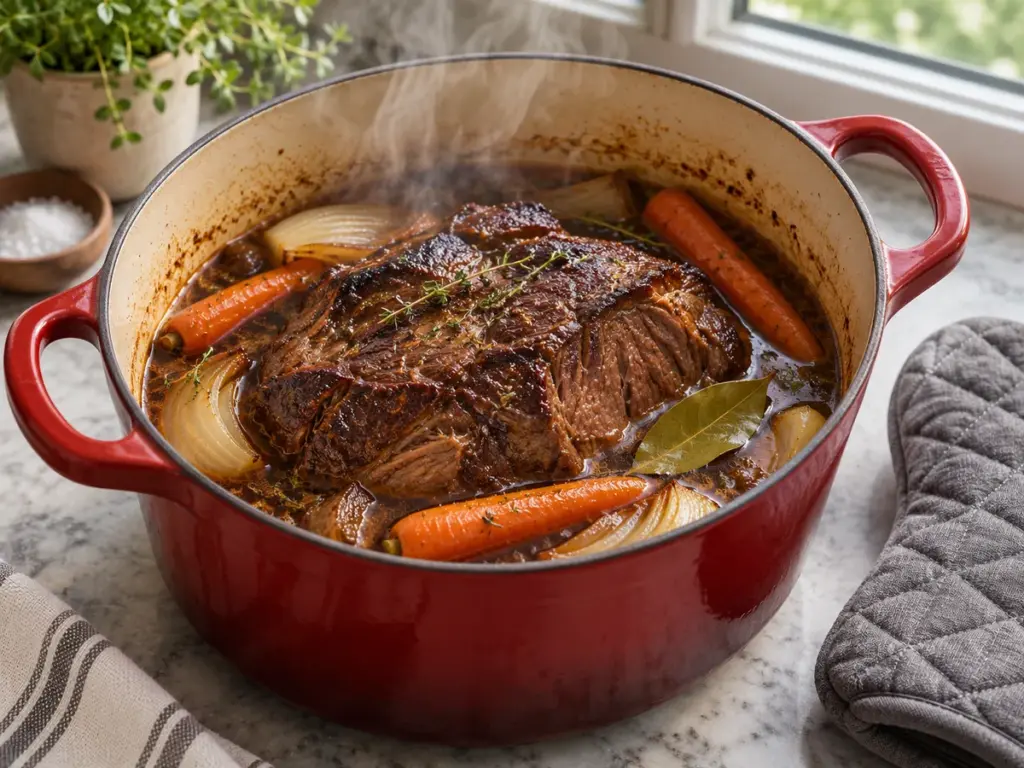
Whichever cut you buy, something that catches the gravy goes well alongside the pot roast, such as mashed potatoes or buttered noodles, plus other pot roast side dishes like roasted carrots. If you chop leftover roast into broth, you get a quick beef stew.
Hot, fast heat only suits the steak cuts, and a smoker needs the same long cook as a braise.
- On the grill, top blade and flat iron steaks go straight over the heat, and shoulder and chuck steaks go on after a marinade.
- In a smoker, a chuck roast taken to 160°F, wrapped, then cooked to 205°F pulls apart, per AmazingRibs.
6. How Do Shoulder Steak and Chuck Steak Compare?
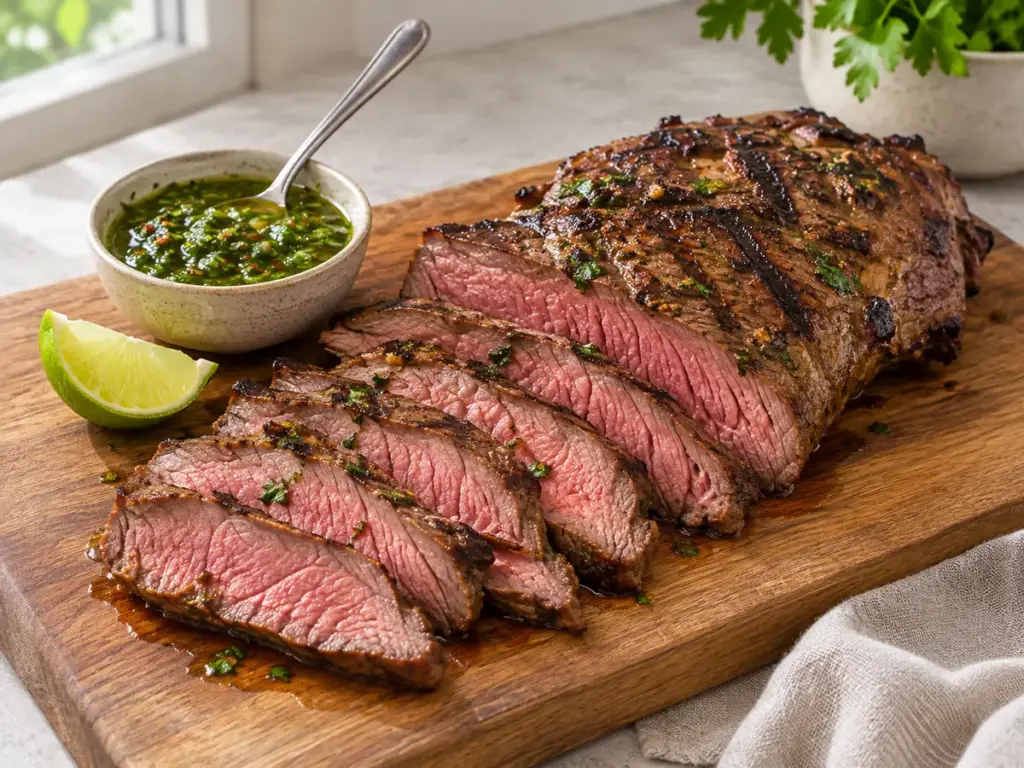
A shoulder steak, or arm steak, is cut from the shoulder clod's arm roast section, and the Beef Checkoff calls it an inexpensive chuck cut that needs slow cooking or a marinade before grilling.
- It comes from the leaner arm roast section
- It needs hours in a marinade before grilling
- It comes from the center of the chuck roll
- It has more marbling, so it eats juicier
The Beef Checkoff chimichurri shoulder steak marinates for 6 hours or overnight, then grills over medium coals for about 12 to 17 minutes.
Blade chuck steaks also need a marinade before grilling, while 7-bone chuck steaks are better slow-cooked.
A shoulder steak against a shoulder roast comes down to thickness: the steak finishes in minutes but stays chewy unless you marinate or braise it, and the roast needs hours.
7. Can You Grind Chuck or Shoulder for Burgers?
Yes, and stores already do it: ground chuck is ground from the chuck primal alone, so you know where the meat came from.
The primal name does not set the fat level, and the legal ceiling for any ground beef is 30 percent fat, so the lean-to-fat ratio on the label is the number to check.
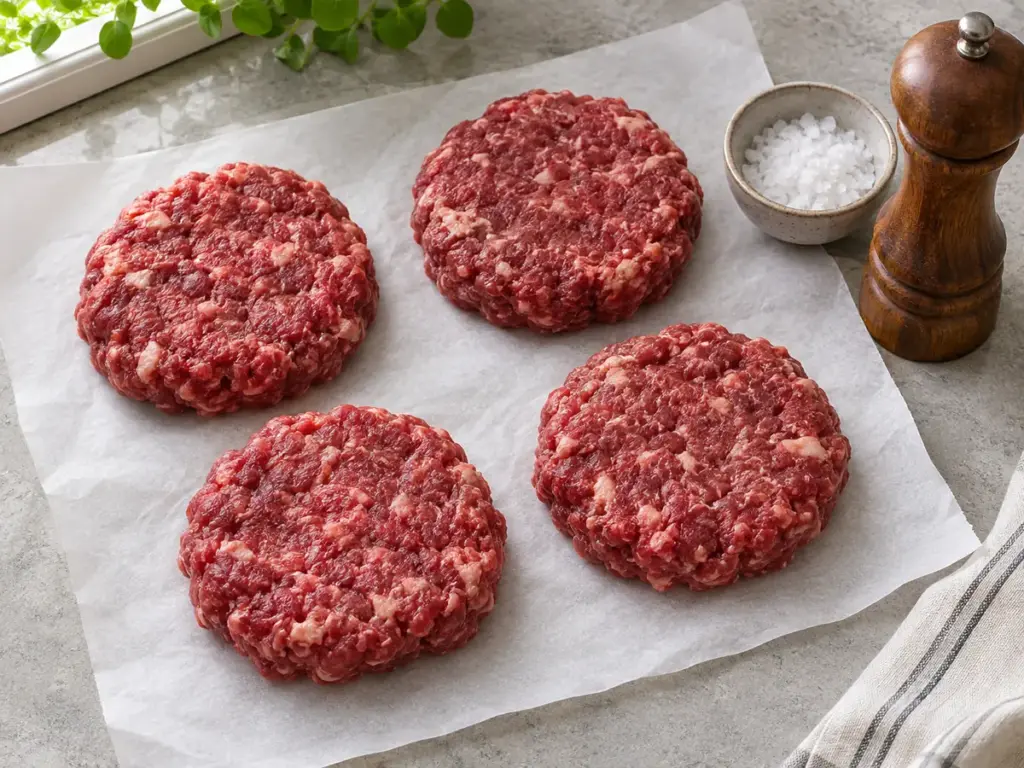
Because arm roast has about half the fat of blade roast in the USDA numbers above, a burger ground from arm roast alone will be leaner and can come out drier.
A ground chuck burger needs to reach 160°F inside, which is the USDA FSIS minimum for ground beef.
8. Can You Use Shoulder Roast Instead of Chuck Roast?
Yes, both are tough, collagen-rich roasts that want the same slow, moist cooking, so you can use either one in a recipe written for the other. The swap changes your result more than your method:
- Arm roast in a chuck roast recipe: you keep the same pot and oven temperature but test with a fork a little earlier. You will get cleaner slices and a lighter broth, and the meat will not shred as readily.
- Chuck roast in an arm roast recipe: you will get softer meat and a richer liquid, so you can skim the surface before you thicken the gravy.
Bone and name also change what you buy.
- When you swap bone-in for boneless, a bone-in roast gives you less meat per pound, so you should buy a little extra.
- When a recipe calls for clod heart or shoulder clod, a boneless arm or shoulder roast is the closest match, and a chuck center roast adds more fat.
If neither is in the case, you can make a pot roast with other chuck roast stand-ins. Either roast also works in a slow cooker or a pressure cooker, and you can compare the slow cooker and Instant Pot for timing.
9. Which Should You Buy?
Both are economical cuts in the Beef Checkoff listings, which leaves what you plan to put on the plate as the deciding question. Here is the cut to buy for the most common dinners:
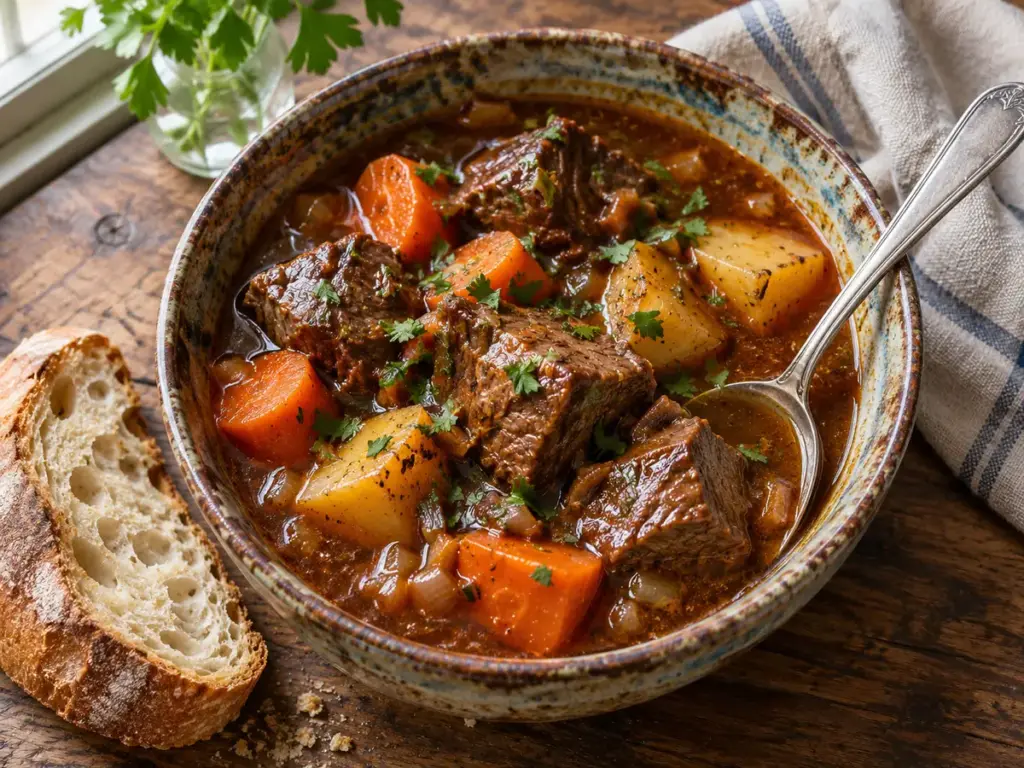
| You are making | Buy this | Why it wins |
|---|---|---|
| Sliced Sunday pot roast with gravy | Arm roast or shoulder clod heart | It is leaner and holds neat slices |
| Shredded beef for tacos or sandwiches | Blade or 7-bone chuck roast | More marbling keeps the shreds moist |
| Beef stew or chili con carne | Chuck roast, cubed at home | Marbling and collagen keep cubes tender |
- For a quick weeknight steak, top blade or flat iron steak grills fast because it is cut from the second most tender muscle.
- For burgers, ground chuck is the match, since it comes only from the chuck, with fat to keep patties juicy.
If you want a steak from the same primal, the chuck eye steak comes from the chuck roll, which extends the ribeye. For a faster-cooking cut, you can look at sirloin instead.
At the counter, you can check three things before you pay:
- The bone shape. A round bone means arm roast, and a flat 7 means a blade cut.
- The white seams. Thin lines of fat running through the meat mean a juicier, shreddable roast. A pale, bare surface means a leaner one.
- The thickness. A roast of even thickness lets the whole piece finish at once.
At home, the thick connective tissue on the outside is worth trimming, while the thin fat seams inside can stay, since they melt into the meat.
Once the roast is cooked, a few minutes on the board before you slice it is enough, in line with the FSIS 3-minute rest for whole cuts.
Sources
- Beef Checkoff, Square-Cut Chuck Primal: location, NAMP 113, cuts from the primal.
- Beef Checkoff, Shoulder Clod: NAMP 114, the five muscles, top blade (second most tender muscle, flat iron steaks) and clod heart.
- Beef Checkoff, Shoulder Clod Heart: names, trimming connective tissue, roast and steak uses.
- Beef Checkoff, Shoulder Roast: cut from the shoulder clod, pot roast name, oven roasting, braising and pressure cooking.
- Beef Checkoff, Chuck Arm Roast: names, arm bone, cooking methods, USDA nutrition for lean meat (NDB 23602).
- Beef Checkoff, Blade Chuck Roast: cooking methods, USDA nutrition for lean meat (NDB 13382).
- Beef Checkoff, 7-Bone Chuck Roast: the blade bone and slow-cooker use.
- Beef Checkoff, Chuck Roll: NAMP 116A.
- Beef Checkoff, Chuck Eye Steak: cut from the chuck eye roll, grilling and skillet methods.
- Beef Checkoff, Shoulder Steak: inexpensive chuck cut, slow-cook or marinate before grilling.
- Beef Checkoff, Chuck Steak: center of the chuck roll, grilling, braising and broiling.
- Beef Checkoff, Chimichurri Beef Shoulder Steak: marinating time and grill time.
- Beef Checkoff, Cross Rib Roast: English cut and other names, ribs 2 through 5.
- Beef Checkoff, Bottom Round Roast: round primal, oven roasting and braising.
- Beef Checkoff, Braising Time Guidelines: covered simmering time for a boneless shoulder roast.
- USMEF, Chuck Family: the chuck eye roll separates from the under blade section of the chuck roll.
- Texas A&M Animal Science, Making Some Sense Out of Ground Beef Labeling: primal-named ground beef, no set fat percentage, 30 percent fat limit.
- USDA AMS, Carcass Beef Grades and Standards: Prime, Choice and Select marbling.
- USDA FSIS, Safe Minimum Internal Temperature Chart: 145°F with a 3-minute rest, 160°F for ground beef.
- USDA FSIS, Leftovers and Food Safety: cooked leftovers 3 to 4 days in the refrigerator.
- USDA FoodKeeper: raw beef roasts, steaks and ground beef storage times.
- Cook's Country, Braising 101: collagen to gelatin, 300°F covered Dutch oven, overcooking.
- AmazingRibs, Smoked and Pulled Beef Chuck Roast: 160°F, wrap, then 205°F.
Frequently Asked Questions
Is Arm Roast or Blade Roast Healthier?
Neither wins for every goal, so the choice depends on the fat and protein you want. In USDA data for 3 ounces of cooked, trimmed lean meat, an arm chuck roast has 2.3 g saturated fat, 29 g protein and 2.5 mg of iron.
A blade chuck roast has 4.3 g saturated fat, 26 g protein and 3.1 mg of iron.
How Long Do Raw and Cooked Roasts Keep?
USDA FoodKeeper lists a raw chuck roast for 3 to 5 days in the refrigerator, or 4 to 12 months in the freezer for best quality.
Cooked pot roast keeps 3 to 4 days in the refrigerator, according to USDA FSIS, and raw ground chuck keeps only 1 to 2 days.
Is Bottom Round a Better Roast Than Chuck?
Bottom round comes from the round primal at the rear of the animal, which the Beef Checkoff describes as lean, inexpensive and less tender.
It lists oven roasting and braising for it and says overcooking makes it dry and tough, so a marbled chuck roast is the more forgiving pick for a long braise.

Food writer at GustoMeadow. Writes ingredient substitutes, food comparisons, taste guides and storage guides for home cooks.
Storage and food-safety numbers follow USDA, FDA and university extension guidance.



