
Other chuck roasts and brisket are the closest swaps for chuck roast, because you cook them the same way: covered, low and slow.
- Bottom round, short ribs, beef shank and pork shoulder also work, and each one needs a single change to the recipe.
- You know the roast is done when a fork slides in, which happens long after the 145°F safe minimum.
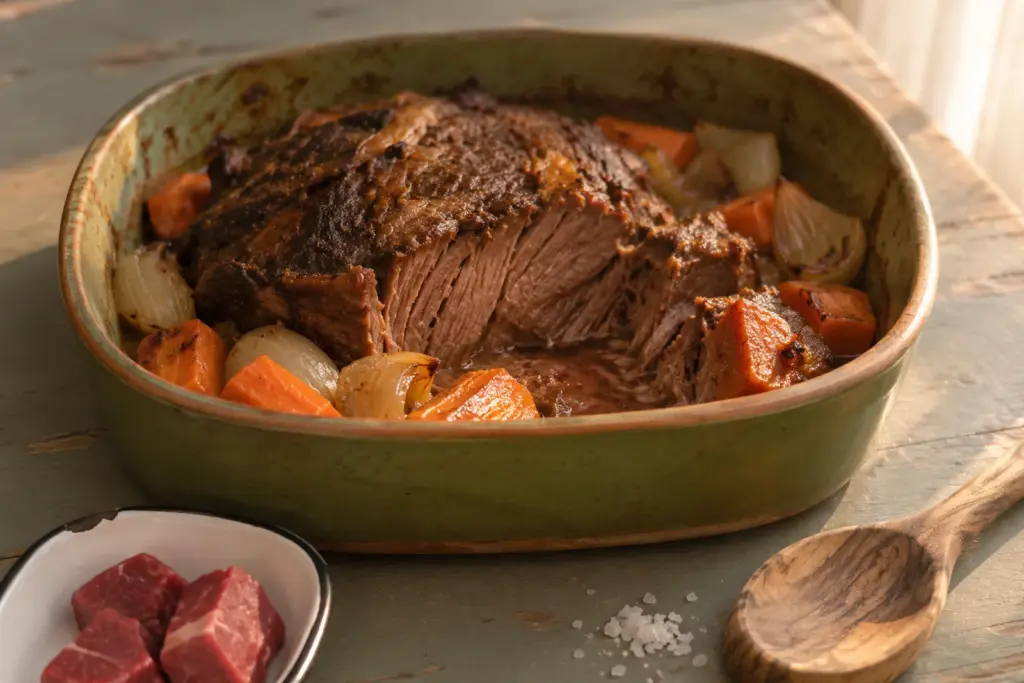
Of all the kitchen substitutions you will make, this is one of the easier ones. Chuck roast is also sold as pot roast, and a pot roast recipe only needs a tough, collagen-rich cut and a covered pot.
What Does Chuck Roast Do in Pot Roast and Stew?
Chuck is a tough cut with fat marbled through the muscle and plenty of collagen. With moisture and low heat, collagen dissolves into gelatin, which lets the meat fibers separate, so the roast turns soft.
That marbled fat also keeps the meat moist. A lean replacement has less of both, so it relies on the braising liquid and a gentle simmer to stay moist.
The Exploratorium notes that a higher cooking temperature makes muscle fibers tougher and that beef stewed in boiling broth turns chewy, so you keep every swap below at a gentle simmer, whether the recipe is a braise or a stew.
6 Best Substitutes for Chuck Roast
You can swap by weight in a recipe that braises or slow-cooks the beef. The simmering times below come from the Beef Checkoff's braising time chart, which lists covered simmering by cut and size.
| Swap | Best for | What changes |
|---|---|---|
| Other chuck roasts | Pot roast, shredding | Closest match |
| Brisket | Slicing or shredding | Flat is leaner |
| Short ribs | Rich braises | Bone, buy more |
| Beef shank | Stew, osso buco | Bone, buy more |
| Bottom round or rump | Sliced pot roast | Lean, needs liquid |
| Pork shoulder | Pulled or stewed dishes | Tastes of pork |
1. Other Chuck Roasts (Arm, 7-Bone, Eye)
If the store has no chuck roast, you will often find another roast from the same shoulder. The Beef Checkoff lists the chuck arm roast as economical and best slow-cooked, the 7-bone roast keeps the 7-shaped bone it is named for, and the chuck eye roast is a good value with loads of beef flavor.
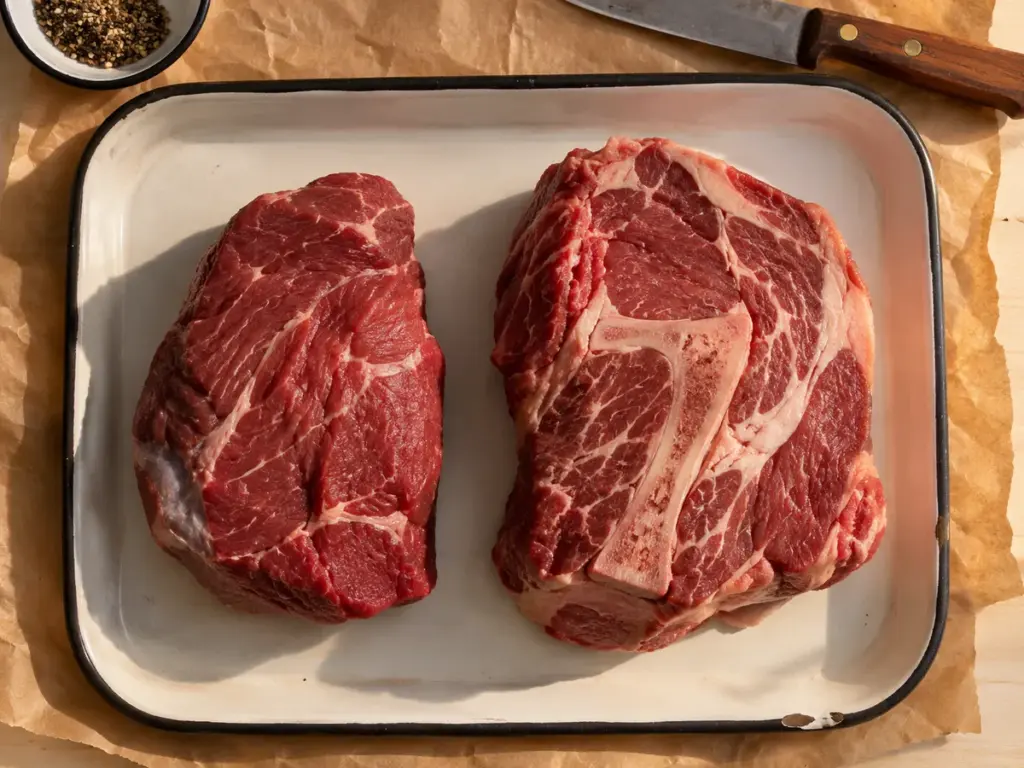
Plain chuck roast is cut from the middle of the chuck roll, so the swap works pound for pound. The chart gives a boneless 2½ to 3½ pound shoulder roast 2¼ to 3¼ hours and an arm roast of that size 1¾ to 2¾ hours, so you start the fork test earlier on the arm roast.
A label that says shoulder points to the same area, since beef shoulder and chuck overlap, so the bone and the white fat show how close it is to chuck.
2. Brisket
Brisket comes from the breast, a muscle that works hard, so the Beef Checkoff says it needs low and slow cooking, the same treatment chuck gets. Its leaner flat half is good sliced or shredded.
The fattier point half is juicy with full flavor, and one Beef Checkoff recipe swaps it for the flat with no change in cook time.
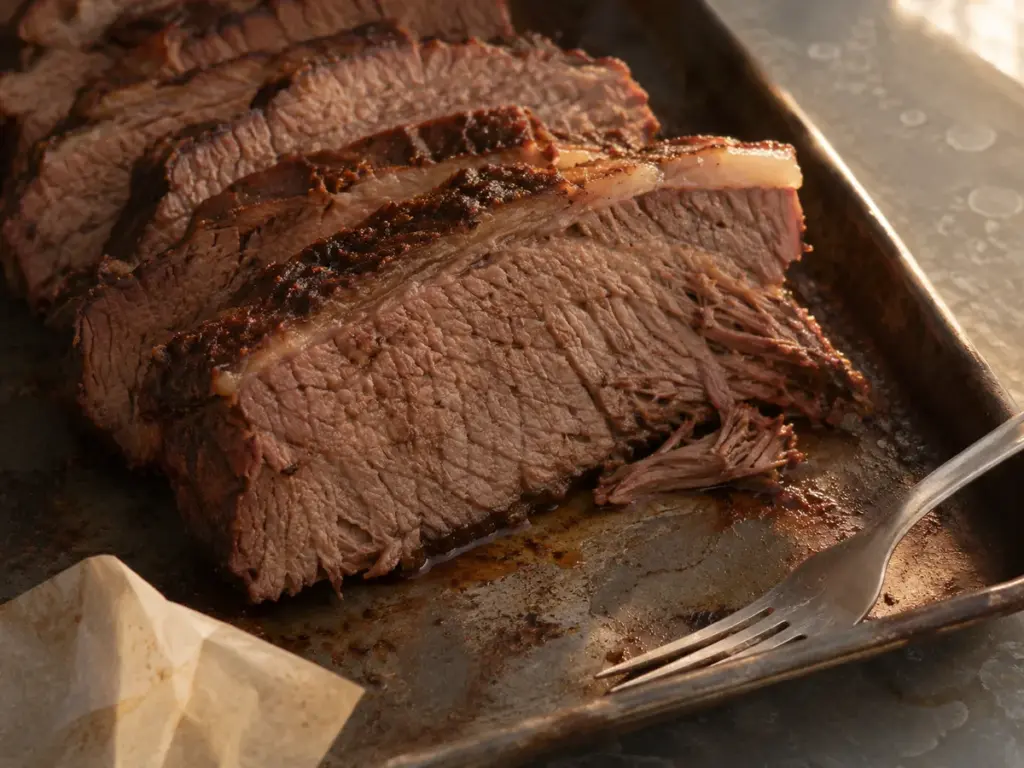
You want the flat when chuck comes out too fatty and the point when you want more richness.
The chart gives a 2½ to 3½ pound brisket 2½ to 3 hours covered, and a Beef Checkoff slow-cooker brisket runs 4 to 6 hours on HIGH or 8 to 10 on LOW until fork-tender.
The package should say plain brisket, because corned beef is the same cut cured in brine.
3. Short Ribs
Chuck short ribs are rich and meaty, and the Beef Checkoff calls them moist and tender when slow-cooked, so they behave like chuck in a braise.
Plate short ribs are listed as good braised or grilled, and you braise them for this swap.
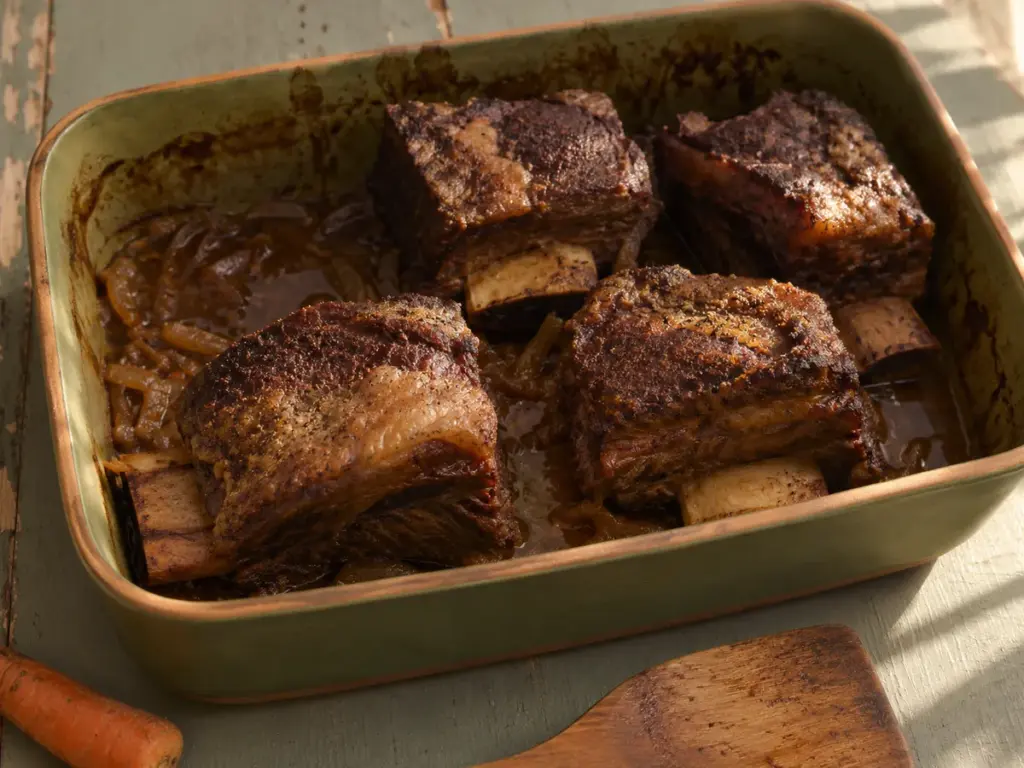
On the chart, a bone-in 2½ to 2¾ pound batch takes about 1¾ to 2½ hours of covered simmering.
The bone adds weight, so you buy more per person (see the buying amounts below), and the pot and the liquid from the roast recipe stay the same.
4. Beef Shank
A shank cross-cut is a slice through the leg, a muscle used for movement, so the Beef Checkoff calls it tough and says it is braised into fork-tender dishes such as osso buco.
Its advice is to skip the grill and cook shank low and slow with liquid, which is how a chuck pot roast cooks anyway.
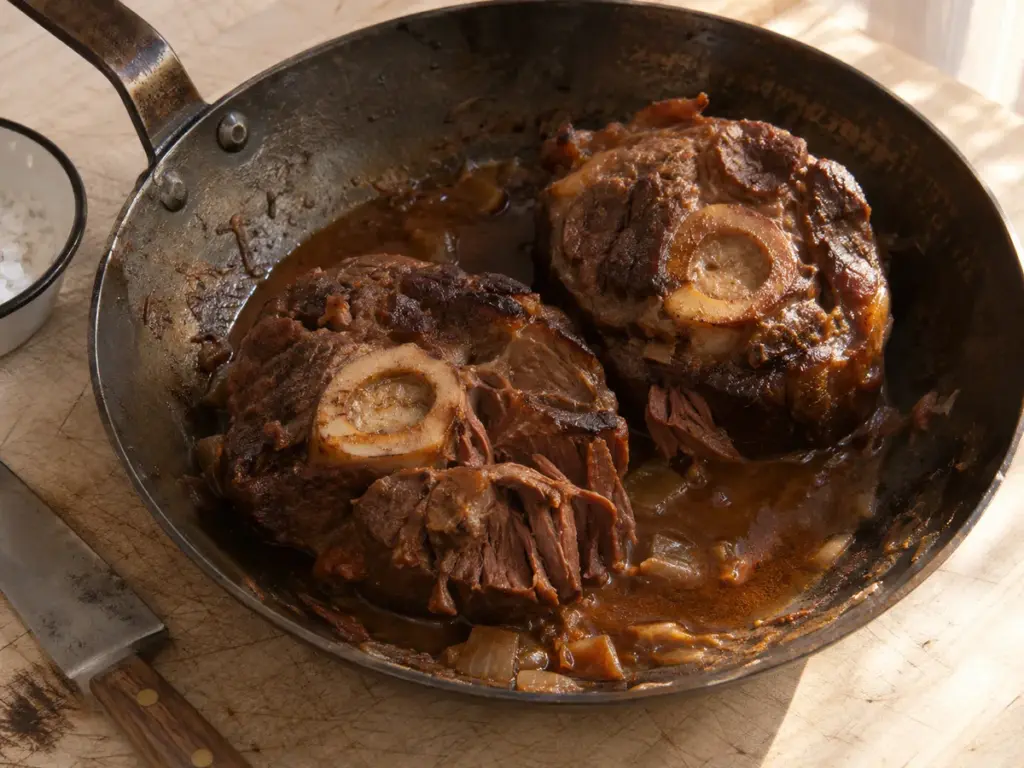
If you ask the butcher for cross-cuts 1 to 1½ inches thick, a 3 pound batch takes 2 to 3 hours of covered simmering on the chart.
The bone can stay in the pot for stews and soups, and the swap runs both ways, since chuck roast replaces beef shank in many recipes.
5. Bottom Round or Rump Roast
Bottom round roast also goes by the names bottom round rump roast and round roast, and it comes from the round near the rump and hind legs, where the muscles do a lot of moving.
The Beef Checkoff calls the beef lean, inexpensive and less tender, and suggests oven roasting or braising, then slicing thin.
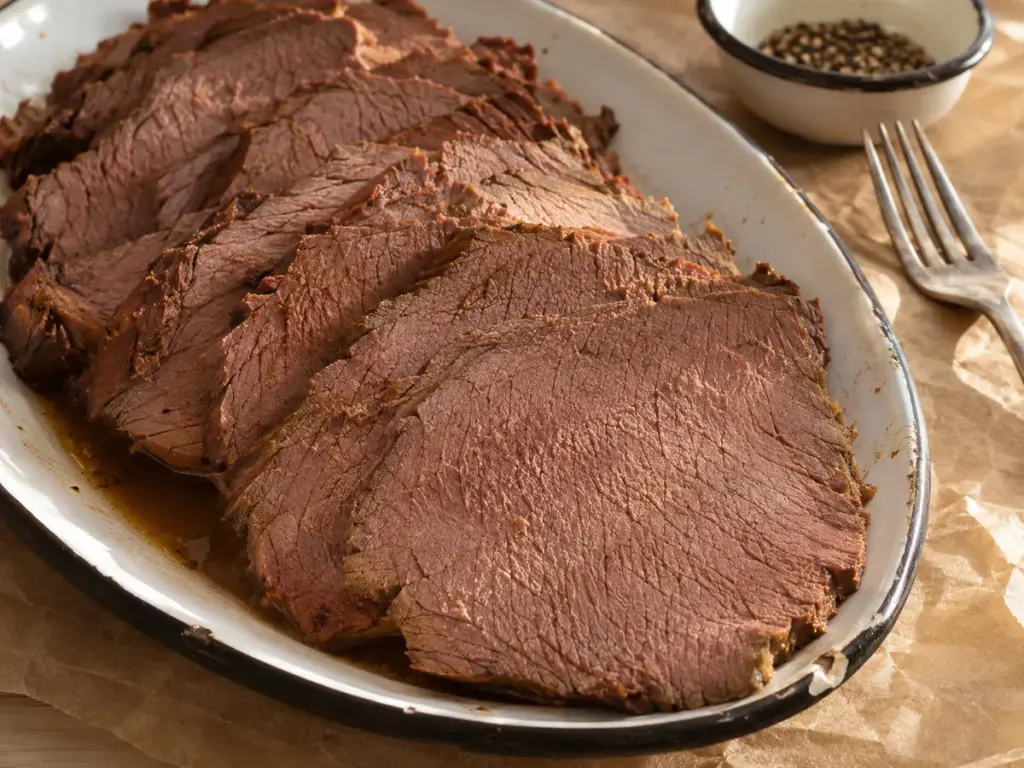
The chart gives a boneless 3 to 4 pound bottom round or rump roast 2½ to 3½ hours covered, and Beef Checkoff slow-cooker recipes use bottom round for shredded beef and pot roast.
Lean meat has less fat to protect it, so you choose it when chuck is too fatty, keep it in liquid at a gentle simmer and stop once a fork slides in.
6. Pork Shoulder
You will also see pork shoulder sold as Boston butt, picnic roast, blade roast or pork butt, and the National Pork Board lists braising, slow cooking, roasting and smoking for it and calls it fall-apart tender.
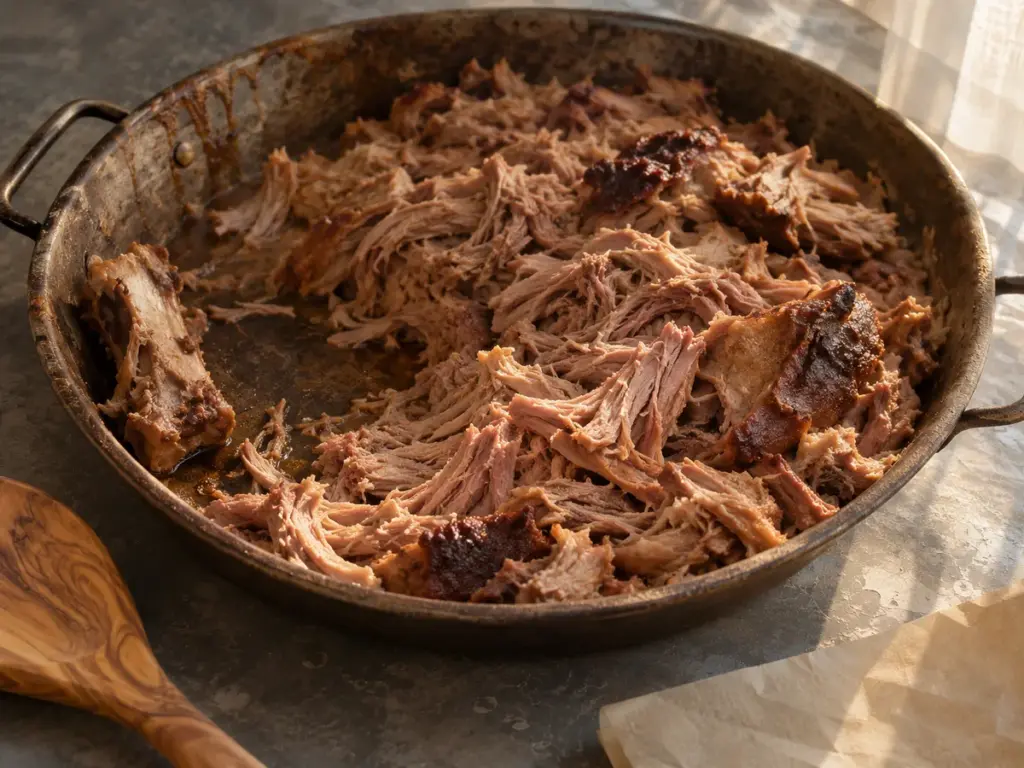
You can swap it by weight in stews, tacos and pulled dishes, but the dish will taste of pork.
The safe minimum for pork shoulder is 145°F with a 3-minute rest (see the box below). For tenderness, the National Pork Board's chart says shoulder is safe at 145°F but best enjoyed at 180°F, and its shoulder page says to cook to 170°F.
The swap also runs the other way, since chuck roast stands in for pork shoulder.
Do Lean Cuts Like Top Round, Tri-Tip and Flat Iron Work?
Lean steaks and roasts have little collagen to turn into gelatin, so they work in a chuck recipe only with extra care.
- Slow cooking improves the tenderness of top round, which is lean, and the Beef Checkoff says to slice it thinly across the grain.
- Eye of round looks like tenderloin but is extremely lean and much less tender, and you can roast or slow-cook it.
- The Beef Checkoff calls tri-tip boneless and fairly tender with full flavor, and suggests roasting or grilling it and slicing across the grain.
- Flat iron steak comes from the top blade of the shoulder, is well-marbled and made for grilling, and needs its internal connective tissue removed.
Top round or eye of round works cubed for a stew or sliced for a pot roast only if you give it plenty of liquid and a gentle simmer.
Tri-tip and flat iron belong in the roasted or grilled recipes the Beef Checkoff describes them for, so you skip them for pot roast.
Slow Cooker or Oven for the Swap?
Whichever one you own will handle every cut above, since each cut wants long, covered, low heat.
USDA FSIS says a slow cooker generally cooks at 170 to 280°F, and that heat, long cooking and trapped steam together destroy bacteria.
- A Beef Checkoff brisket braise is covered at 325°F for 3 hours.
- A Beef Checkoff pot roast is seared, then cooked on LOW for 8 to 10 hours.
- FSIS says you should thaw the meat before it goes in.
Why Fork-Tender Beef Cooks Past the Safe Temperature
That number is only about safety. Tenderness is a separate test: the Beef Checkoff says braised beef is done when it is fork-tender, and the Exploratorium recommends holding the braising liquid at a simmer of 180 to 190°F.
If the roast still resists the fork at the end of the listed time, you keep it covered at the same gentle heat and test again, because more heat toughens the fibers.
How Much Should You Buy for Each Person?
Iowa State University Extension gives these amounts per serving, which you multiply by the number of people you feed:
- For boneless roasts, such as chuck, brisket or bottom round, you buy ¼ to ⅓ pound.
- Bone-in roasts, such as a 7-bone chuck or pork shoulder with the bone, take ⅓ to ½ pound.
- Bony cuts, such as short ribs and shanks, call for ¾ to 1 pound.
A Beef Checkoff pot roast recipe lists a 2½ to 3 pound roast for 8 servings, which works out to about ⅓ pound each.
The Iowa State table does not say whether its weights are raw or cooked, so you round up when you want leftovers.
Sources
- Beef Checkoff, Braising Time Guidelines: covered simmering times by cut.
- Beef Checkoff, Braising Basics: fork-tender as the sign of doneness.
- Beef Checkoff, Best Beef Cuts for Slow-Cooking: chuck arm roast, 7-bone roast, chuck short ribs, brisket flat.
- Beef Checkoff, Brisket Flat Half: flat and point, braised and slow-cooker brisket recipes.
- Beef Checkoff, Bottom Round Roast: names, lean and less tender, oven roasting and braising.
- Beef Checkoff, Shank Cross-Cut: braising, osso buco, grilling not preferred.
- Beef Checkoff, Chuck Short Ribs: rich and meaty, tender when slow-cooked.
- Beef Checkoff, Chuck Eye Roast: other names and slow-cooker use.
- Beef Checkoff, Lean Beef Cuts: top round, eye of round, tri-tip, flat iron descriptions.
- National Pork Board, Pork Shoulder: names, cooking methods, 170°F.
- National Pork Board, Pork Cooking Temperature: 145°F to 180°F for shoulder.
- USDA FSIS, Safe Minimum Internal Temperature Chart: 145°F with a 3-minute rest.
- USDA FSIS, Slow Cookers and Food Safety: 170 to 280°F, thawing meat first.
- Exploratorium, Braising Makes a Tough Cut Tender: collagen and gelatin, heat and tough fibers, 180 to 190°F simmer.
- Iowa State University Extension, Tackling the Holiday Meat Puzzle: pounds per serving.

Food writer at GustoMeadow. Writes ingredient substitutes, food comparisons, taste guides and storage guides for home cooks.
Storage and food-safety numbers follow USDA, FDA and university extension guidance.



