
Gorgonzola dolce is the closest swap for dolcelatte, starting at 1:1 by weight.
- Saint Agur melts well into a sauce, though it is spicier.
- On a salad or cheese board, mild creamy Mycella or Cambozola works at the same weight.
- Use half the amount of a sharper blue such as gorgonzola piccante, Roquefort or Danish blue.
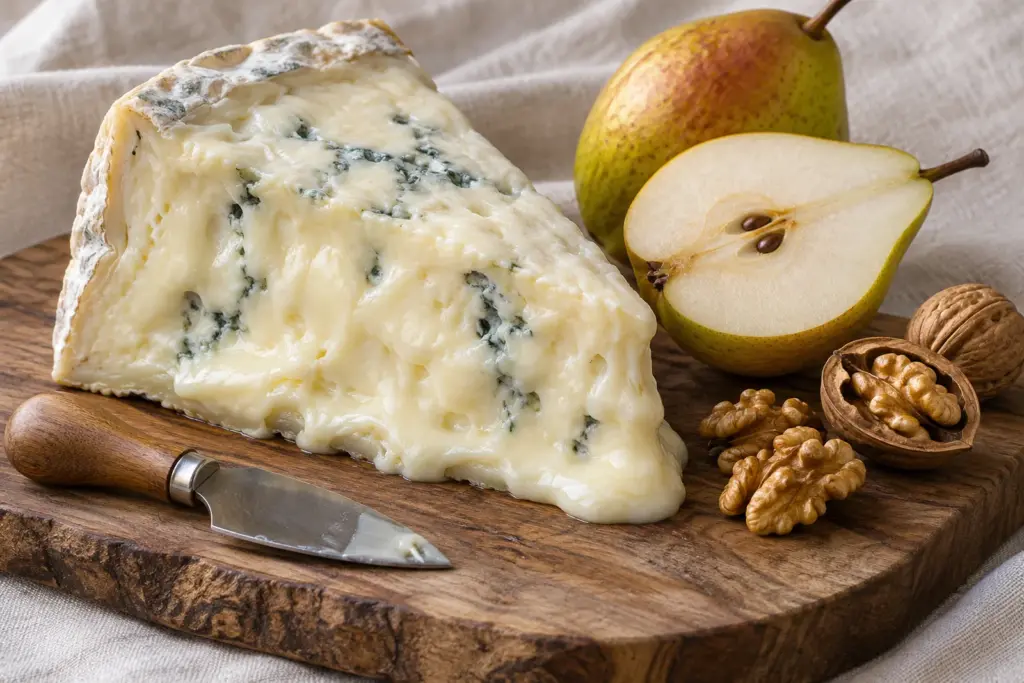
Dolcelatte means "sweet milk" in Italian, and the name is a Galbani trademark for a soft, creamy blue cheese made from cow's milk. Because several mild blues do the same job, this is one of the easier ingredient swaps to get right, and the best pick depends on whether you are melting the cheese into a hot sauce or serving it on a board.
What Does Dolcelatte Do in a Recipe?
Galbani developed dolcelatte around 1960 as a milder-smelling, milder-tasting alternative to Gorgonzola for the British market. It has a faint sweetness and a soft, mild blue flavor, so you get blue-cheese character in a dish without the salty bite of an aged blue.
In a recipe the cheese does three jobs:
- It melts smoothly into warm cream or butter, so a sauce turns silky.
- It adds a mild blue tang that you can use generously without it taking over the dish.
- It stays soft and creamy when cold, so it dollops onto pizza and folds into salads.
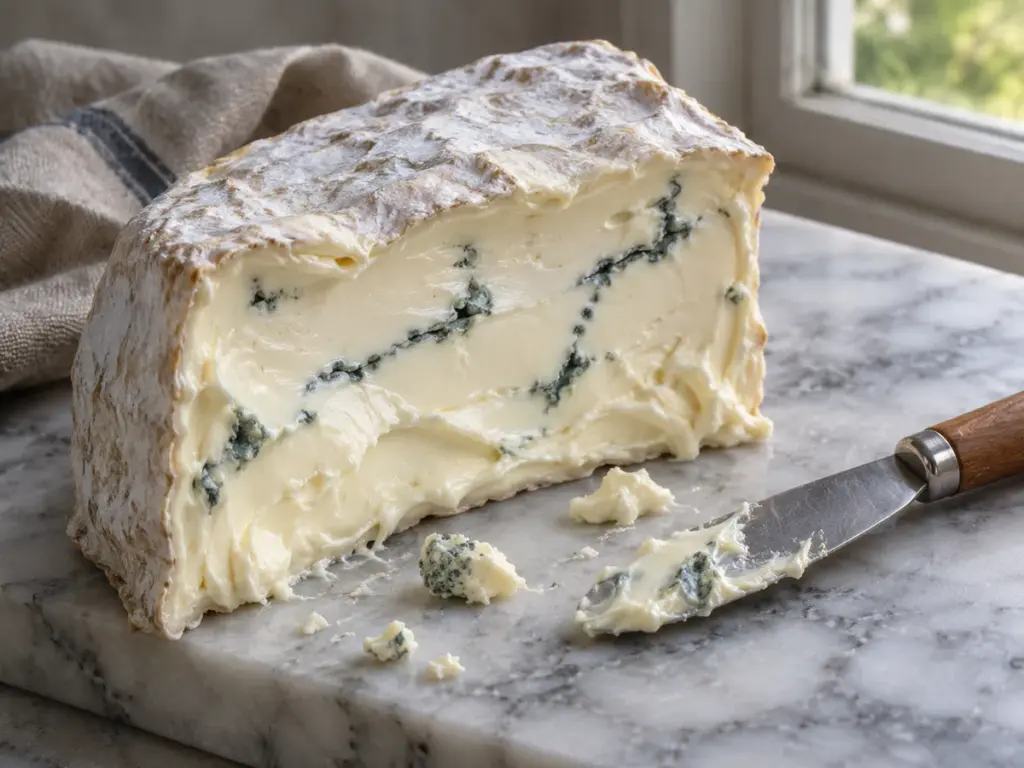
That list decides your swap. For a hot sauce, you need a cheese that melts smoothly, and for a salad you want one that stays soft and creamy straight from the fridge. Most of the cheeses below manage both.
6 Best Substitutes for Dolcelatte Cheese
Six cheeses cover nearly every dolcelatte recipe, ranked by how close they come in mildness and melt.
| Substitute | Ratio | Best for | What changes |
|---|---|---|---|
| Gorgonzola dolce | 1:1 | Sauces, pizza | Almost nothing |
| Cambozola | 1:1 | Boards, spreads | Soft white rind |
| Fromager d'Affinois Bleu | 1:1 | Boards, spreads | Tangier, thin rind |
| Saint Agur | About ¾ | Sauces, salads | Spicier finish |
| Mycella | 1:1 | Salads, boards | Sweeter, creamier |
| Fontina | 1:1 | Hot sauces, gratins | No blue at all |
These ratios are a starting point, not published ratios, so taste and adjust. If you cannot taste as you cook, stay with the first row. Saint Agur and Mycella change the flavor a little, and fontina keeps the creamy melt but gives up the blue.
1. Gorgonzola Dolce
Gorgonzola dolce is the young, soft style of Gorgonzola. Culture magazine puts its aging at about two months, and it has a mild, creamy flavor with a buttery paste and widely spaced blue-green veins. Dolcelatte was built as a gentler Gorgonzola, so the two give a recipe almost the same result.
Use it 1:1 by weight and look for the word dolce on the label. Gorgonzola's mild dolce and stronger piccante styles often sit side by side in the same case, so check the label before you buy. The piccante is aged longer, turns firm and pungent, and tastes far too sharp for a dolcelatte recipe.
2. Cambozola
Cambozola is a German cheese, made since 1983, that blends a Camembert-style bloomy rind with Gorgonzola-style blue veins. Extra cream gives it the rich body of a triple cream, and its blue flavor is considerably milder than gorgonzola piccante.
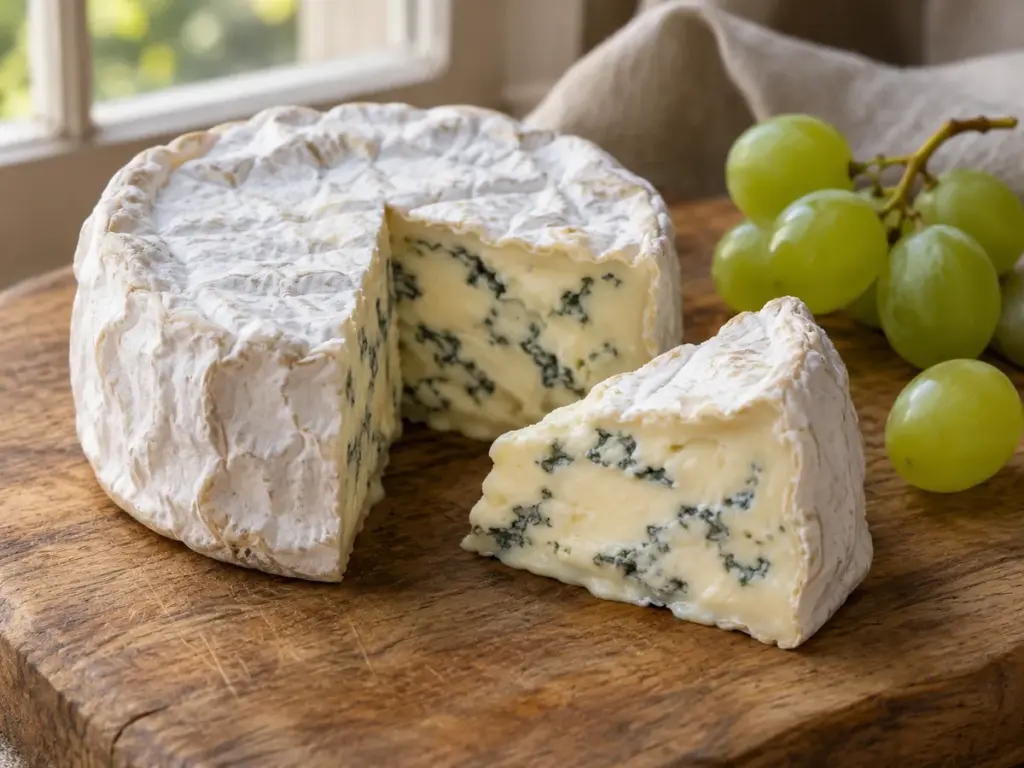
Swap it 1:1 by weight as a starting point, on a board with fruit or crackers, where its rich cream body and mild blue are the point. The white rind is edible, so trim it only if you want the cheese perfectly smooth.
3. Fromager d'Affinois Bleu
Fromager d'Affinois Bleu is a French triple-cream blue with a thin rind. Its maker describes the flavor as mild, with the tangy bite of a French blue and a rich, buttery finish, which keeps it close to dolcelatte's gentle character.
Use it 1:1 by weight where dolcelatte goes in cold. The maker suggests poached pears, stone fruit or apple slices, and it also suits crostini with honey. For a warm sauce, gorgonzola dolce or cambozola is the safer choice.
4. Saint Agur
Saint Agur is a pasteurized cow's-milk blue from the Auvergne in central France, enriched with cream and aged about 60 days. It is soft, moist and easy to spread, it melts well, and its mild, slightly spicy taste is less salty than many traditional blues.
The tang is balanced so it does not overpower, but the cheese turns stronger and spicier as it ages, so go in steps:
- Start with about three-quarters of the weight the recipe calls for, a starting point rather than a published ratio.
- Taste the sauce, then stir in more if you want a stronger blue note.
5. Mycella and Other Mild Danish Blues
Mycella is a pasteurized cow's-milk blue from the Danish island of Bornholm. Culture magazine calls it sweeter and more cream-like than many blue cheeses, rich and only mildly salty, and recommends it for salads.
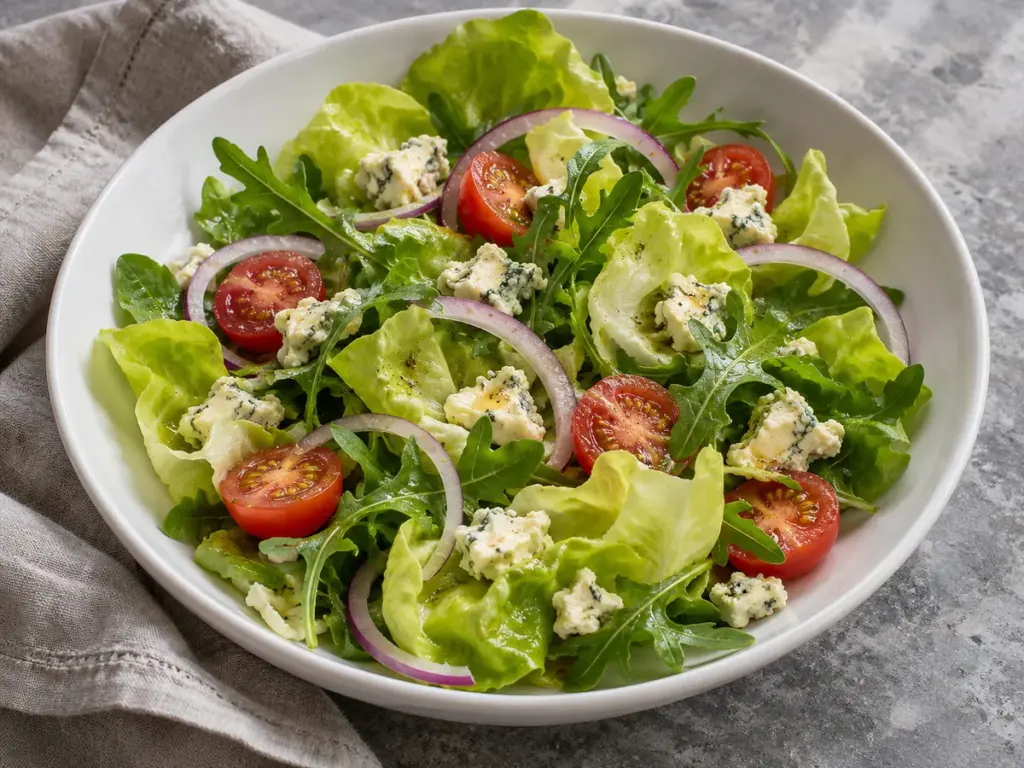
Use it 1:1 where dolcelatte goes in cold, on a salad or a board. A pear and caramelized onion focaccia suits it well, since sweet fruit balances the salt in blue cheese. For a hot sauce, pick one of the softer cheeses above.
6. Fontina
Fontina is the swap when you want the creamy melt and have no blue cheese at all. Fontina Val d'Aosta is a semisoft Italian cow's-milk cheese with a creamy, mild, nutty flavor, and young fontina is soft enough for fonduta. Danish, Swedish and American fontinas are milder and softer still.
Fontina Val d'Aosta must be made from unpasteurized milk, so a pregnant person, an adult 65 or older or anyone with a weakened immune system should read the label for "pasteurized" first. Buy it by name, because Fontinella is a firmer US cheese, not the same one.
Use it 1:1 in a sauce or gratin, and expect no blue veins and no blue tang. If you want a hint, crumble in a spoonful of any blue you have and taste.
Which Substitute Fits Your Dish?
Pick by temperature. You want a cheese that melts for hot dishes and one that stays soft for cold ones.
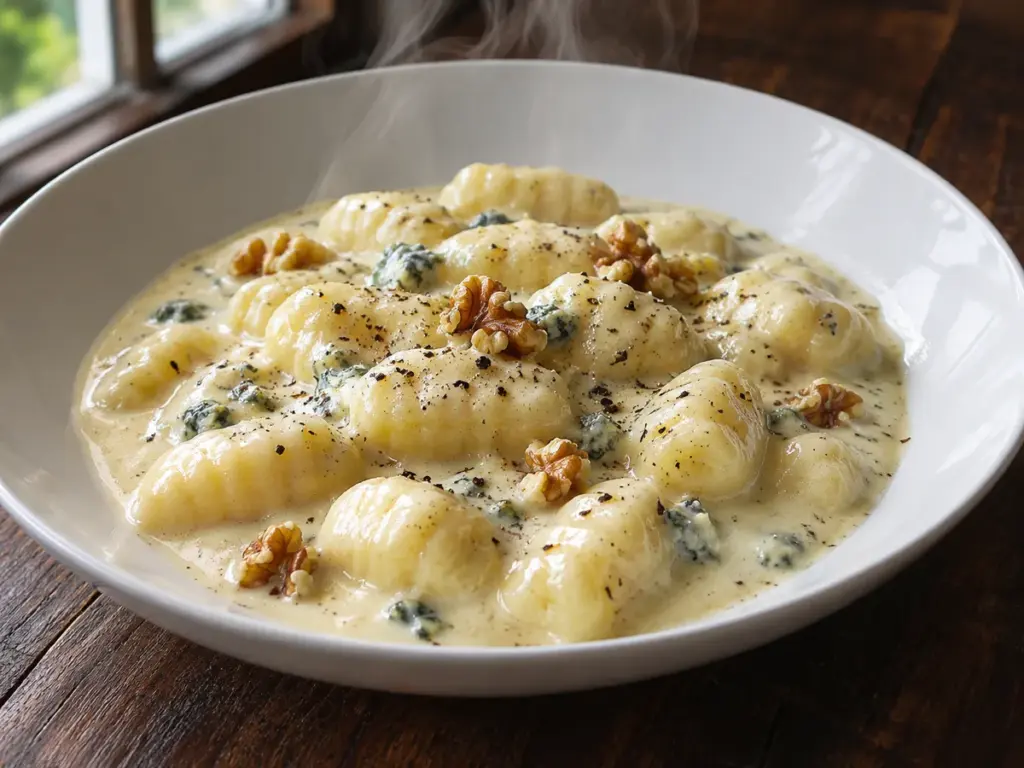
- Gorgonzola dolce for pasta sauce, gnocchi, risotto and pizza
- Saint Agur for steak sauce, at three-quarters of the weight
- Fontina when you want melt without blue flavor
- Mycella for salads and cheese boards
- Saint Agur spread on crackers or crumbled over pears
- Fromager d'Affinois Bleu on crostini with honey
- Cambozola sliced with fruit
Gnocchi in a blue cheese cream sauce is rich, so you want something bitter and fresh beside it, such as bitter greens with sliced pear and toasted walnuts.
How Do You Melt a Blue Cheese Into a Sauce?
A cheese sauce can turn grainy or oily if you overheat it, so the order of the steps protects the texture.
- Cut the cheese small. Crumble or dice it so it melts quickly.
- Warm the cream gently. Heat it on low until it steams, and stop before it boils.
- Take the pan off the heat. Stir in the cheese until it is smooth, because high heat can make the fat separate.
- Taste before you salt. Blue cheeses can be quite salty, so season last and thin with a splash of pasta water if the sauce is thick.
Which Cheeses Should You Skip or Cut Back?
Regular Danish blue is a different cheese from Mycella. Wikipedia describes Danablu as having a sharp, salty taste, which makes it one of the usual gorgonzola stand-ins for a bolder dish, and a poor match for mild dolcelatte.
The same goes for Roquefort and Stilton. Roquefort is bolder and saltier than gorgonzola, and Stilton tastes sharp and earthy with a pungent finish. Both work in everyday blue cheese swaps, but you will taste them over everything else in a dish written for a gentle blue.
Limburger is a poor swap in any case. It is a soft cheese with a strong, pungent aroma and no blue veins, so you lose both the sweetness and the mild tang that dolcelatte gives a dish.
Sources
- Dolcelatte, Wikipedia: Galbani trademark, about 1960, milder alternative to Gorgonzola.
- Gorgonzola Dolce PDO, culture magazine: about two months of aging, mild and creamy.
- Gorgonzola, Wikipedia: dolce and piccante styles, uses in sauces, risotto and gnocchi.
- Cambozola, Wikipedia: produced since 1983, extra cream, edible Camembert-style rind, considerably milder than Gorgonzola piccante.
- Saint Agur Blue, Wikipedia: pasteurized cow's milk with cream, about two months of aging, spreads easily and melts well, spicier with age.
- Fromager d'Affinois Bleu, producer page: triple cream, thin rind, mild with a tangy bite, serving suggestions.
- Mycella, culture magazine: Bornholm origin, sweeter and more cream-like than many blues.
- Danablu, Wikipedia: sharp, salty Danish blue.
- Fontina, Wikipedia: Aosta Valley cheese, mild and nutty, used for fonduta; Val d'Aosta must be made from unpasteurized milk.
- Listeria prevention, CDC: higher-risk groups and unpasteurized cheese.

Food writer at GustoMeadow. Writes ingredient substitutes, food comparisons, taste guides and storage guides for home cooks.
Storage and food-safety numbers follow USDA, FDA and university extension guidance.



