
Pastrami is the closest swap for corned beef: both are brined, cured brisket, so you can use it 1:1 for Reubens and hash.
- For corned beef and cabbage, you can use a cured pork joint such as ham, which is close to the older Irish meal.
- Fresh brisket and fresh pork shoulder have no cure, so you need to add salt and spice.
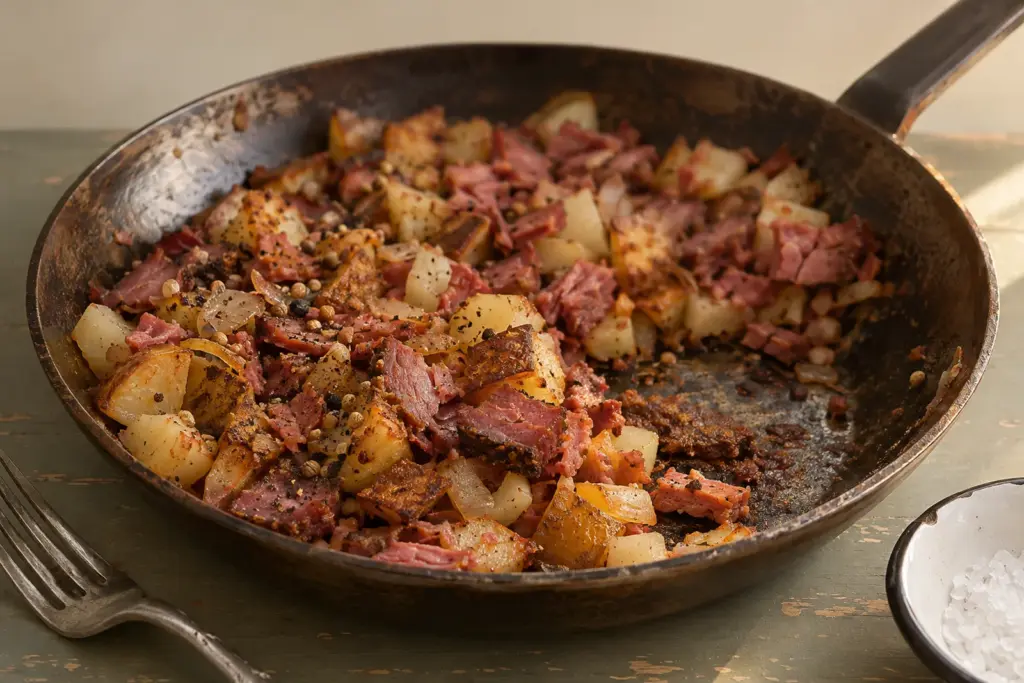
Corned beef is brisket or round cured in salt brine with nitrite, so it is a salty, tangy meat that stays pink after cooking. The best swap depends on the dish, since you might slice the meat for a sandwich, fry it into hash or simmer it with cabbage, and like most ingredient substitutes, each stand-in suits some of those jobs better than others.
What Does Corned Beef Do in a Dish?
A swap has to replace what the cure gives corned beef, starting with its salty, tangy flavor, and three things set it apart from an uncured or deli stand-in:
- The salt and tang go first, since raw corned beef holds 1,217 mg of sodium per 100 g and raw fresh brisket only 69 mg.
- Nitrite fixes the meat's pigment, so the pink color disappears without it.
- Raw corned beef needs a long simmer to turn tender, and FSIS calls fork-tender a good sign of doneness.
When you cook raw corned beef, FSIS says it is done at 145°F on a food thermometer plus a 3-minute rest, and that it may still look pink at that point.
It also helps to know which of three products your recipe means. Raw brined brisket needs a long simmer, deli corned beef is cooked and sliced, and canned corned beef is cooked and shredded, at 897 mg of sodium per 100 g.
The cut matters too, because round and flat-cut brisket slice and shred differently. In a British recipe, corned beef may mean the canned kind, which Foods of England describes as bully beef: shredded, cooked salt beef set in its own fat and jelly, usually canned as "Corned Beef".
7 Best Substitutes for Corned Beef
Pound for pound by weight is a fair starting point, though no source publishes a ratio, and the last column shows what you have to correct.
| Swap | Ratio | Best for | What changes |
|---|---|---|---|
| Pastrami | 1:1 | Reuben, hash | Smokier, saltier |
| Fresh brisket | 1:1 | Simmered dinner | Needs salt, spice |
| Cured ham | 1:1 | Simmered dinner | Pork, not beef |
| Deli roast beef | 1:1 | Sandwiches | No brine tang |
| Pork shoulder | 1:1 | Simmered dinner | Needs salt, spice |
| Turkey pastrami | 1:1 | Reuben, hash | Less fat |
| Roasted beets | Slice for slice | Meatless Reuben | Earthy, sweet |
1. Pastrami
Pastrami starts as the same brined, cured brisket. Food Network says it then gets a coat of black pepper, garlic and coriander before it is smoked and steamed, so you get something richer, saltier and smokier than corned beef.
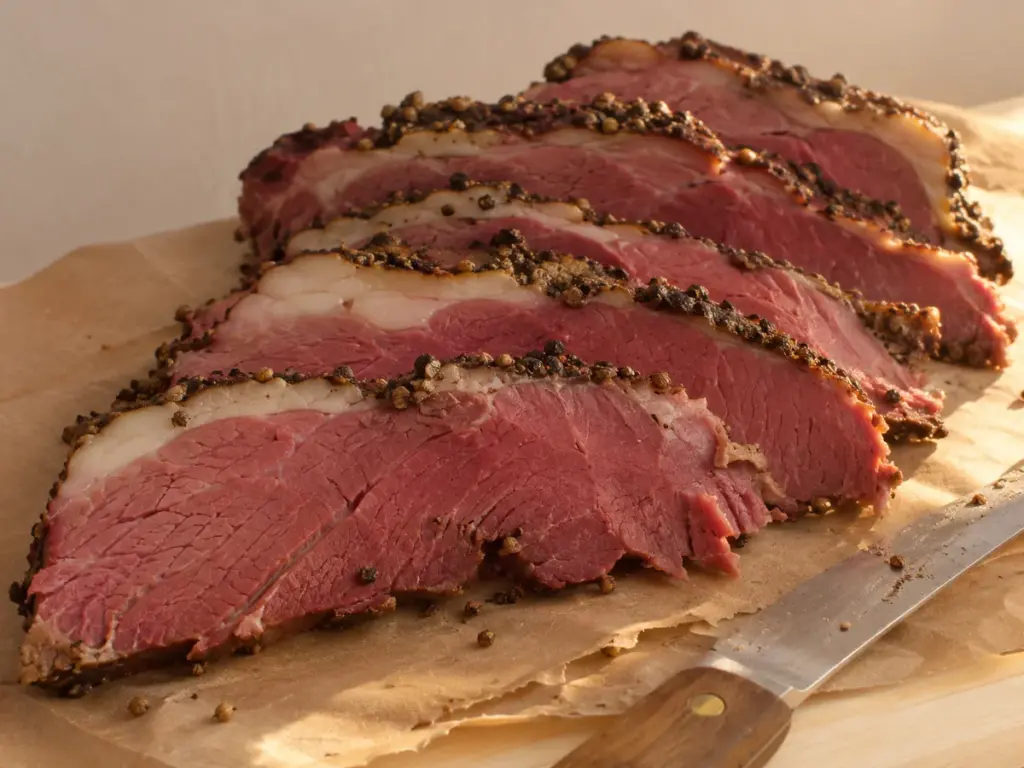
You can use it pound for pound in hash, where you dice it and fry it until the edges crisp and taste before you add any pepper, because the crust already carries plenty.
In a Reuben you keep the Swiss and sauerkraut, and the same Reuben sandwich sides work as they do with corned beef. A pot of cabbage is where pastrami fits least, since it is already cooked and only needs warming through.
2. Fresh Brisket (Braised or Home-Cured)
Fresh brisket is the cut that becomes corned beef when cured, so you get the texture but not the flavor. Because it has no brine, the pot needs generous salt and pickling spice.
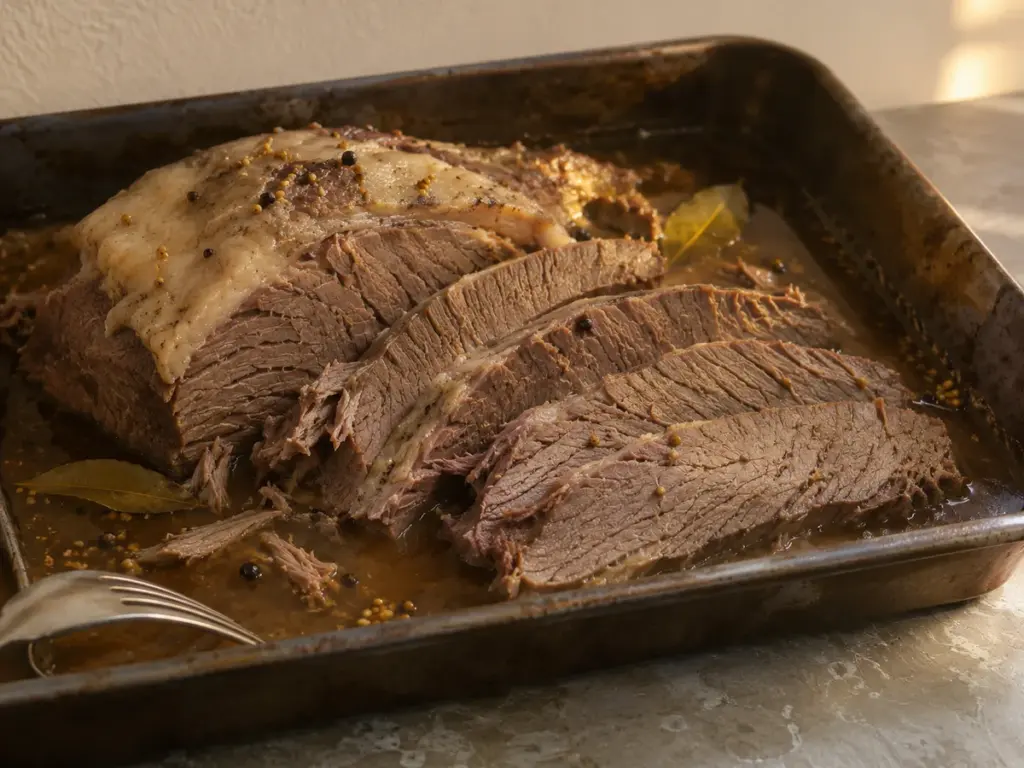
You cook it to 145°F with a 3-minute rest, the FSIS minimum for beef roasts, and then keep simmering until a fork goes in easily. Without nitrite it comes out gray-brown instead of pink.
If you want to corn it yourself, you need a published recipe that uses a nitrite curing salt such as Prague powder, and you should never convert an old recipe's saltpeter amount by volume.
3. Cured Ham for Corned Beef and Cabbage
Cured ham puts pork back in the pot for corned beef and cabbage, which is how the meal started. The Irish Times says Irish cooks traditionally served a bacon joint with cabbage, and that Irish immigrants in America found beef cheap and pork costly, so corned beef took its place.
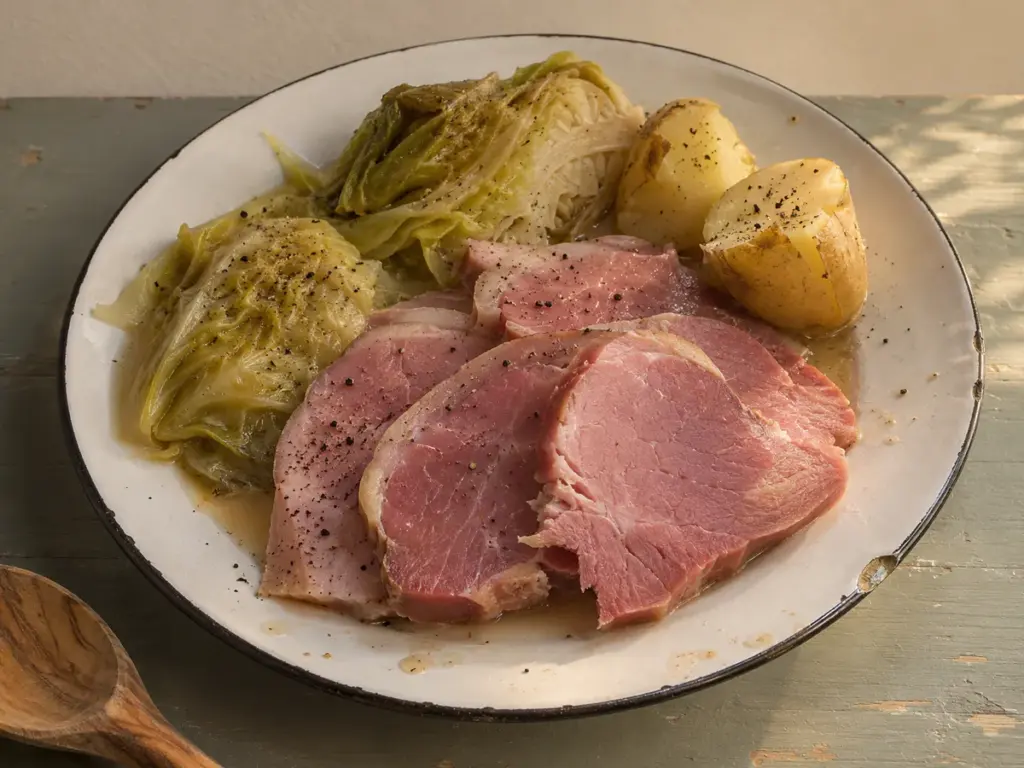
Ham brings its own cure, so you can skip extra salt: USDA lists unheated cured whole ham at 1,284 mg of sodium per 100 g, close to the 1,217 mg of raw corned beef. FSIS sets the temperature by the label:
- Fully cooked ham packaged in a USDA-inspected plant reheats to 140°F.
- If the ham was repackaged or is a leftover, it heats to 165°F.
- For an uncooked, fresh or smoked ham, the target is 145°F with a 3-minute rest.
4. Deli Roast Beef
Deli roast beef is roasted with no brine, so it is already salty but lacks the tang, and the rest of your plate has to supply it.
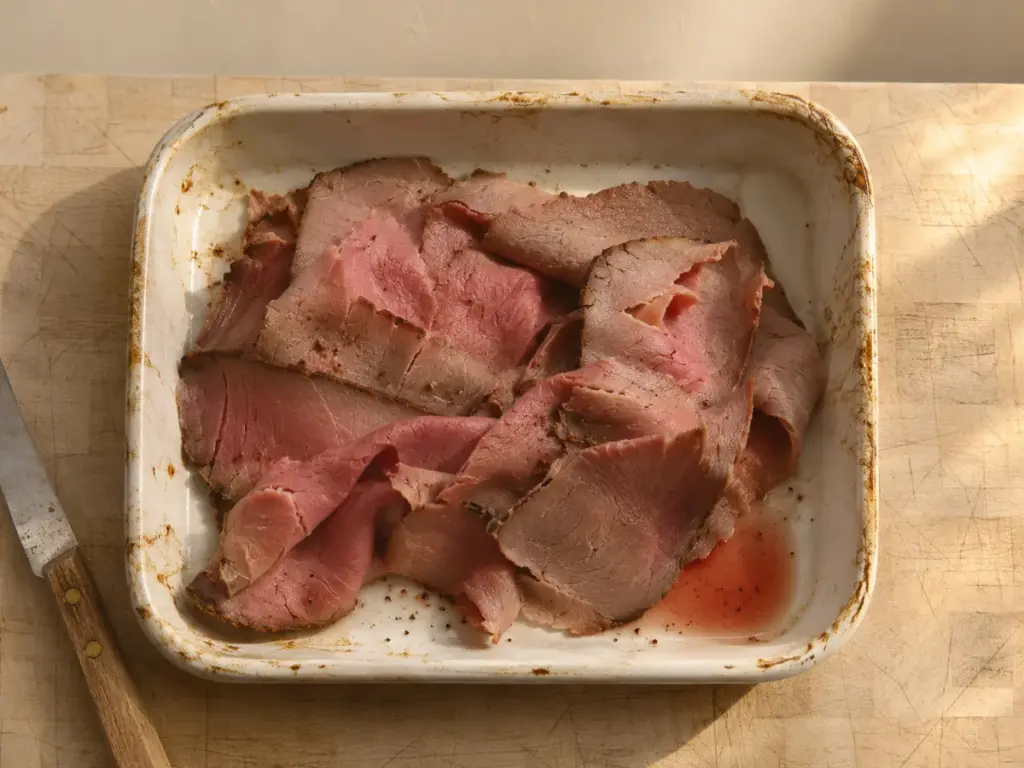
You can pile it hot on rye with sauerkraut and Swiss for a Reuben-style sandwich, or dice it into hash with onion, and a sharp mustard or horseradish sauce puts back some of the tang. You only need to warm the slices through, because they are already roasted and dry out fast.
5. Pork Shoulder
Pork shoulder is a fatty, long-cooking cut like brisket, so it holds up in a pot of cabbage and potatoes. It is sold fresh, though, with 65 mg of sodium per 100 g raw in USDA's data, so you salt and spice the pot as you would for fresh brisket.
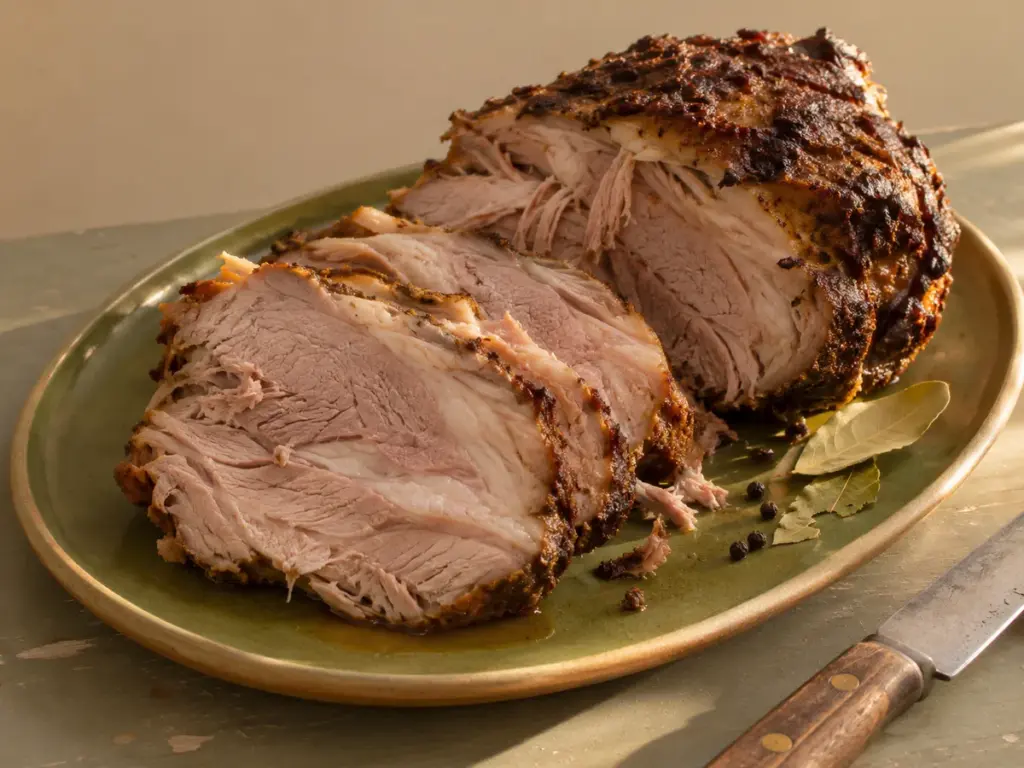
FSIS lists 145°F with a 3-minute rest as the minimum for fresh pork roasts, but a shoulder is not tender until a fork pulls it apart. It shreds more than it slices, which suits hash and piled sandwiches better than neat Reuben slices.
6. Turkey Pastrami
Turkey pastrami has about a third of the fat of cooked corned beef brisket, much like beef pastrami, and a little more sodium.
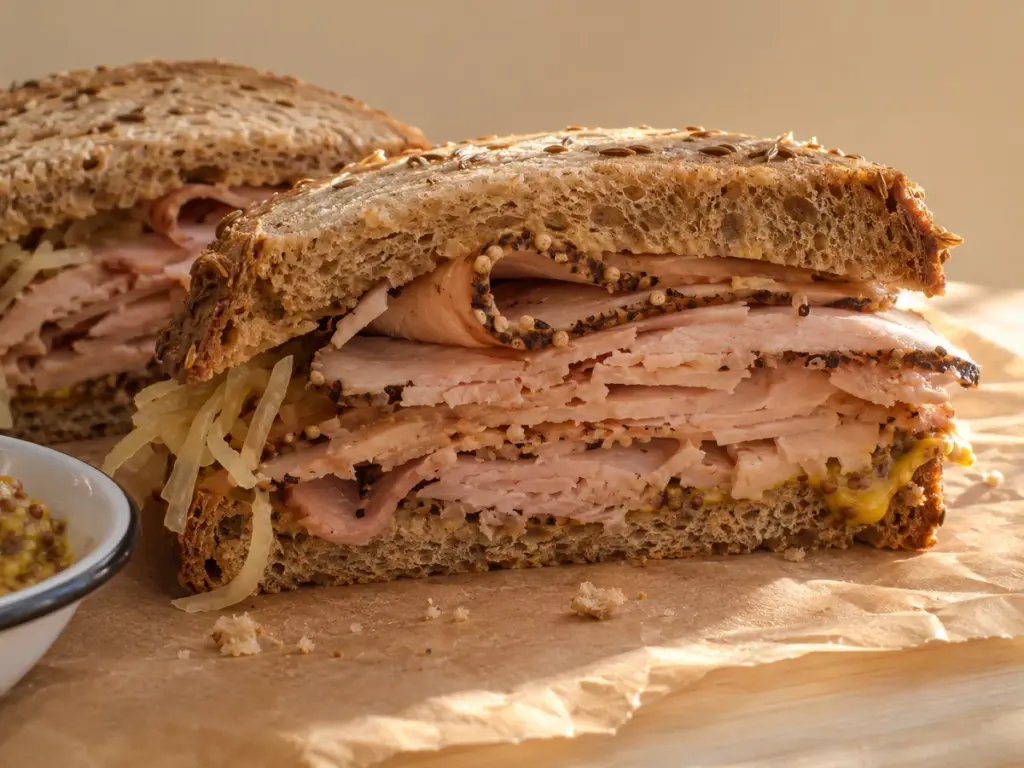
A slice-for-slice swap works, and thick slices hold up better than paper-thin turkey, which tears when the sandwich is grilled. In hash you add a spoonful of oil or butter, since turkey brings little fat of its own to the pan.
7. Roasted Beets for a Meatless Reuben
For a meatless Reuben, FoodPrint lists tempeh, seitan, thinly sliced roasted beets and maitake mushrooms as stand-ins. Seitan is made from wheat gluten, so it is not an option if you eat gluten-free.
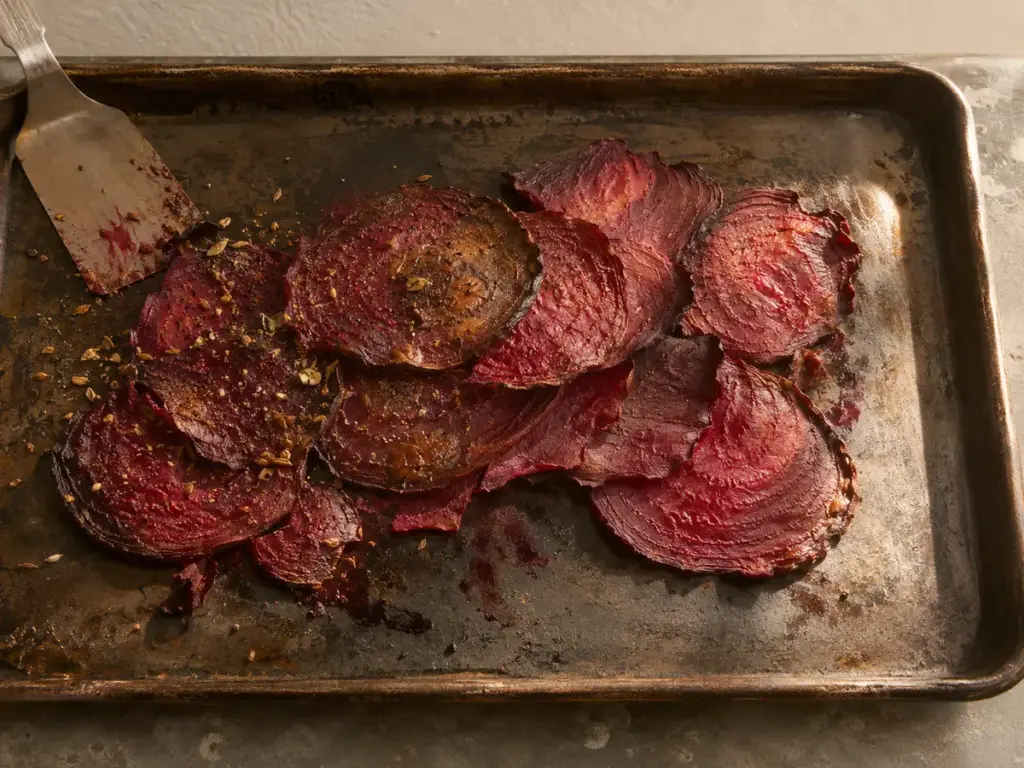
Beets are the easiest to turn into a pastrami-style slice, since FoodPrint's basic method is to slice them thin and roast them.
For a meatier chew, FoodPrint suggests rubbing them with salt at 1.75% of their weight, wrapping them tight and refrigerating them for 2 to 3 days, then smoking or hard-searing them with earthy spices such as cumin, black pepper, chocolate, coffee or mushroom powder.
Alicia Kennedy, quoted by FoodPrint, says the corned beef "was never the point" of a Reuben, so you can pile the slices with melted Swiss, tangy dressing and sauerkraut on rye.
Which Swap Is Lighter Than Corned Beef?
Every deli or cured swap sits at 850 mg of sodium per 100 g or more in USDA FoodData Central, so the fat and calories are where you will see a difference. These are the cooked or ready-to-eat values per 100 g:
- Corned beef has 251 kcal, 19 g fat and 973 mg of sodium.
- Beef pastrami has 147 kcal, 5.8 g fat and 1,078 mg.
- Turkey pastrami has 139 kcal, 6.2 g fat and 1,123 mg.
- Deli roast beef has 115 kcal, 3.7 g fat and 853 mg.
- Cured ham has 178 kcal, 9 g fat and 1,500 mg.
- Fresh brisket has 331 kcal, 24.5 g fat and 64 mg.
If you want the lightest sliced meat, deli roast beef has the fewest calories, the least fat and the lowest sodium, and fresh brisket is the only option low in sodium until you salt the pot.
Sources
- USDA FSIS: Corned Beef and Food Safety
- USDA FSIS: Safe Minimum Internal Temperature Chart
- USDA FSIS: Hams and Food Safety
- CDC: Listeria Prevention
- USDA FoodData Central: FDC 170199, 170200, 170602, 170204, 172927, 174570, 167872, 167875, 168664, 168665, 167843
- Food Network: Corned Beef vs Pastrami
- The Irish Times: Why Did Irish-Americans Make Corned Beef an Irish Dish?
- FoodPrint: Make Beets Taste Like Meat to Build the Best Veggie Reuben
- Foods of England: Corned or Bully Beef

Food writer at GustoMeadow. Writes ingredient substitutes, food comparisons, taste guides and storage guides for home cooks.
Storage and food-safety numbers follow USDA, FDA and university extension guidance.



