
A club steak is usually a bone-in strip steak from the short loin; a ribeye comes from the rib.
- A ribeye has more fat: 18.7 g per 100 g raw against 15.5 g for top loin.
- "Club steak" is a regional name, so ask which muscle is in the tray.
- Cook either to 145°F and rest 3 minutes.
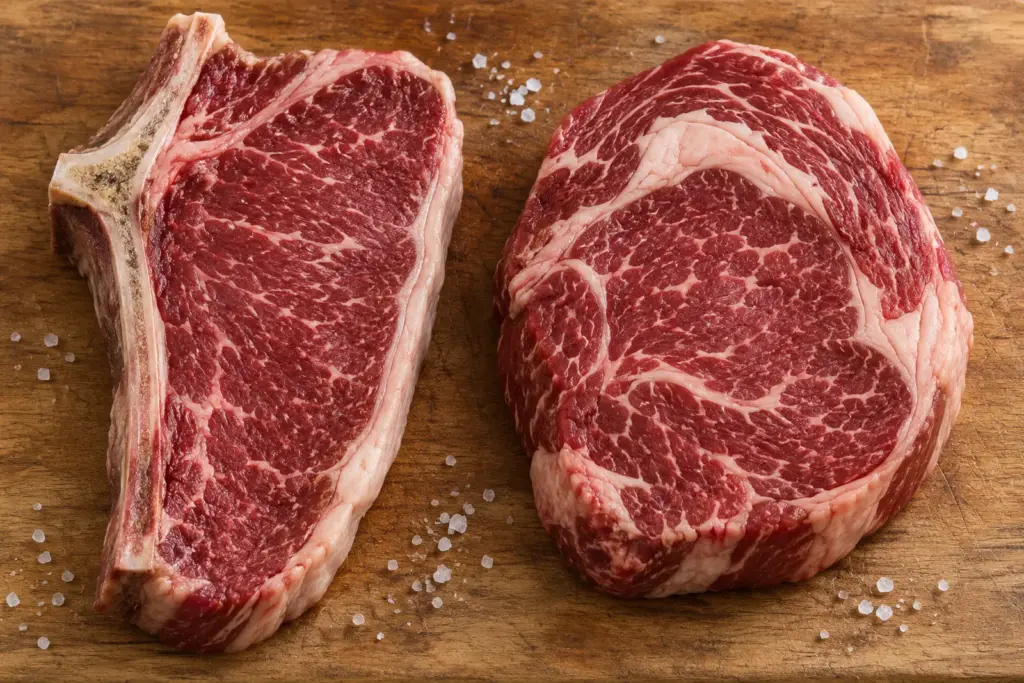
You may find both steaks in the same meat case and wonder whether they are one cut. This is one of many food pairs that shoppers confuse, because "club steak" is not one standard cut in every shop. What you need to know is which muscle you are buying and what it does at the stove.
1. What Is the Difference Between Club Steak and Ribeye?
The cut chart that American Foods Group publishes with the Beef Checkoff lists "Club Steak" as another name for the strip steak (IMPS/NAMP 1180) from the loin primal. A ribeye is a boneless rib steak from the rib section, which is why a ribeye and a prime rib roast are the same meat.
| Trait | Club steak | Ribeye |
|---|---|---|
| Primal | Short loin (loin primal) | Rib |
| Fat, raw, per 100 g | 15.49 g (top loin steak) | 18.73 g (boneless ribeye) |
| Calories, raw, per 100 g | 228 | 244 |
- It is one large muscle, the longissimus.
- It is usually bone-in, with a small L-shaped bone along one side.
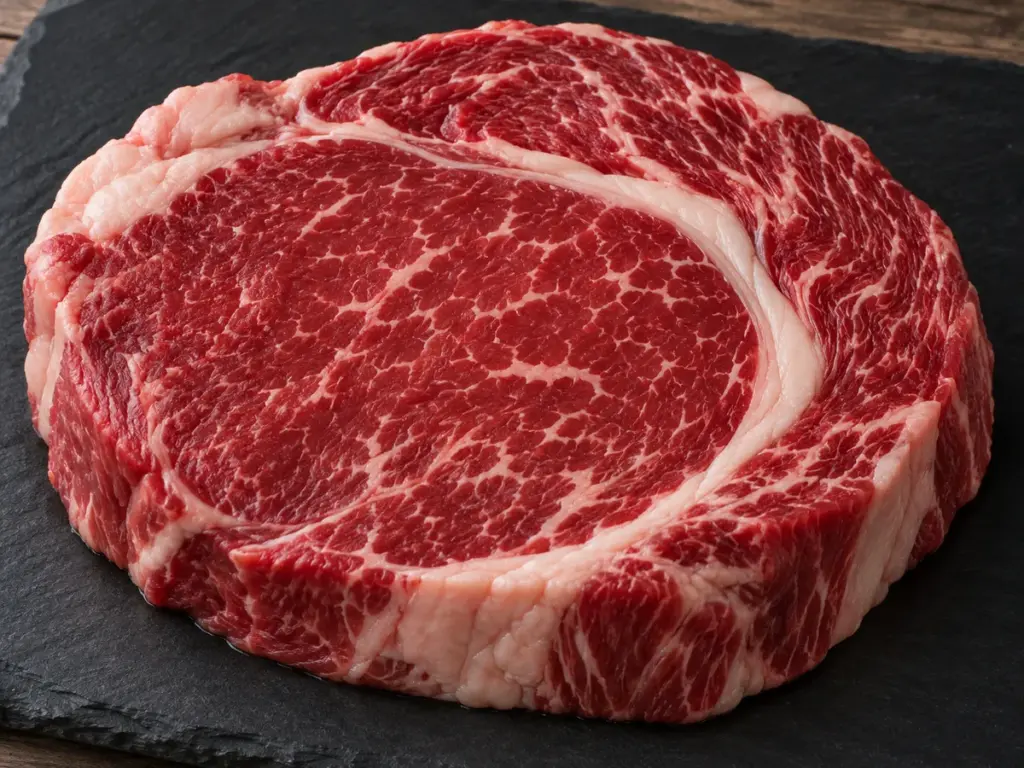
- It has the eye (longissimus dorsi) plus the cap (spinalis), and sometimes a small trimmed muscle at the front.
- It is boneless, or bone-in with a rib bone.
Club steak also goes by strip steak, New York strip, Kansas City strip, top loin and shell steak. Ribeye also goes by Delmonico, Spencer, Scotch fillet and entrecote.
The nutrition rows come from USDA FoodData Central: FDC 169538 for the short loin top loin steak and FDC 172156 for the boneless lip-on ribeye, both raw, lean and fat, trimmed to ⅛ inch of fat. A 12-ounce raw ribeye (340 g) carries about 11 g more fat than a top loin steak of the same weight.
2. Is a Club Steak Cut From the Rib?
In the cut chart and in steak guides it is not a rib cut. The chart files it under the loin, and Tasting Table says it comes from the narrower front section of the short loin, the part closest to the rib cage. The short loin sits right behind the ribs, so the two steaks sit side by side on the animal, and you can see why shoppers mix them up.
The name also moves between shops. You are likely to meet these labels:
- Club steak and country club steak: both are listed as names for the strip steak on the beef chart.
- Kansas City strip and New York strip: the same strip steak under regional strip names, and the beef chart lists both for the club steak too.
- Shell steak: a bone-in strip with no tenderloin attached, according to Wikipedia.
- Delmonico: a name for several cuts. Delmonico's restaurant now sells a thick-cut ribeye under it and once sold a strip, and South Dakota State Extension uses it for the chuck eye, a chuck cut that resembles a ribeye.
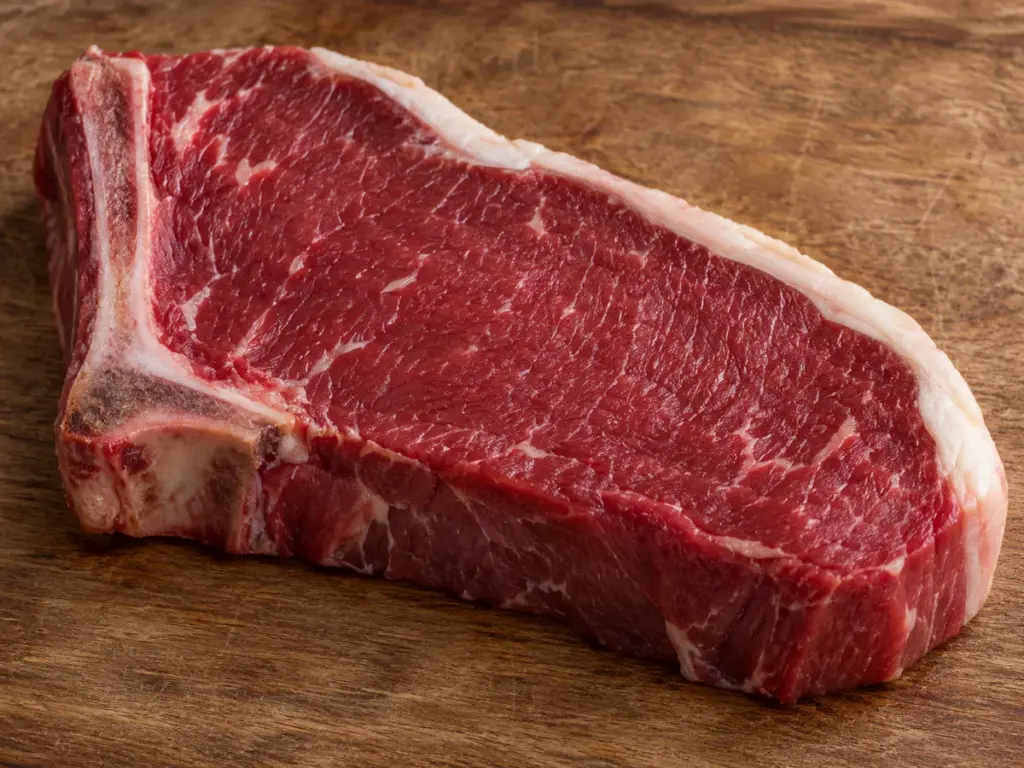
A T-bone or porterhouse has a strip on one side of its bone and a piece of tenderloin on the other, and the porterhouse and strip steak differ for that reason. A club steak has the strip side only, so you should expect it to cook like a strip steak.
3. Does Club Steak Taste Different From Ribeye?
You will find the two steaks close in taste, and the fat accounts for most of the gap. A ribeye has 3 g more fat per 100 g, and its cap carries extra marbling that Wikipedia credits with a flavor boost. A club steak has less fat to render, so you taste more of the plain beef.
South Dakota State Extension calls both ribeye and New York strip "high in marbling, flavorful and acceptably tender." The strip muscle does little work, and Wikipedia says that makes it fairly tender, though not as tender as the tenderloin beside it. Neither steak is a tough cut.
The USDA grade matters as much as the name, because the same extension page says the amount of marbling sets the quality grade. A Prime club steak can carry more marbling than a Select ribeye, so you should compare the grade on each label before you pay for the name.
4. How Do You Cook Club Steak and Ribeye?
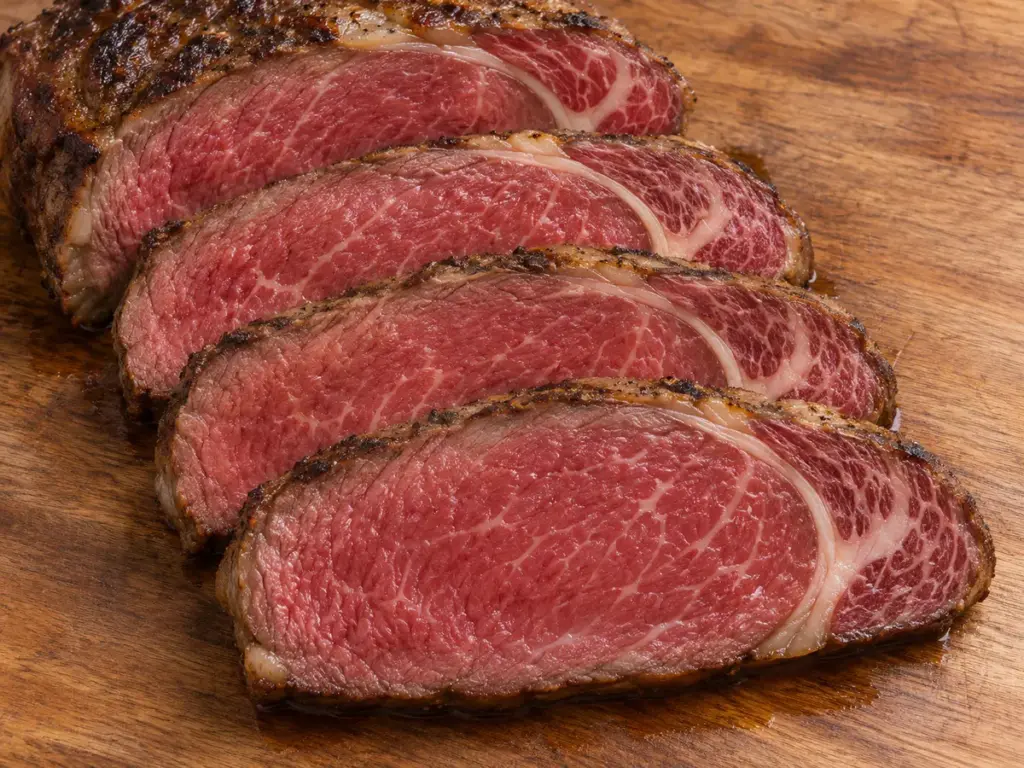
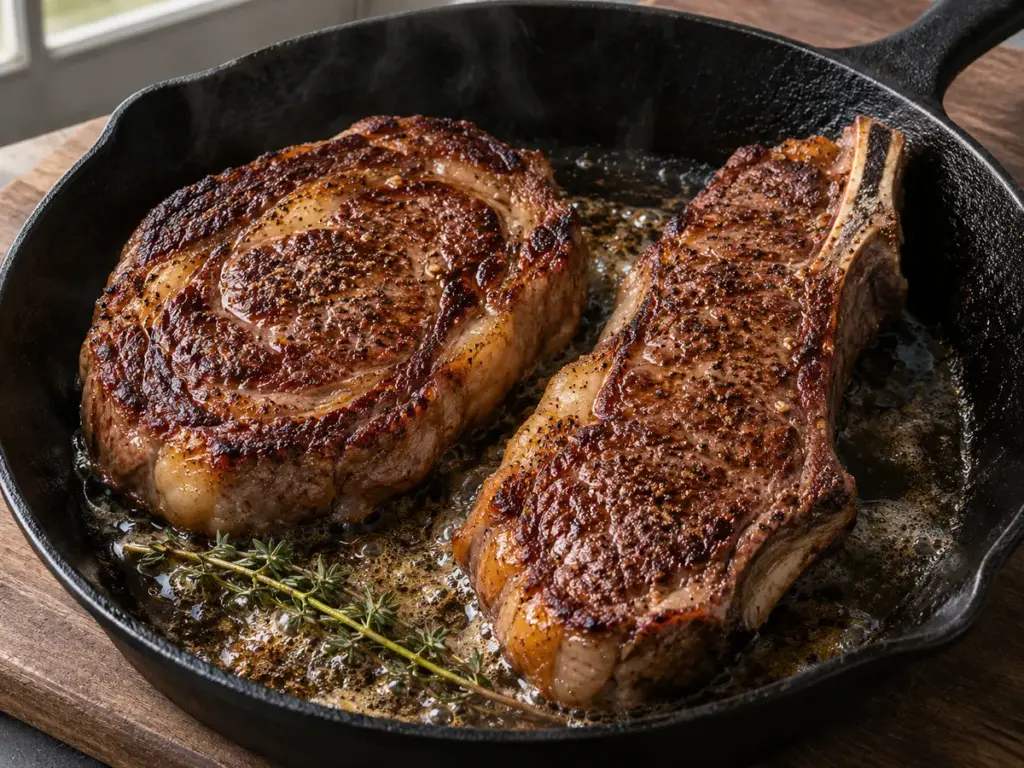
Both are tender steaks that want hard, quick heat, so you can use one method for both. The steps below work in a skillet or on a grill, and your thermometer, not the clock, tells you when to stop.
- Salt and dry. Salt both sides and pat the surface dry, because a dry steak browns instead of steaming.
- Heat hard. Get a heavy skillet or a grill very hot before the steak goes on.
- Sear and render the edge. Brown both faces, then stand the steak on its fat edge with tongs for a minute so the fat melts.
- Check the thickest part. Slide the thermometer tip into the center of the meat, away from the bone and the fat.
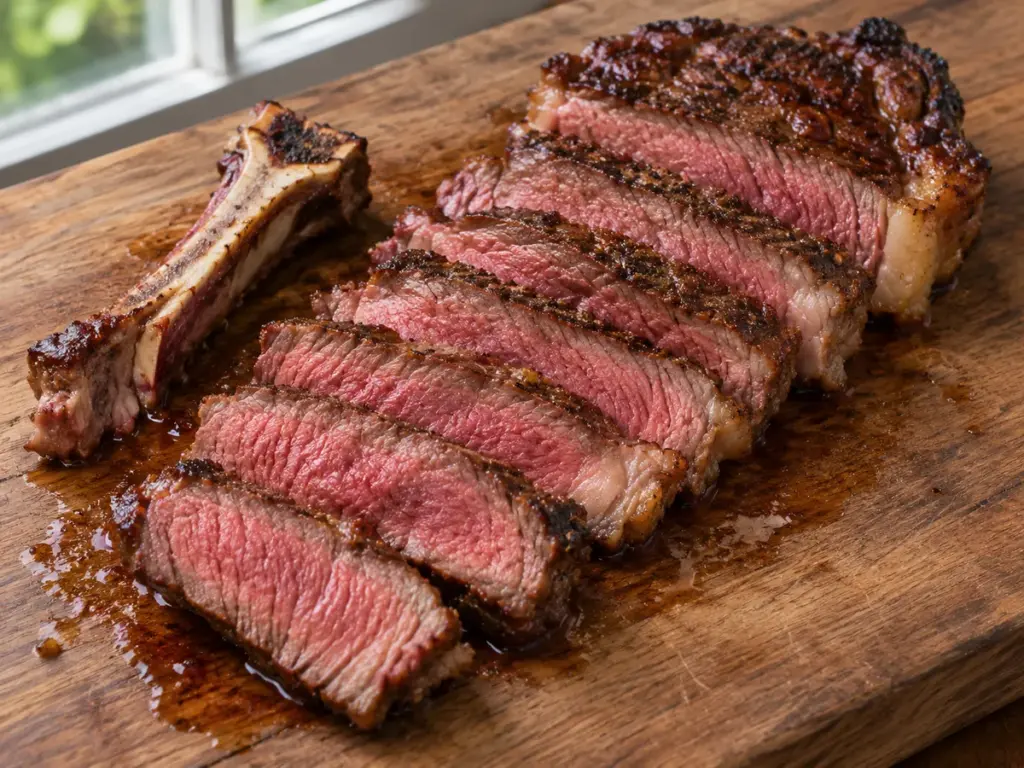
- Rest. Take the steak off the heat at 145°F, let it rest for at least 3 minutes, then slice across the grain.
- Probe away from the bone
- Less fat means less cushion, so pull it at your target temperature
- Leave the edge fat on for the crust, or trim it
- Expect more fat to render and more smoke
- Stand it on the fat edge until golden
- Probe the center of the eye, not the cap
You can choose between cast iron and a grill by the crust you want, and either one suits both steaks. Buy or cut a steak at least about 1 inch thick, because a thin steak overcooks before it browns.
5. Can You Use Club Steak Instead of Ribeye?
Yes in a skillet or grill recipe, because both are thick, tender steaks. Match them by thickness and not by weight, since a bone-in club steak holds less meat per ounce than a boneless ribeye. If you put a ribeye into a club steak recipe, it gives off more fat, so pour off the extra from the pan before you make a sauce.
If you want a boneless match for a club steak, buy a strip steak, since the beef chart lists club steak as one of its names. A tomahawk is a bone-in ribeye with a long frenched bone, so it behaves like a ribeye and wants a slower method than a club steak.
6. Which One Should You Buy?
- A leaner steak for one, seared in a pan: buy a club steak or strip. It has less fat to render and one muscle to slice.
- The richest bite, with a cap: buy a ribeye, and look for fine white flecks through the eye and the cap.
- A bone-in steak with no tenderloin: buy a club or shell steak, and confirm at the counter that it is a strip.
- Cooking for a crowd: compare the price per ounce of meat you will eat, since a bone-in label counts the bone.
USDA FoodKeeper lists raw beef steaks at 3 to 5 days in the refrigerator and 4 to 12 months in the freezer, so you can buy a steak on sale and wait for the right night. A ribeye goes well with the sides in grilled ribeye sides, and a club steak suits the steak and chips plate.
Sources
- Strip Steak, Boneless (IMPS/NAMP 1180), American Foods Group beef chart credited to the Beef Checkoff and Strip Steak (club steak and country club steak names)
- Strip steak: short loin, longissimus, shell steak (Wikipedia), Rib eye steak: eye, cap and names (Wikipedia) and Delmonico steak (Wikipedia)
- Tasting Table: What Exactly Is a Club Steak? and Chicago Steak Company: Ultimate Guide to Club Steak (short loin, bone shape)
- South Dakota State University Extension: Picking the Perfect Steak (marbling, grade, ribeye and strip, chuck eye)
- USDA FoodData Central: FDC 169538 (short loin top loin steak) and FDC 172156 (boneless lip-on ribeye)
- University of Maine Extension: Safe Minimum Internal Temperatures (steaks 145°F, 3-minute rest) and USDA FoodKeeper (raw beef steaks: 3 to 5 days refrigerated, 4 to 12 months frozen)

Food writer at GustoMeadow. Writes ingredient substitutes, food comparisons, taste guides and storage guides for home cooks.
Storage and food-safety numbers follow USDA, FDA and university extension guidance.



